Subscribe to our email list if you’d like to receive these quizzes as soon as they come out in our monthly newsletter.
Sometimes these quiz photos will be from Africa, sometimes from North America, and sometimes from elsewhere, but don’t worry, we will always tell you the location. Give it a try and let’s learn together!
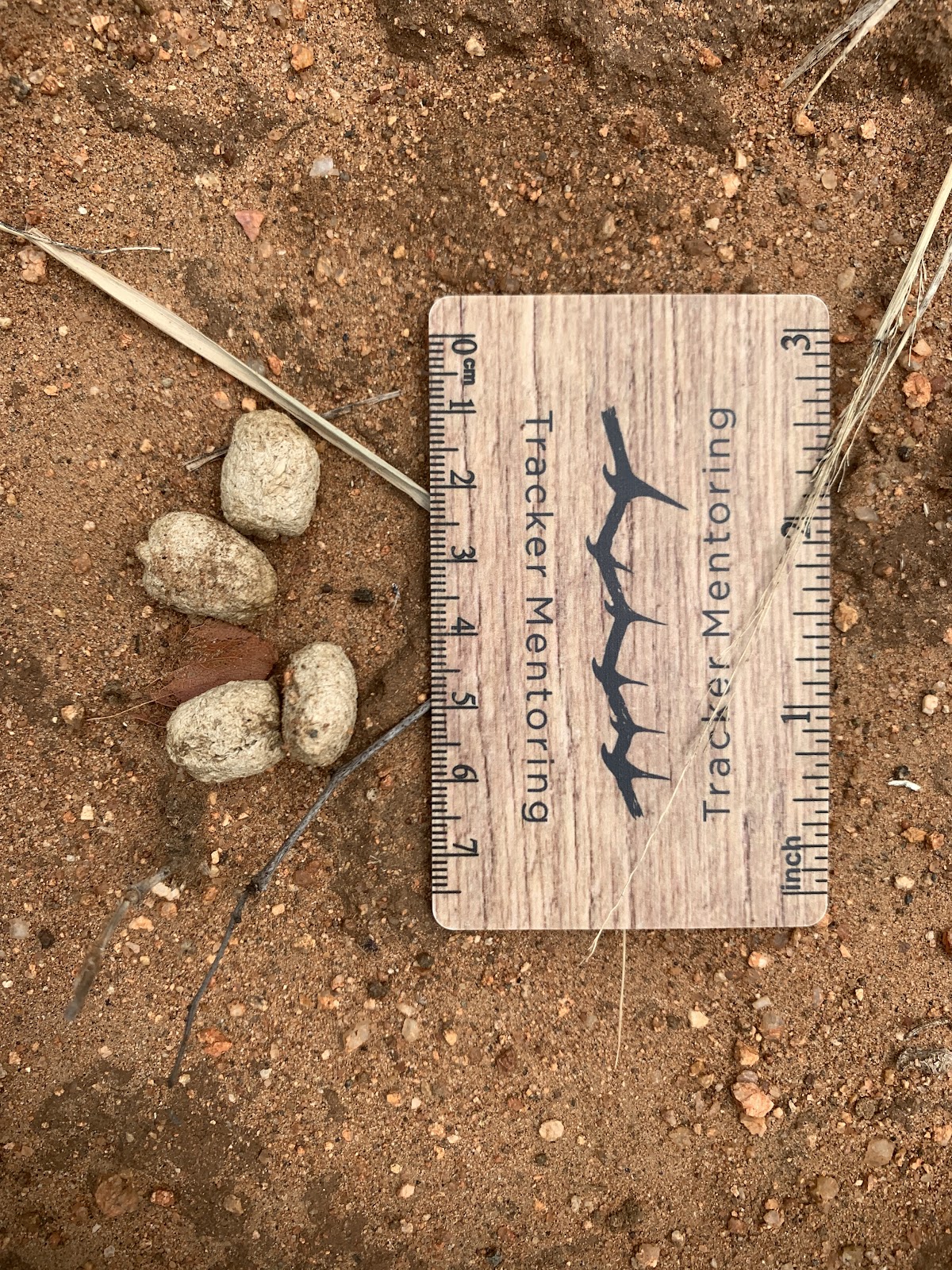
These are springhare (Pedetes capensis) dung pellets from the dry Greater Kruger region of South Africa. In last month’s May 2025 quiz, we reviewed this rodent’s tracks. Here, we present their dung, scat, pellets, poo, or whatever you’d like to call excrement. Springhares, like lagomorphs (rabbits and hares, which they are not related to, ironically), practice a form of coprophagy called refection, or autocoprophagy. Coprophagy is the eating of dung, and many animals practice this, especially at birth when a young animal needs to establish the “gut flora” of its mother to process food. Refection, or autocoprophagy, is the eating of your own dung. Springhares (and lagomorphs) consume their own dung right from their anus, before it hits the ground, in a form of ultra-processing to get as much nutrients from the grasses and root systems that they feed upon. The first scat is generally dark in color, and the second scat, after going through the system another time, is much lighter and straw-like particles are often visible. We can tell springhare scats apart from those of lagomorphs because the springhare scats are rectangular in shape, while lagomorph scats are round and flattened like an M&M candy. We call springhare scats “little suitcases” due to their shape.
Photo taken by Kersey Lawrence
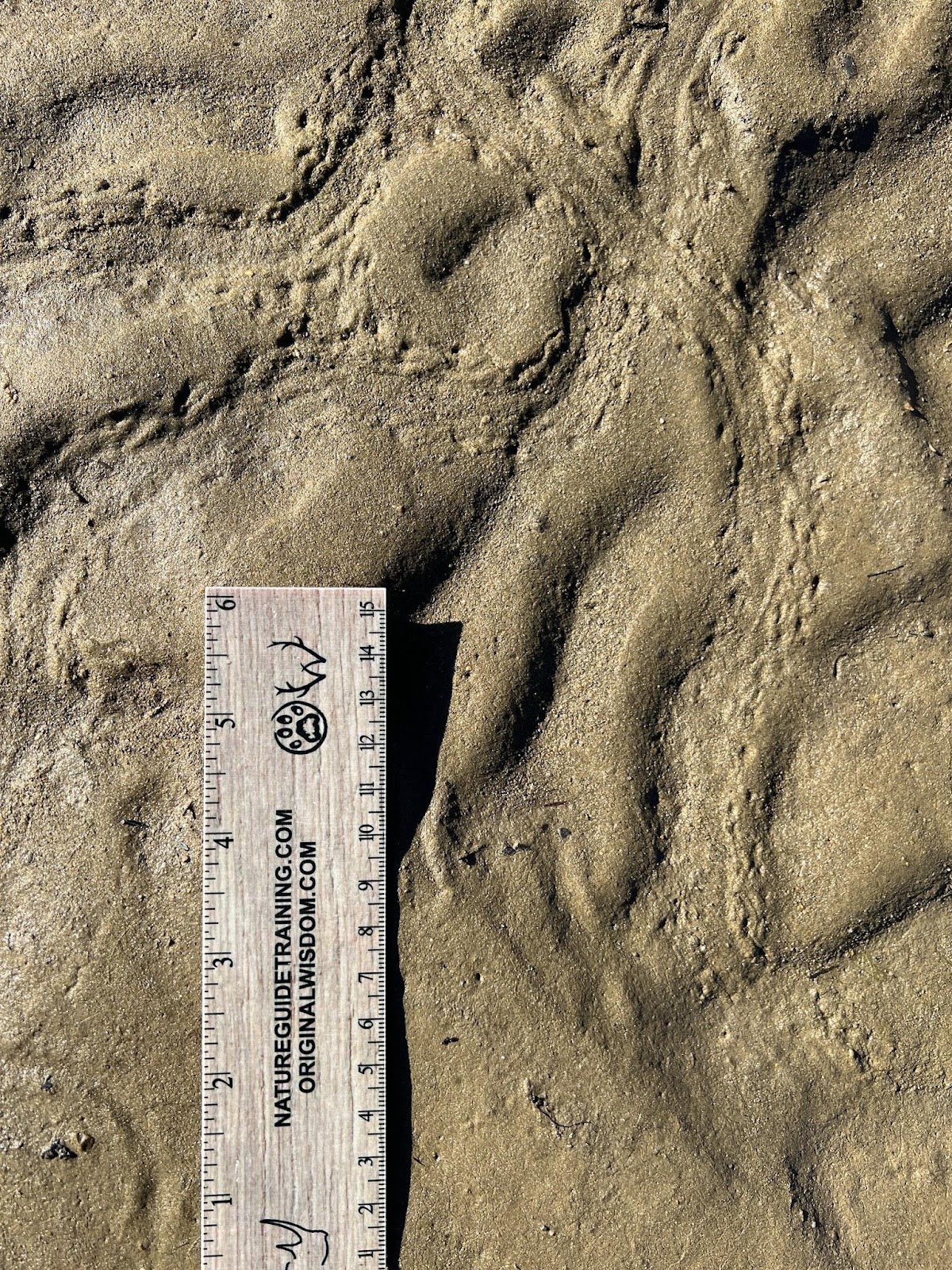
These are crayfish trails from the Allegheny mudflats of Southwestern New York, photo taken by Shane Hawkins. These crustaceans live in fresh water and often come onto the silty banks, leaving their spider-like trails behind. Crayfish have ten legs, belonging to the order Decapoda, within the phylum Arthropoda. There are many different genus and species, depending on the location. Their legs are arranged as five pairs, with the first pair being the large claws (chelicerae) used for defense and capturing prey. The remaining four pairs are walking legs, some of which may have small pincers.
Photo by Shane Hawkins, Southwestern New York, USA
How did you do? We’d love to hear from you!
In fact, we welcome your photo contributions from anywhere in the world! Send them to us HERE with your explanation of where they are from, what you think they are, and why you think so, and we could include them in a future quiz (giving you credit of course). Your photos will also become part of our searchable database that trackers can use for learning!
You can view old quizzes on the Original Wisdom website under the Resources tab, in the Tracking Gallery.
Happy Tracking!
The Team at Original Wisdom
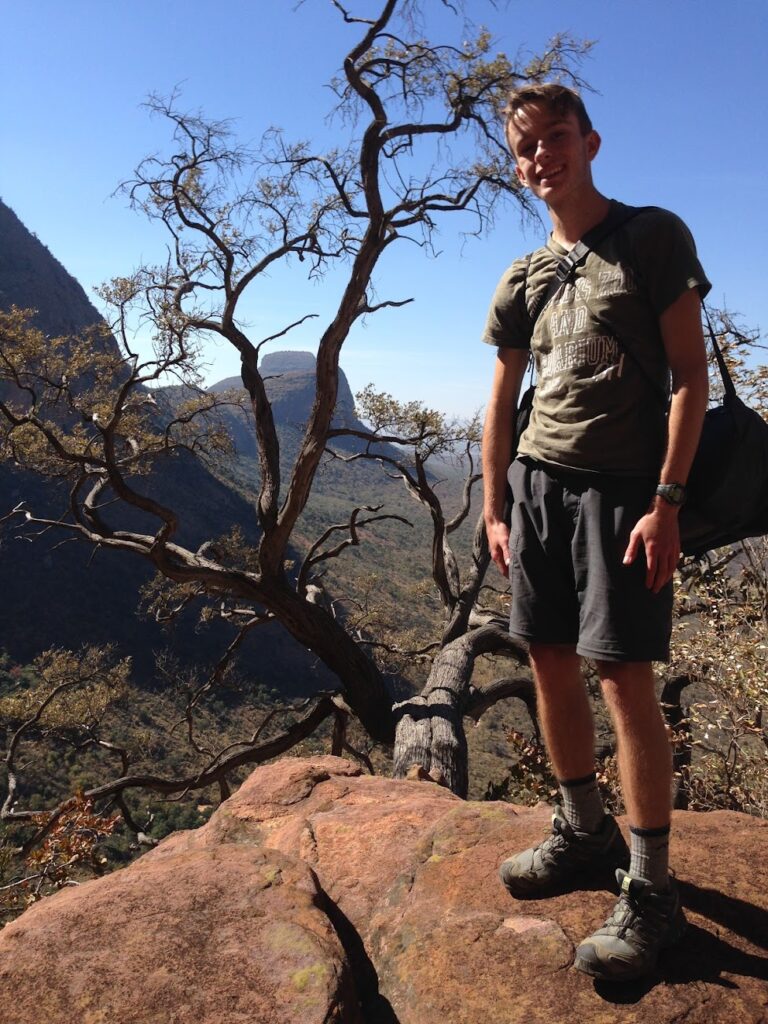
One hundred percent of donations made in Brandon’s name are set aside to help provide for a high school or college student to travel to South Africa to participate in an Original Wisdom program. The student must have a strong passion for photography and/or wildlife tracking and be a part of a program or class that is learning about and working towards conservation.