April 2024 Quiz
There are 10 questions in this quiz, some are from the northeastern and midwestern USA, some are from Canada, and some are from South Africa. More exact locations are given with the individual questions.
Choose an answer under each photo to see straight away whether you are right, with a note on what to look for. Your score is at the end.
Choosing an answer shows the result at once. With a keyboard, use the arrow keys to move between answers and press Enter to choose.
-
Question 1 of 10 Intermediate
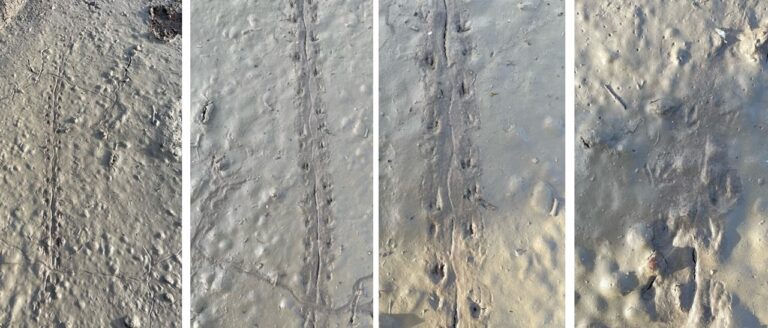
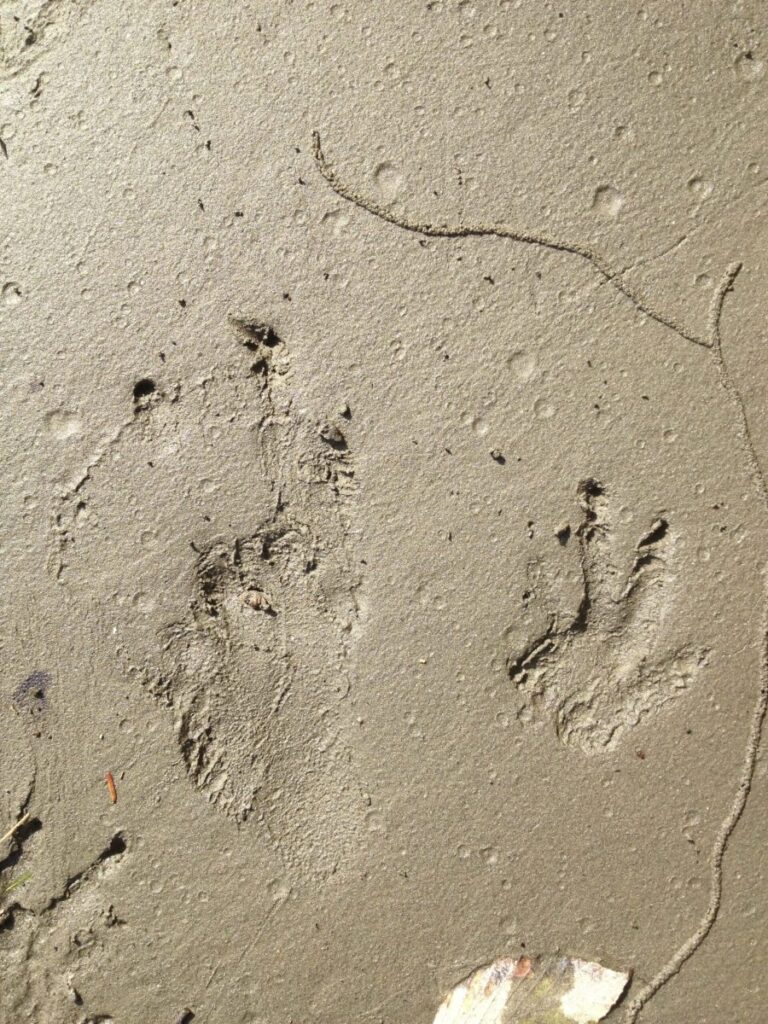
Who left this trail?
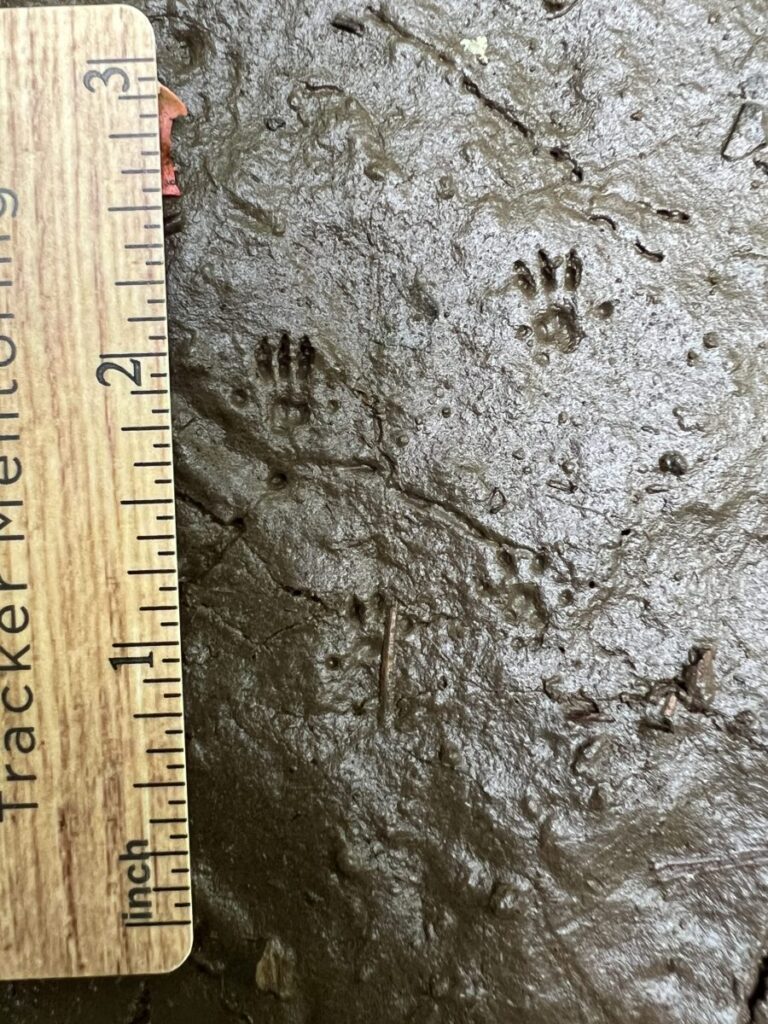
Location: Pennsylvania, near the southwestern New York border, USA Photo: Shane Hawkins Jiska thought frog but was confused by the body drag in the middle. Ana Maria saw small four-toed tracks with blunt nails close together around a long center line, considered turtle, then settled on salamander because of the long narrow toes. Maria described a tail drag down the middle and a short-stride understep walk, and said a small salamander or newt. Shane thought this trail was made by an eastern newt, the most common small species in the eastern deciduous forests.
-

Salamander tracks · Sweden -
Salamander tracks · Pennsylvania, USA
-
-
Question 2 of 10 Intermediate
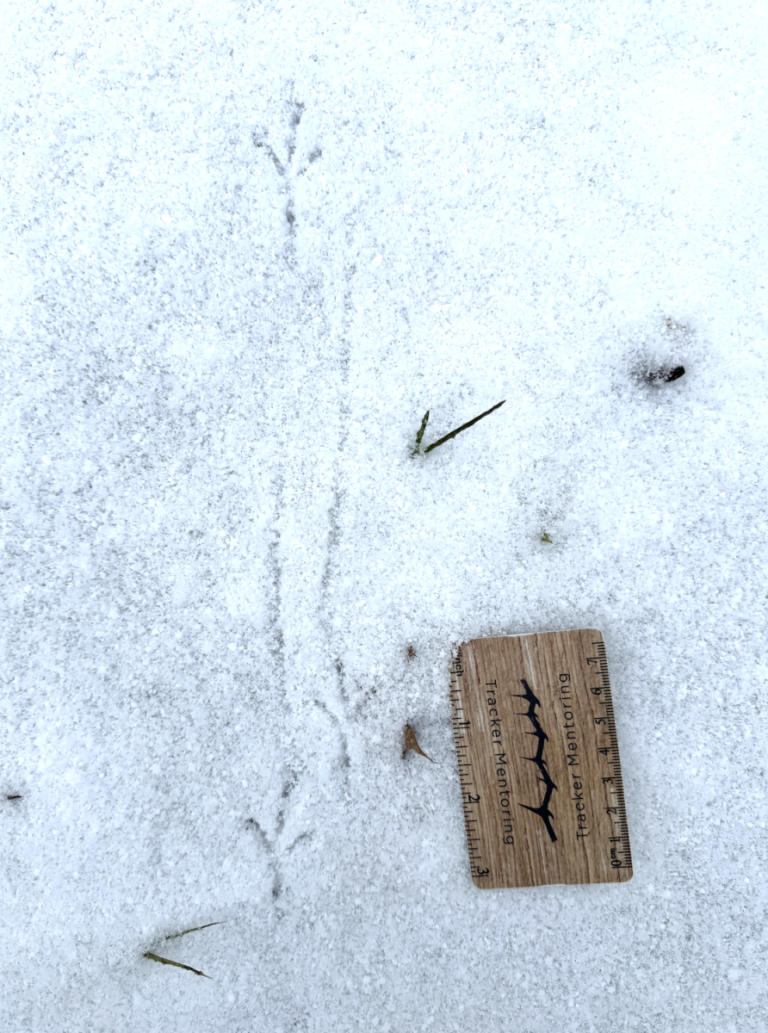
Who left these tracks?
Location: Southwestern New York, USA Photo: Shane Hawkins With bird tracks, start with foot structure, then how it moves, the habitat, the common species, and size. Michael saw an anisodactyl foot hopping or skipping with a long stride, so not a short-legged walker like a dove or pigeon. Sören and Cal both saw a small songbird hopping. Maria got the species: the skipping stride is often seen in robins, with toes 2 and 4 curving outward like a peeled banana.
-
American robin, tracks · New York, USA
-
-
Question 3 of 10 Intermediate
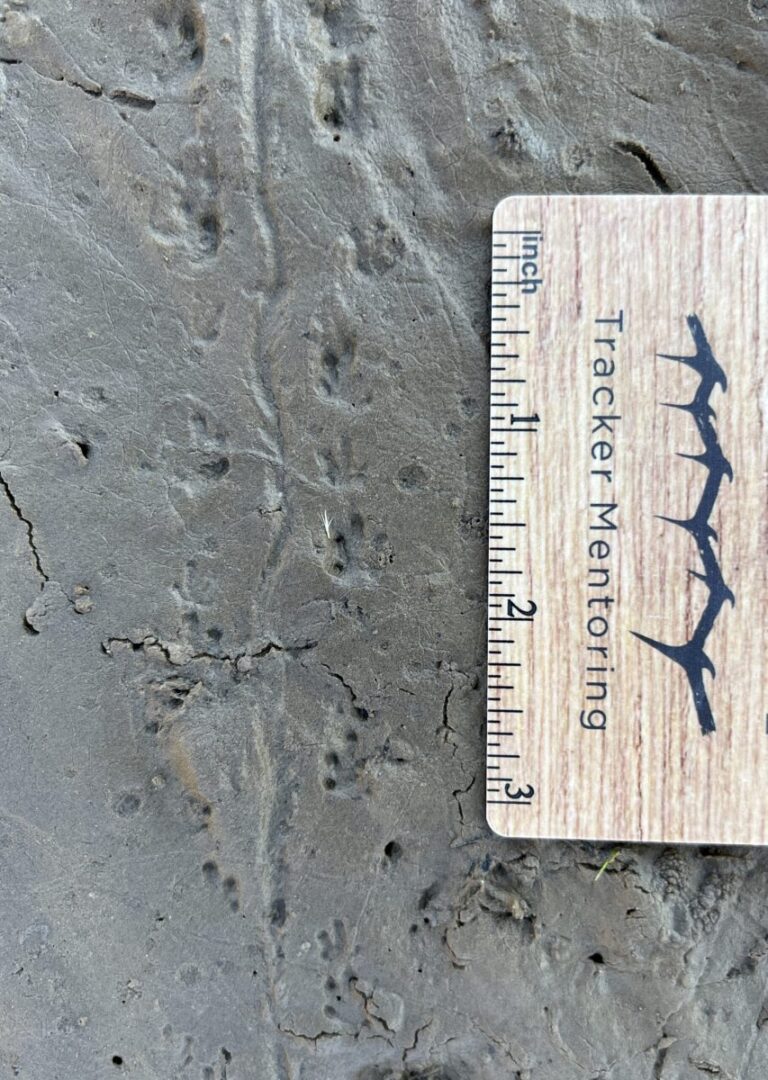
Who left these tracks?
Location: New York, USA Photo: Shane Hawkins Michael and Tracy pointed out a mouse-sized rodent bounding, with four toes on the front feet and five on the hind in a 1-3-1 pattern. Logan measured the group at a little over an inch wide, which rules out rats and chipmunks, and called it a Peromyscus mouse. Maria added that vole tracks look more fingery and widely splayed, while these have bulbous toe and palm pads.
-
Peromyscus tracks · New York, USA
-
-
Question 4 of 10 Intermediate
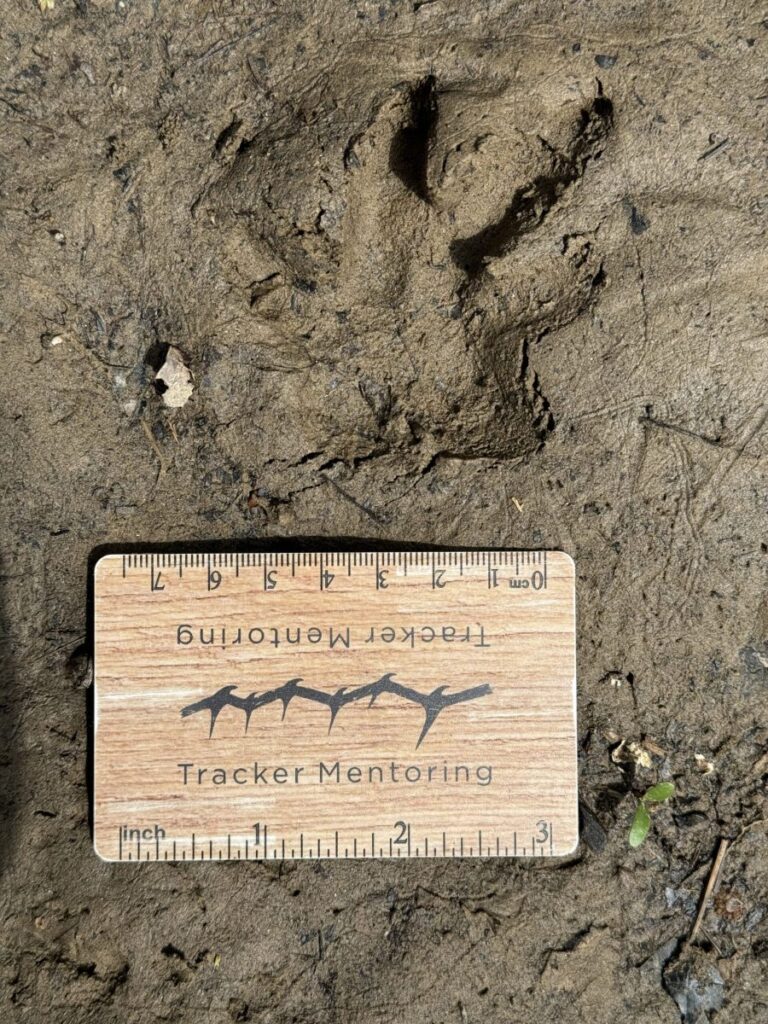
Who left these tracks?
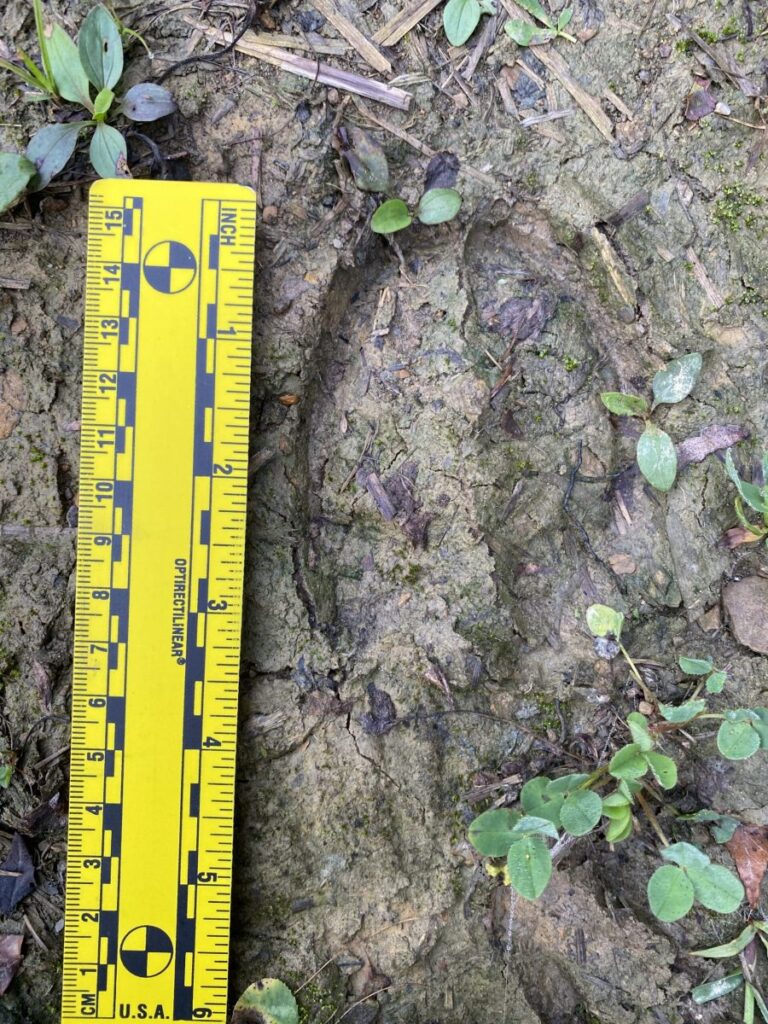
Location: Benzette, Pennsylvania, USA Photo: Shane Hawkins Sören saw a bigger two-hoofed animal, not boar because the negative space runs all the way between the toes, and thought elk though it looked small. Maria nailed it: a track about 3.25 inches long, and at this location it is elk or white-tailed deer. White-tailed deer cleaves are more pointed, like an inverted heart, and these look too blocky for deer, so elk. The page gives the answer as Roosevelt elk.
-
Roosevelt Elk tracks · Pennsylvania, USA
-
-
Question 5 of 10 Intermediate
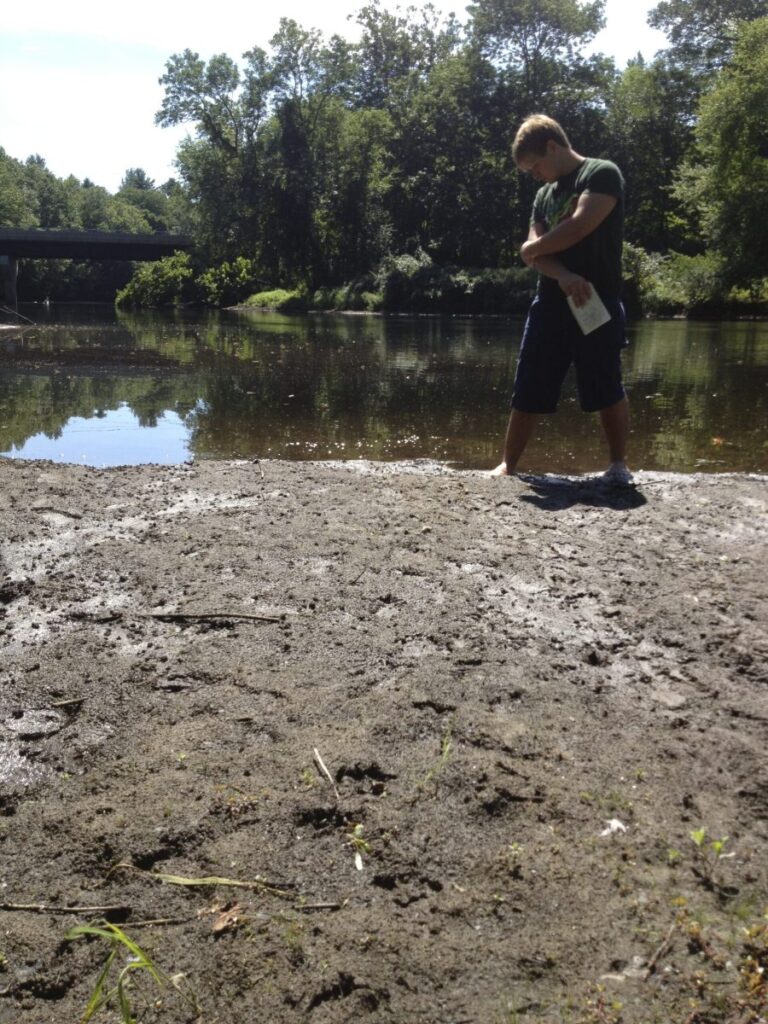
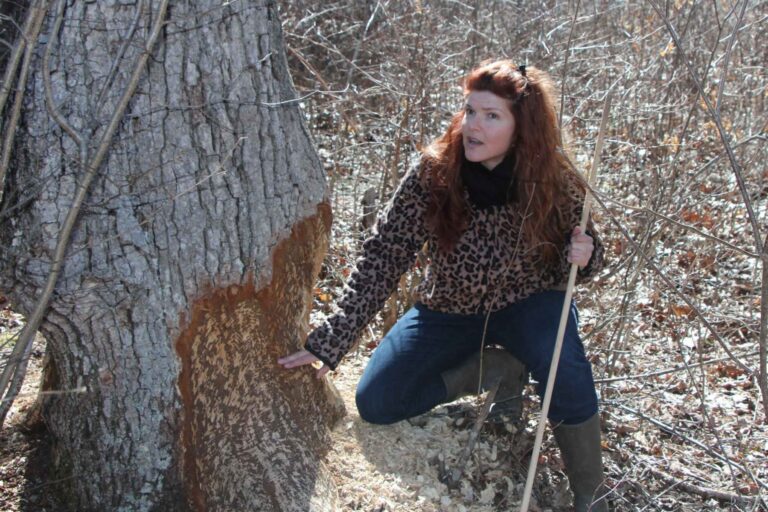
What happened here, and who is responsible?
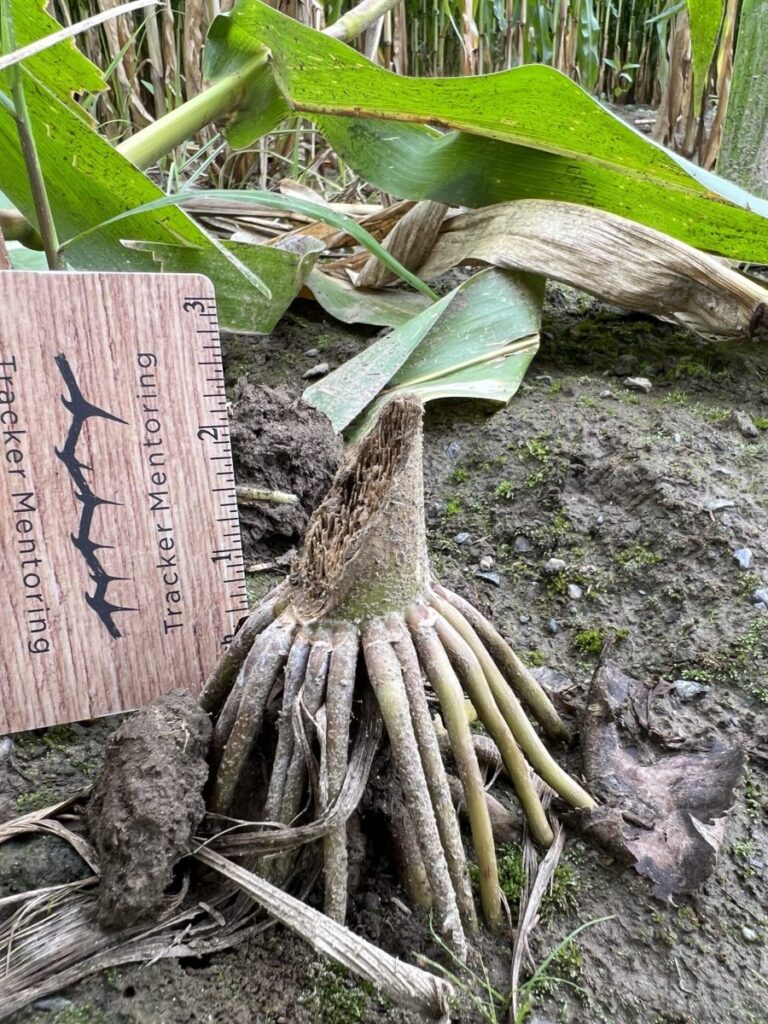
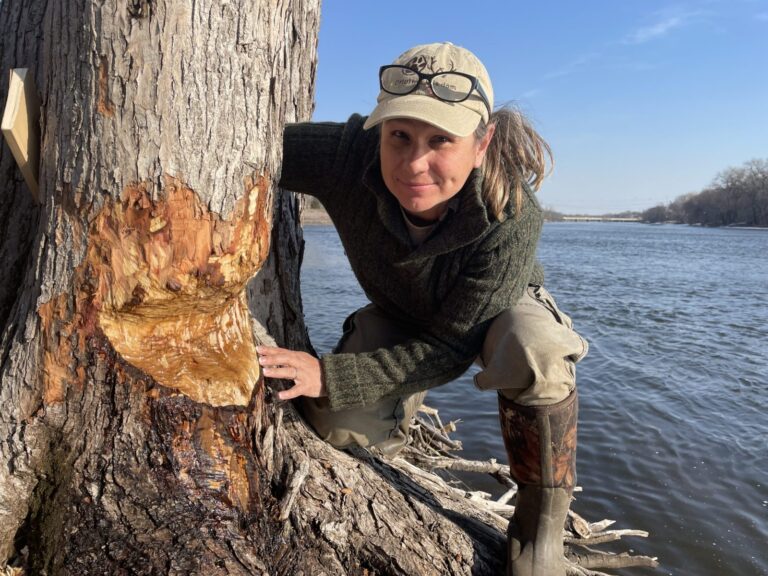
Location: Southern Vermont, USA Photo: Shane Hawkins Jiska guessed nutria, a word she learned on our Black Leopard Tracking program in Kenya, where non-native South American nutria swim in the rivers. Ana Maria saw that most of a corn stalk had been removed with ridged edges, not a human cut, and the width of the stalk suggested beaver chewing. Michael said it looks just like the pictures in Mark Elbroch's mammal book. The answer is a beaver harvesting corn stalks.
-
American Beaver signs -
American Beaver signs -
American Beaver tracks -
American Beaver tracks · Vermont, USA -
American Beaver signs -
American-Beaver_LF-scaled · Allegheny River Basin, Pennsylvania, USA
-
-
Question 6 of 10 Advanced
Who left this track?
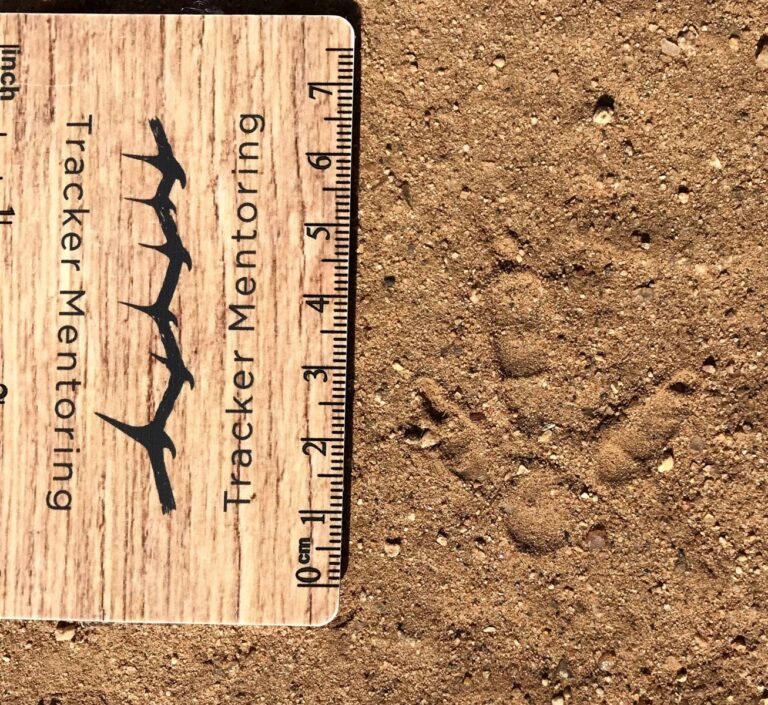
Location: Near Hoedspruit, Greater Kruger, South Africa Photo: Sandy Reed Logan saw a 3-toed track with no hallux and a big pad, a ground bird that is not large, and checked eBird lists for the region. He guessed Natal spurfowl, which was wrong, but looking at features and finding out what birds are in the area is the way to do it. Cal got korhaan, and Michael and Jiska gave detail: the right foot of a korhaan, thick-toed with prominent claws, a solid heel pad, a little over 4 cm, and no hallux.
-
Red crested korhaan track · South Africa
-
-
Question 7 of 10 Beginner
What happened to this mushroom cap?
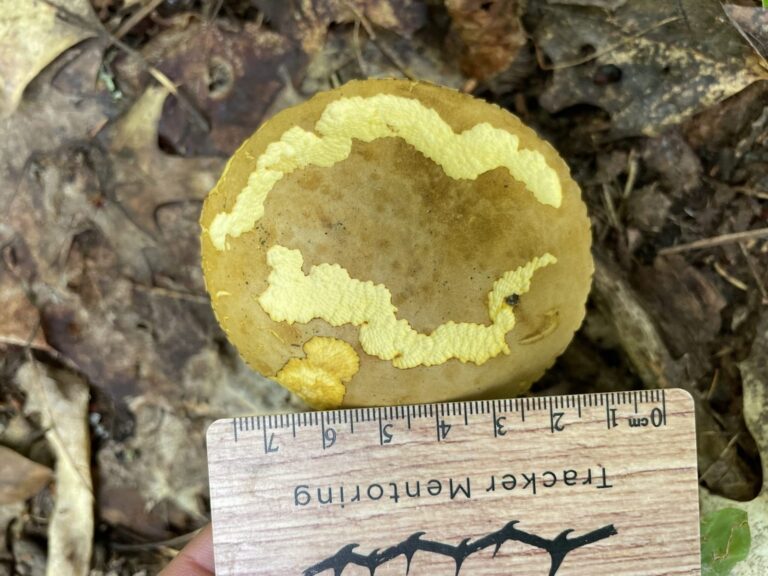
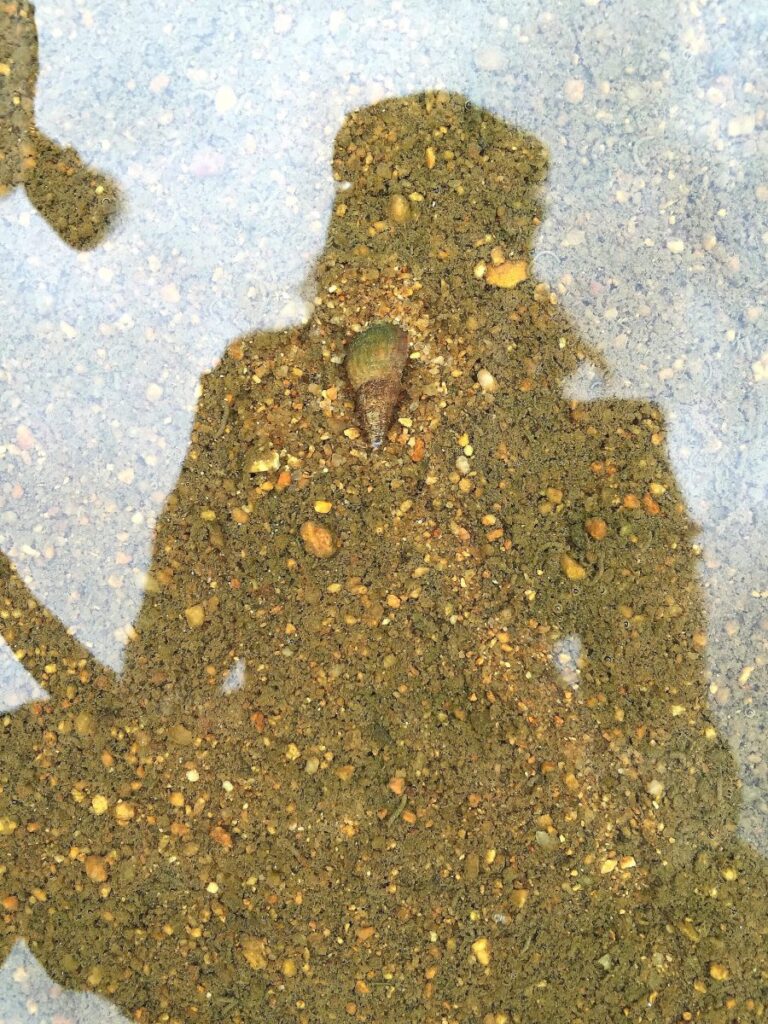
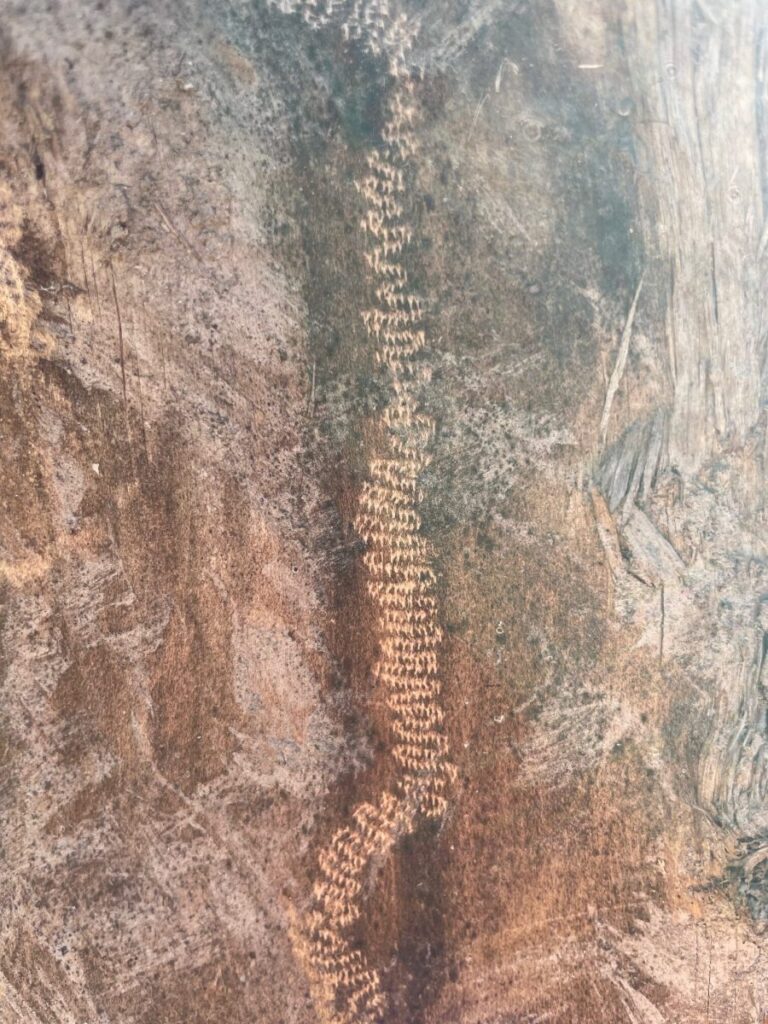
Location: Ontario, Canada Photo: Sandy Reed Logan described snail feeding sign, where you can see the arcs and scraping movement of the radula. Sören added the specific pattern where they seem to scoop out pieces of mushroom with an ice cream scoop. The answer is slug feeding sign on a mushroom.
-
Slug sign -
Snail trail -
Snail or slug, feeding on algae · Sweden
-
-
Question 8 of 10 Advanced
Who left these tracks?
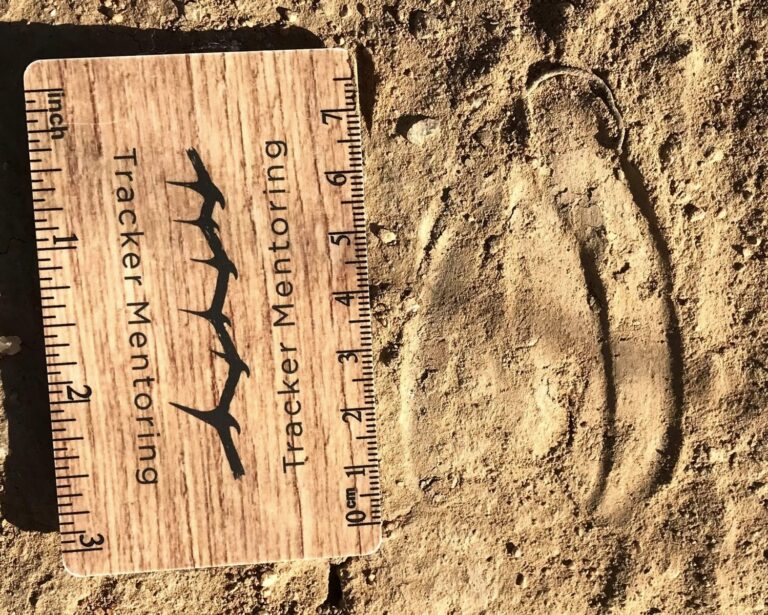
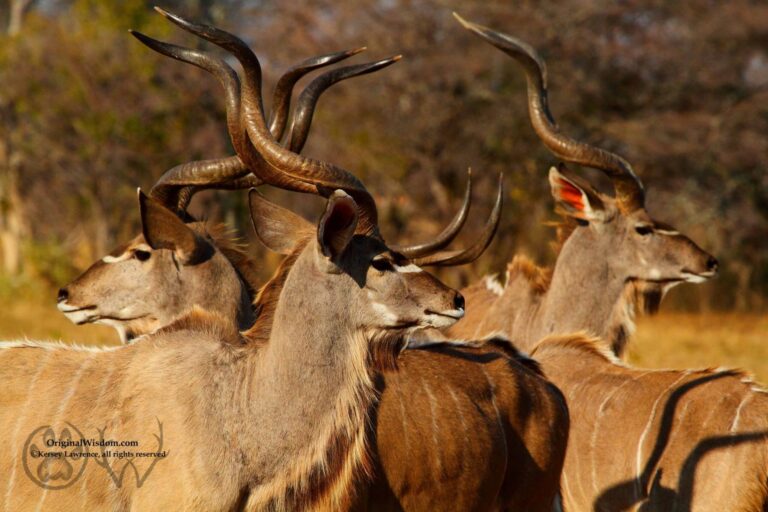
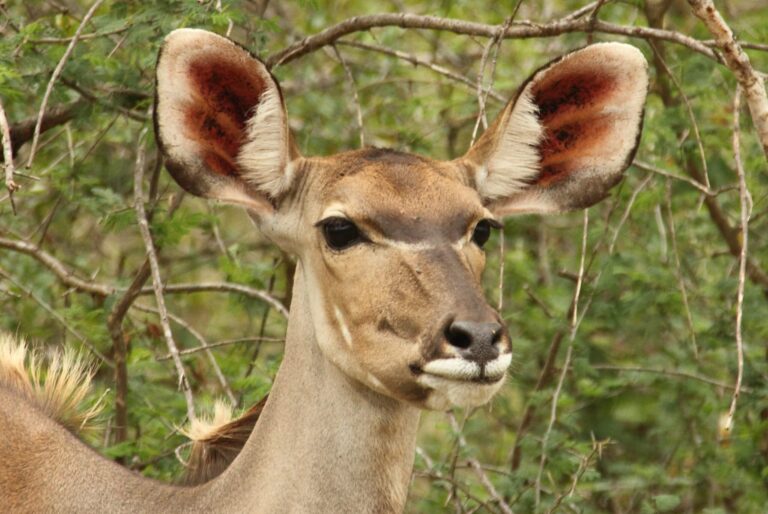
Location: Near Hoedspruit, Greater Kruger, South Africa Photo: Sandy Reed Everybody knew this was a hoofed animal, which is where we start. With only 2 overlapping tracks and no full stride, body size is hard to judge. Maria saw a narrow double-registered hoof a little over 6 cm long and guessed nyala, but these are a little longer than wide, and size does not help here because a big male nyala overlaps a small female or young male kudu. Michael got it: kudu, with oval or shield-shaped prints and the smaller hind print placed neatly on the front.
-
Kudu tracks · South Africa -
Male kudu · South Africa -
Female kudu · South Africa
-
-
Question 9 of 10 Intermediate
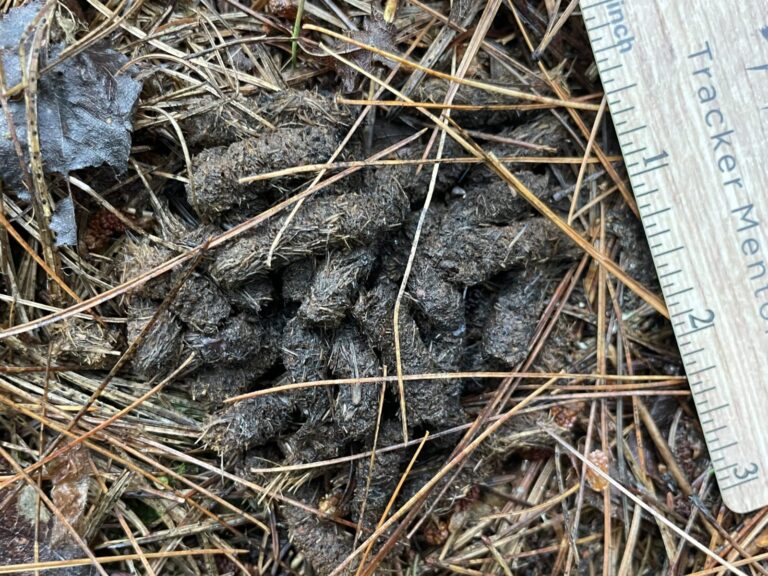
Who left this scat pile, and why?
Location: Ontario, Canada Photo: Sandy Reed Maria described fibrous, tubular scats about an inch long and a quarter inch wide, filled with grassy material. That points to a game bird, and the size and big pile point to grouse, which leave fairly large piles at roosting sites. Ana Maria added that the pile was likely made over winter while the grouse was in the snow and revealed after the melt. She also considered porcupine, but these are smaller and longer.
-
Grouse beds under the snow -
Grouse signs
-
-
Question 10 of 10 Intermediate
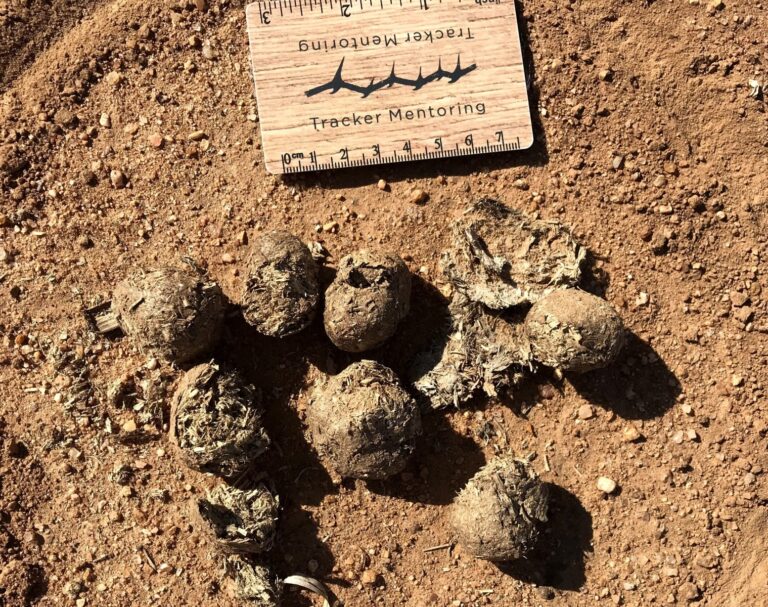
Who left this dung?
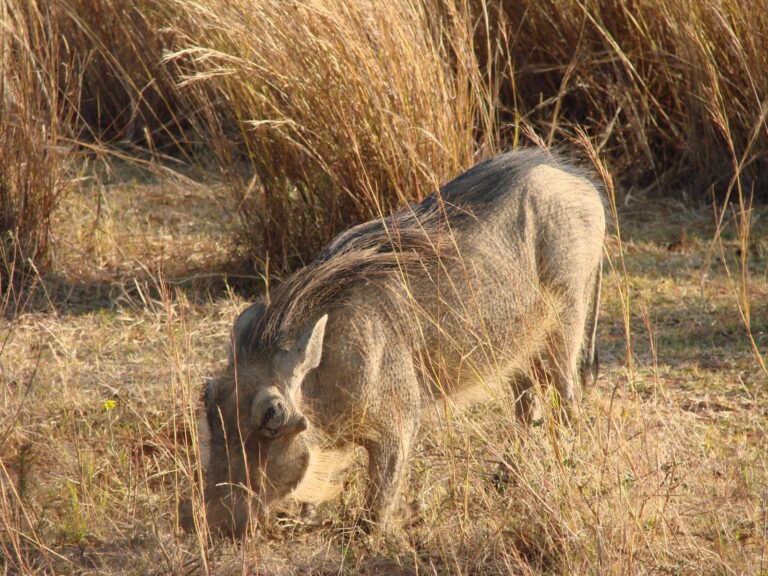
Location: Near Hoedspruit, Greater Kruger, South Africa Photo: Sandy Reed The first question to ask about a scat is what it is made of. Visible vegetation tells us it is not a ruminant, which chews the cud and breaks plants down to a fine powder. This animal is a plant-eating hind-gut fermenter. Jiska saw a trapezoidal shape with lots of vegetation, and Michael added that the angular pellets are not processed enough for a ruminant and not scattered enough for giraffe, which is a ruminant.
-
Warthog signs · South Africa -
Warthog · South Africa
-
Your score
Answer every question to see your score. 10 to go.