December 2023 Quiz
There are 10 questions in this quiz, the first 5 are from Africa, and the second 5 are from the northeastern USA. More exact locations are given with the individual questions.
Choose an answer under each photo to see straight away whether you are right, with a note on what to look for. Your score is at the end.
Choosing an answer shows the result at once. With a keyboard, use the arrow keys to move between answers and press Enter to choose.
-
Question 1 of 10 Advanced
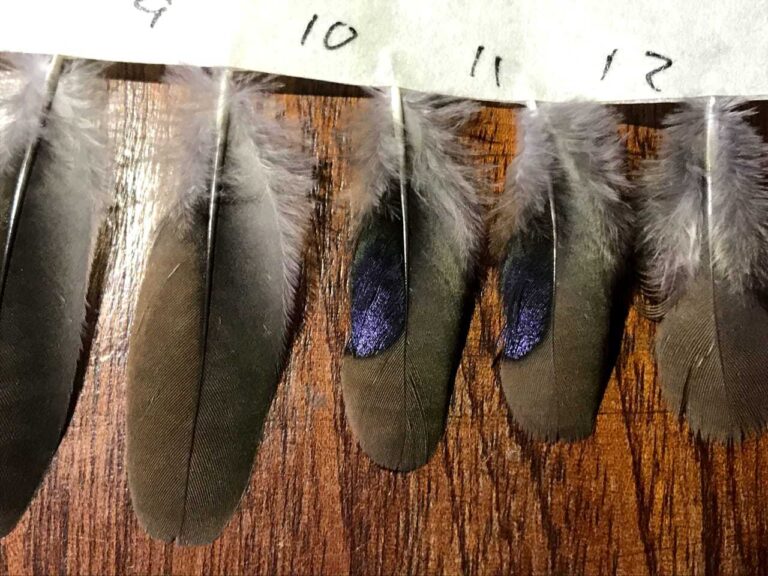
Whose feathers are these, and which side of the body are they from?
Location: Garamba National Park, Democratic Republic of the Congo Photo: Kersey Lawrence These are the feathers of a blue-spotted wood dove. The bird hit a lodge window and died, so it could be examined in hand. It is very similar to the emerald-spotted wood dove, which is more common in southern Africa. The bright blue spots are only on the secondary flight feathers and the coverts, and the curve of most of these feathers indicates the left side of the body.
-

Blue spotted wood dove feathers, signs
-
-
Question 2 of 10 Advanced
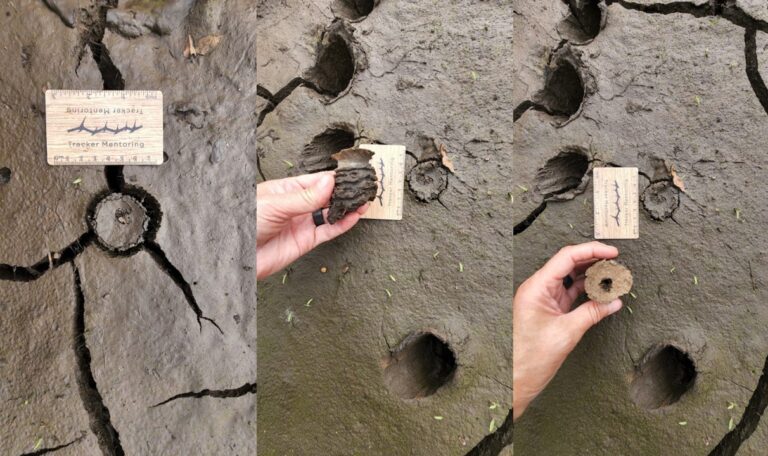
What made this structure?
Location: Greater Kruger region, South Africa Photo: Kersey Lawrence This is the larval chamber of a hippo fly. Lee and Kersey saw these on the edges of muddy pans, waterholes, and wallows for years before digging some up and finding the maggot-like larvae inside. The female lays eggs on grasses or sedges beside water, the eggs hatch and drop into the mud, and the larva makes this spiral tube downward, pupating in the center before emerging from the hole at the top as a large fly. They are called hippo flies because they often ride on large animals that spend time near water, such as hippos and warthogs.
-
Hippo fly signs · South Africa
-
-
Question 3 of 10 Intermediate
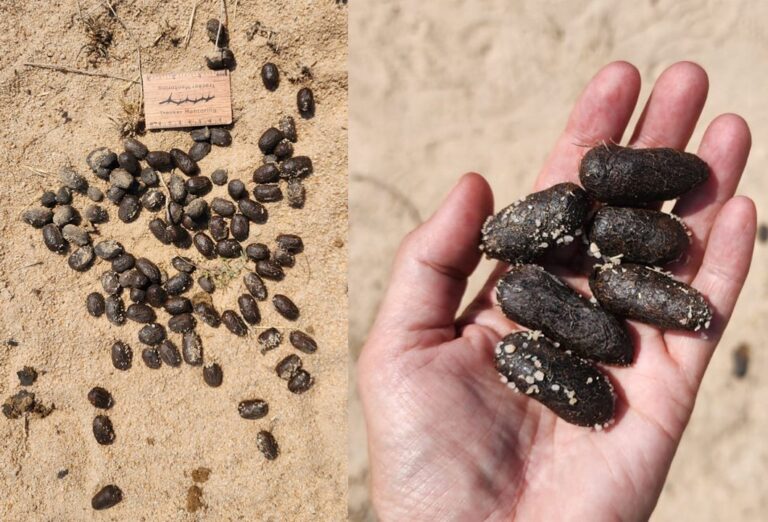
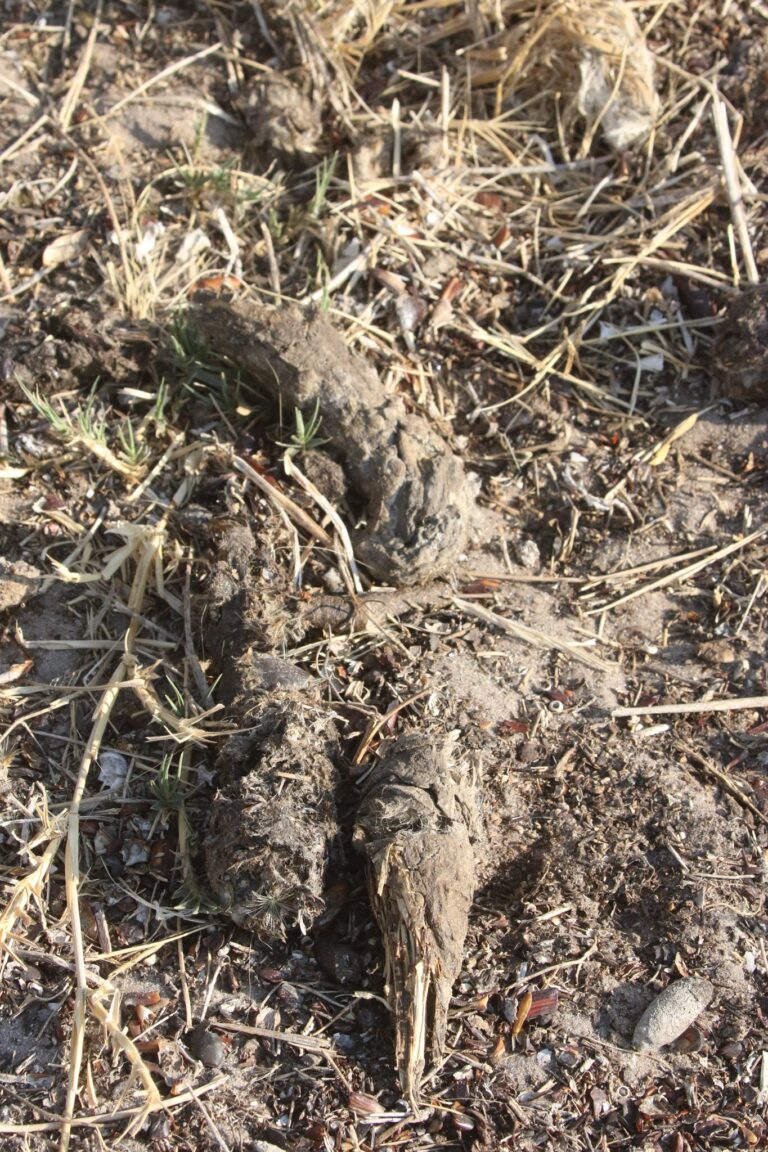
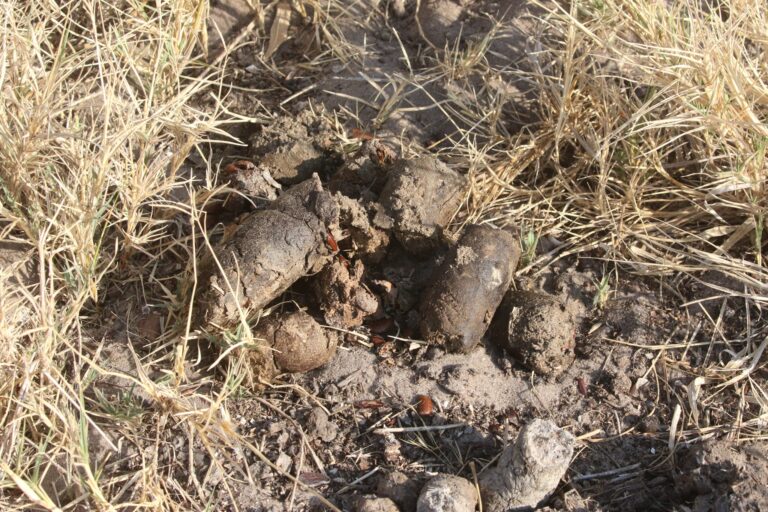
Who left this dung?
Location: Moholoholo Mountain View Reserve, near Hoedspruit, South Africa Photo: Kersey Lawrence These are eland dung pellets. Dung can be tricky because its size and shape depend on seasonal food and the health of the animal. These are the classic form of eland dung: large, herbivorous, ruminant, and long. There were also tracks present, which helped to confirm it.
-
Eland signs · South Africa
-
-
Question 4 of 10 Advanced
What is this, and who left it?
Location: Near Hoedspruit, Greater Kruger, South Africa Photo: Kersey Lawrence This is the pasting of an African civet, a black and white animal that looks like Africa's version of a fluffy, spotted raccoon. Civets scent mark by extruding an anal pouch and sticking a gooey substance to an object such as a small bush, grass, a rock, or a power pole. Pastings are usually low, about 8 to 12 inches off the ground, and many animals use them repeatedly. Many people smell a pasting before they see it. Civetone, one of its chemicals, was historically farmed from civets for fine perfumes.
-
African civet signs · South Africa -
African civetry with grass plug -
African civetry
-
-
Question 5 of 10 Intermediate
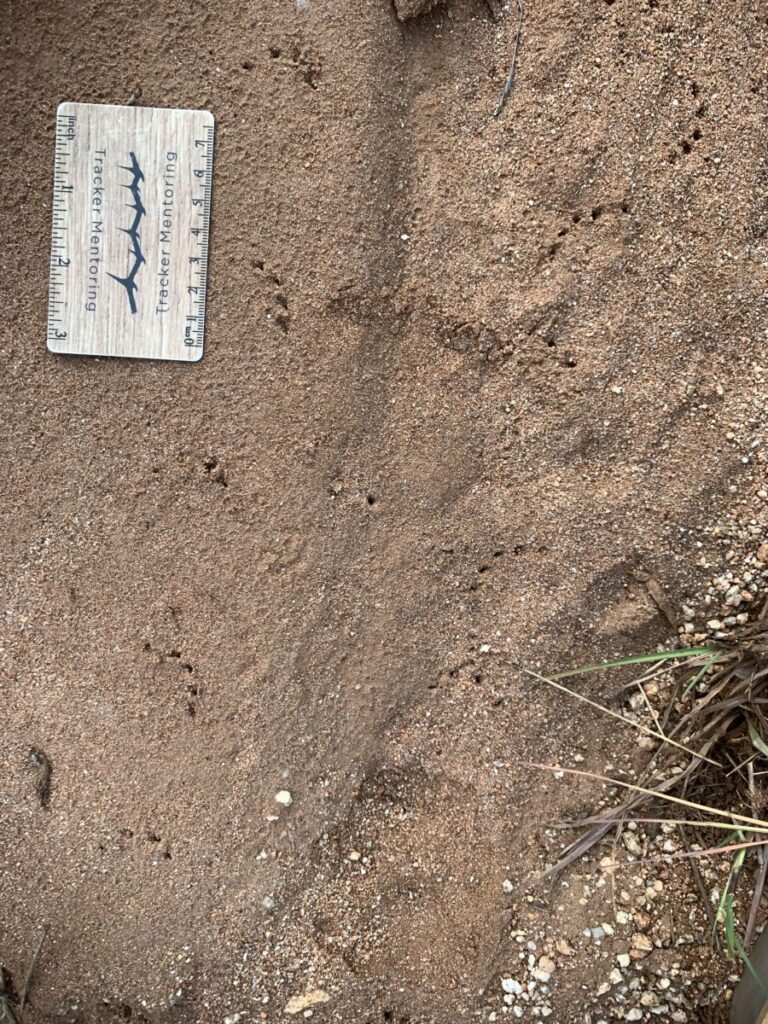
Who left these tracks?
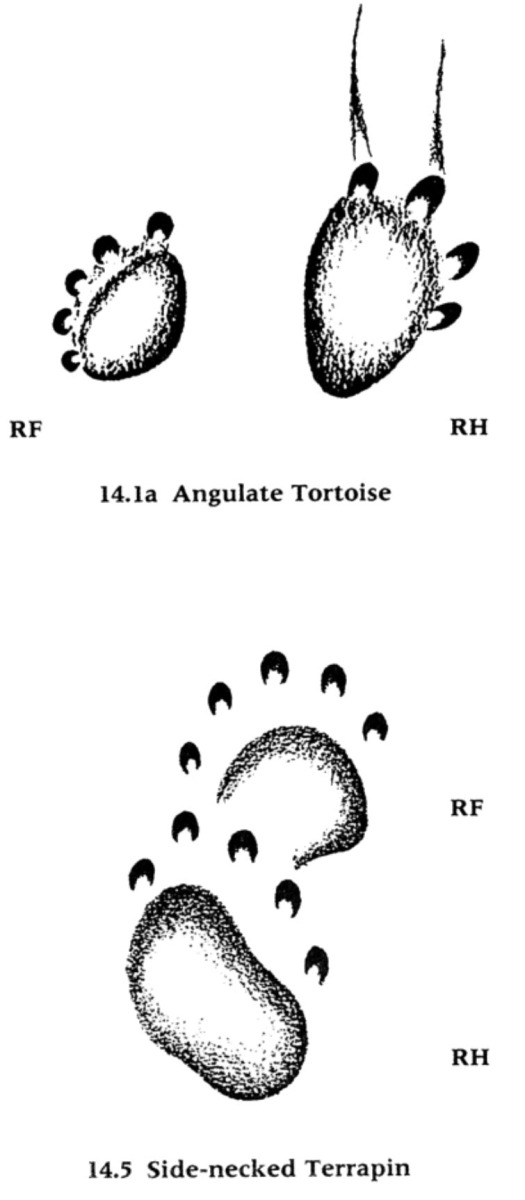
Location: Near Hoedspruit, Greater Kruger, South Africa Photo: Kersey Lawrence These are leopard tortoise tracks, from the right side of the body. Few other tortoises get this big in the area, and they often come down to water to drink. The skewed oval tracks point different ways, with hinds facing forward and fronts facing inward, and show obvious claws. Tortoises have only 4 toes on the hind foot while terrapins have 5, and terrapin fronts and hinds both point more forward.
-
Tortoise, terrapin, turtle tracks · South Africa -
Tortoise, terrapin, turtle tracks -
Tortoise, terrapin, turtle tracks · South Africa -
Tortoise, terrapin, turtle tracks · South Africa -
Tortoise, terrapin, turtle tracks · South Africa -
Tortoise Trail in soft sand · South Africa
-
-
Question 6 of 10 Intermediate
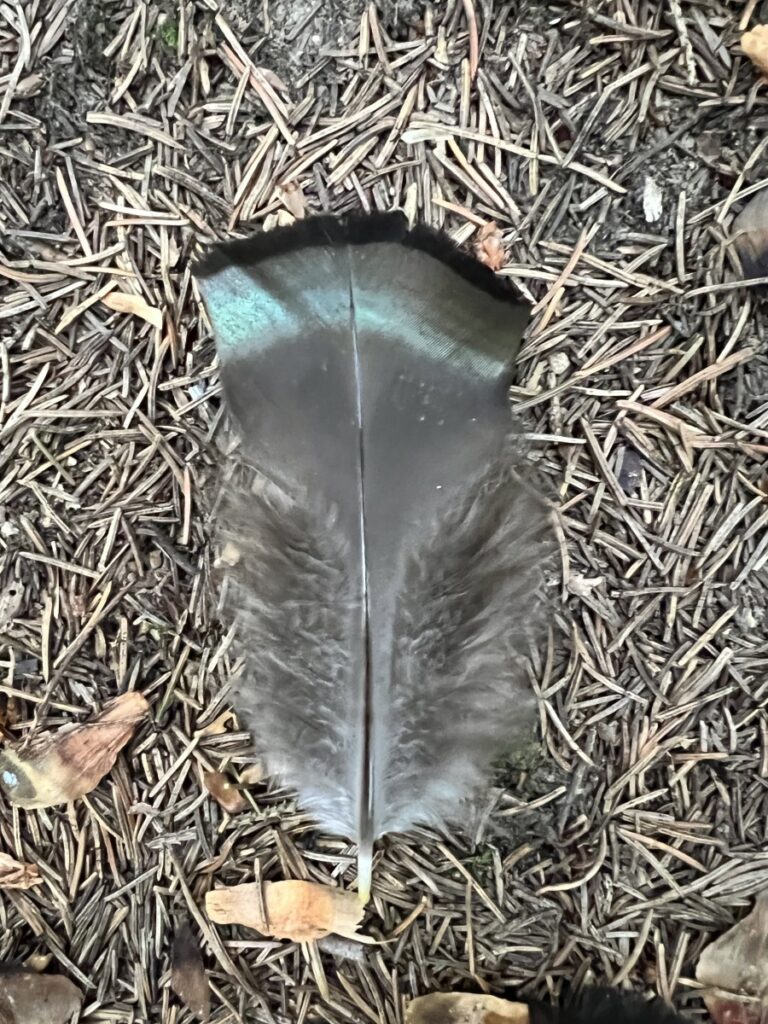
Whose feather is this, and what part of the body is it from?
Location: Western New York, USA Photo: Shane Hawkins This feather is not big enough or rigid enough for flight. With that colorful, oily-looking sheen at the tip, it is the body feather of a wild turkey.
-
Turkey sign ,bird feathers · New York, USA -
Turkey tracks and signs · New York, USA
-
-
Question 7 of 10 Intermediate
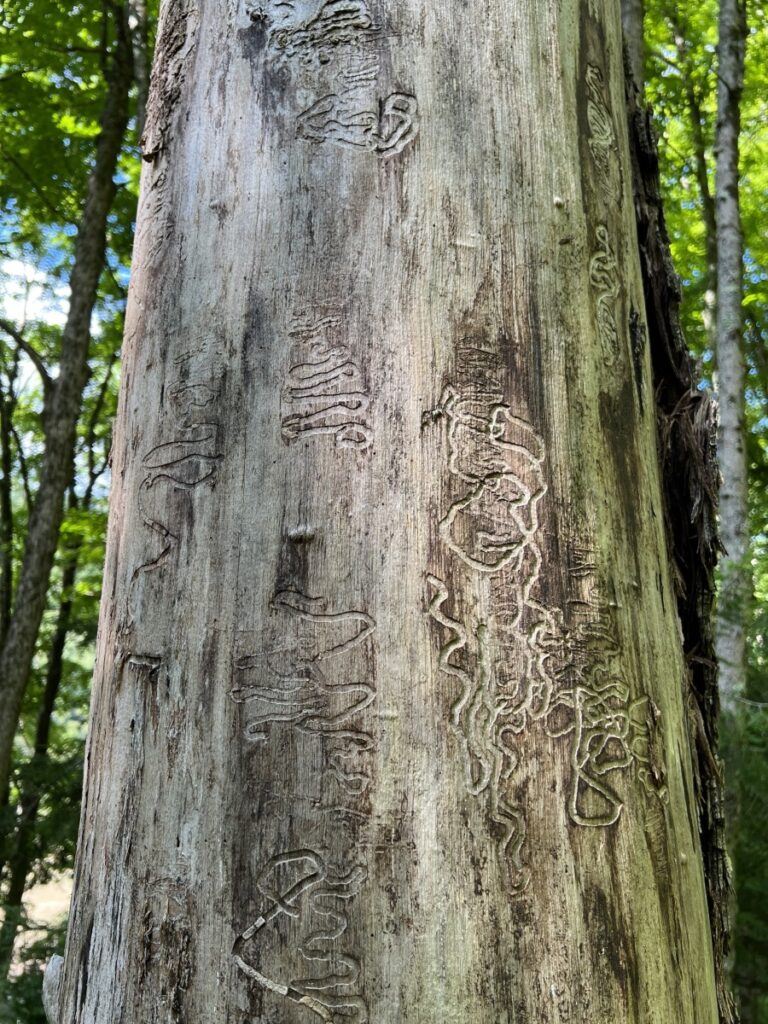
What made this sign on a green ash tree?
Location: Western New York, USA Photo: Shane Hawkins These are the larval tunnels, also called galleries, of the emerald ash borer. It is an Asian beetle that has become a significant pest of ash trees in North America. They are important to recognize, because they devastate entire swaths of ash forest.
-
Emerald ash borer beetle signs · New York, USA
-
-
Question 8 of 10 Advanced
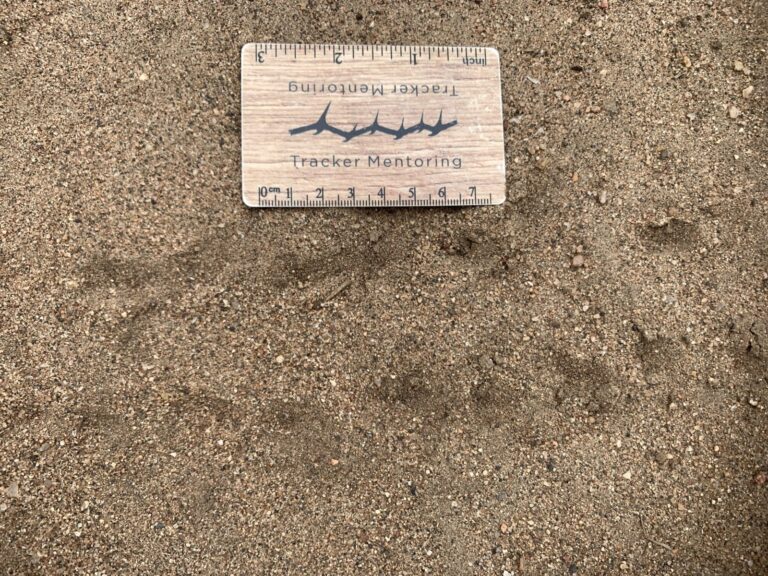
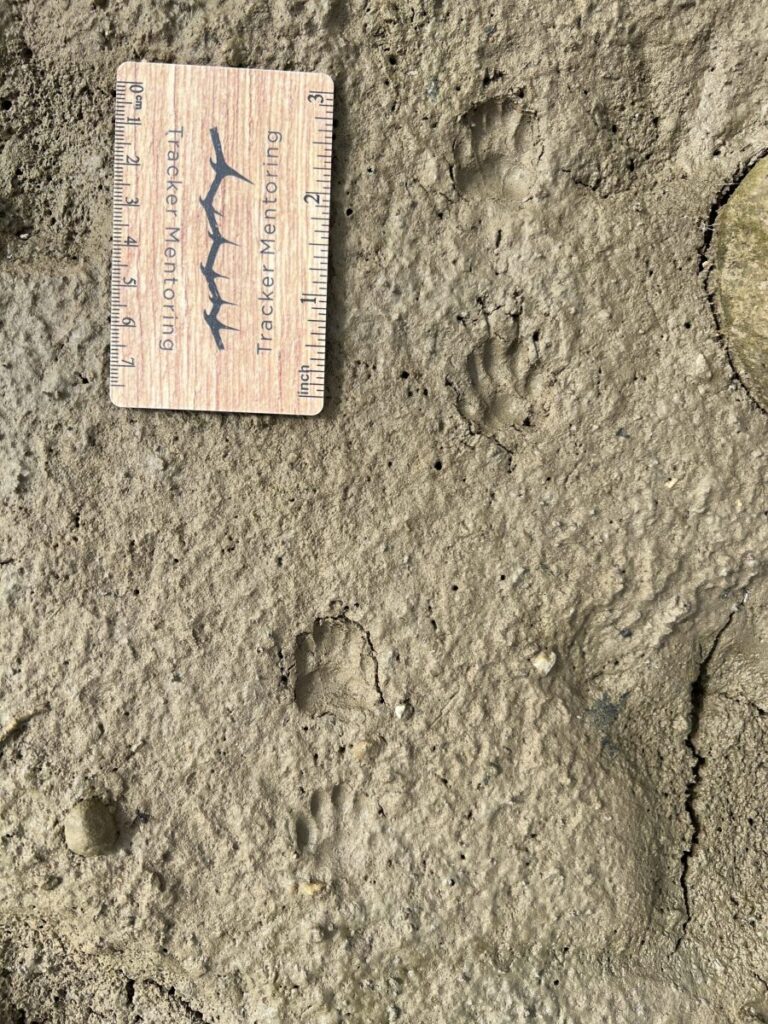
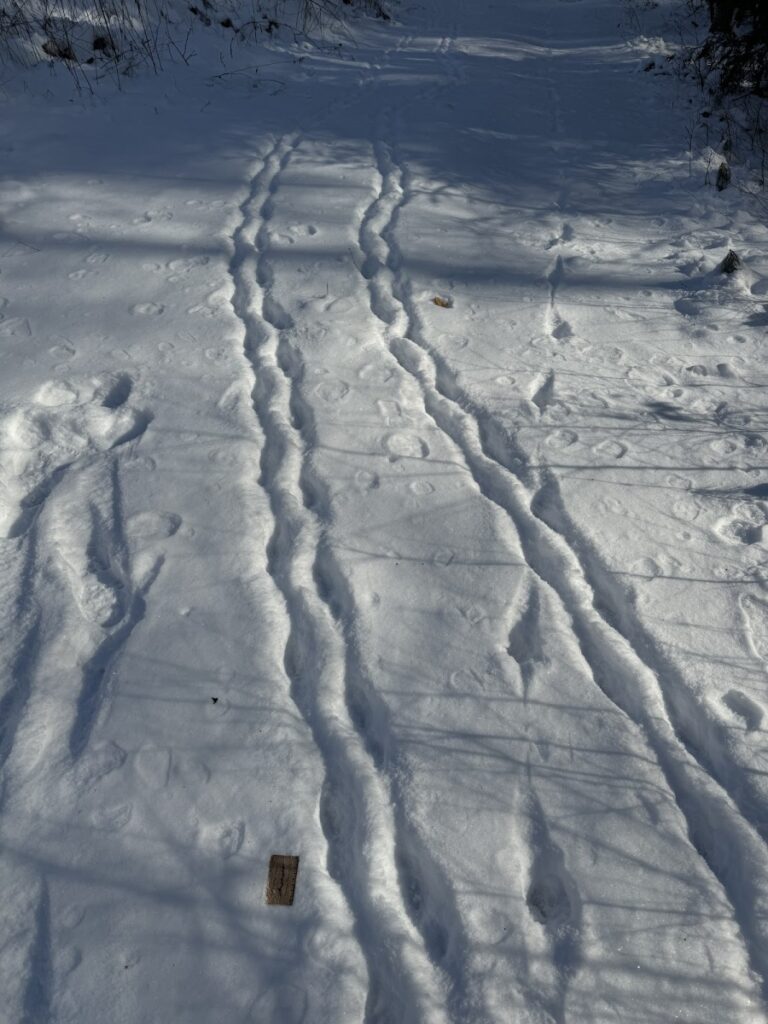
Who left these tracks?
Location: Northwestern Pennsylvania, USA Photo: Shane Hawkins These are the tracks of a striped skunk in an overstep walk. Going up from the bottom of the photo, the hind left oversteps the front left: FL, HL, FR, HR. Note the long digging claws on the front tracks.
-
Striped skunk tracks · Pennsylvania, USA
-
-
Question 9 of 10 Intermediate
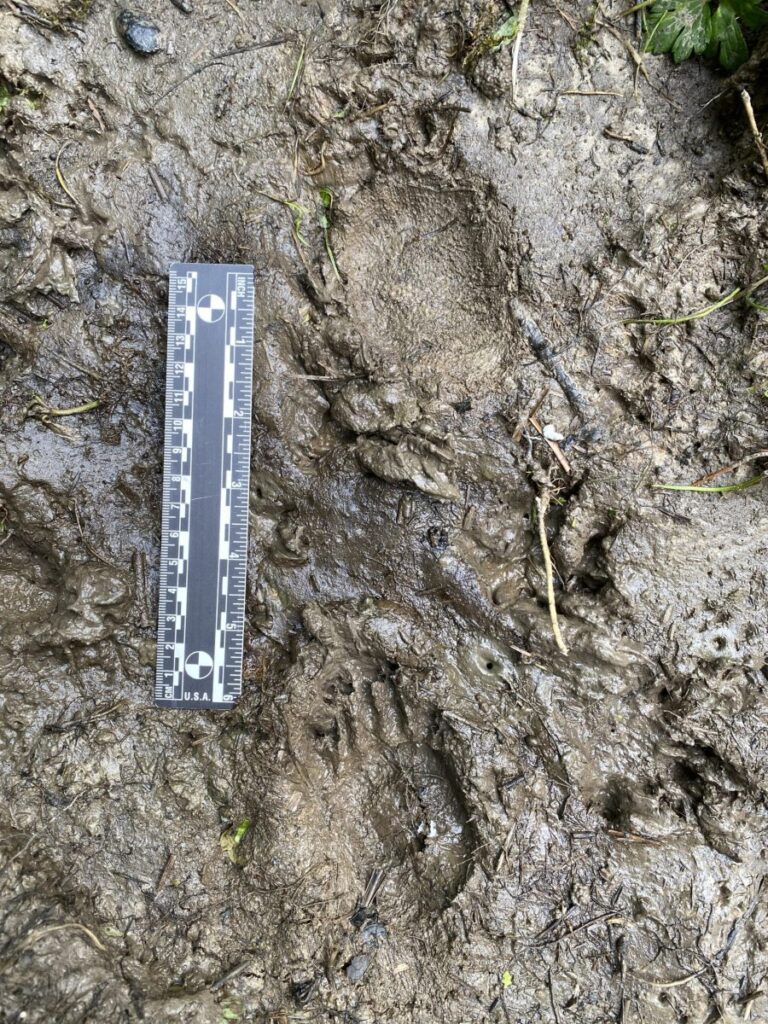
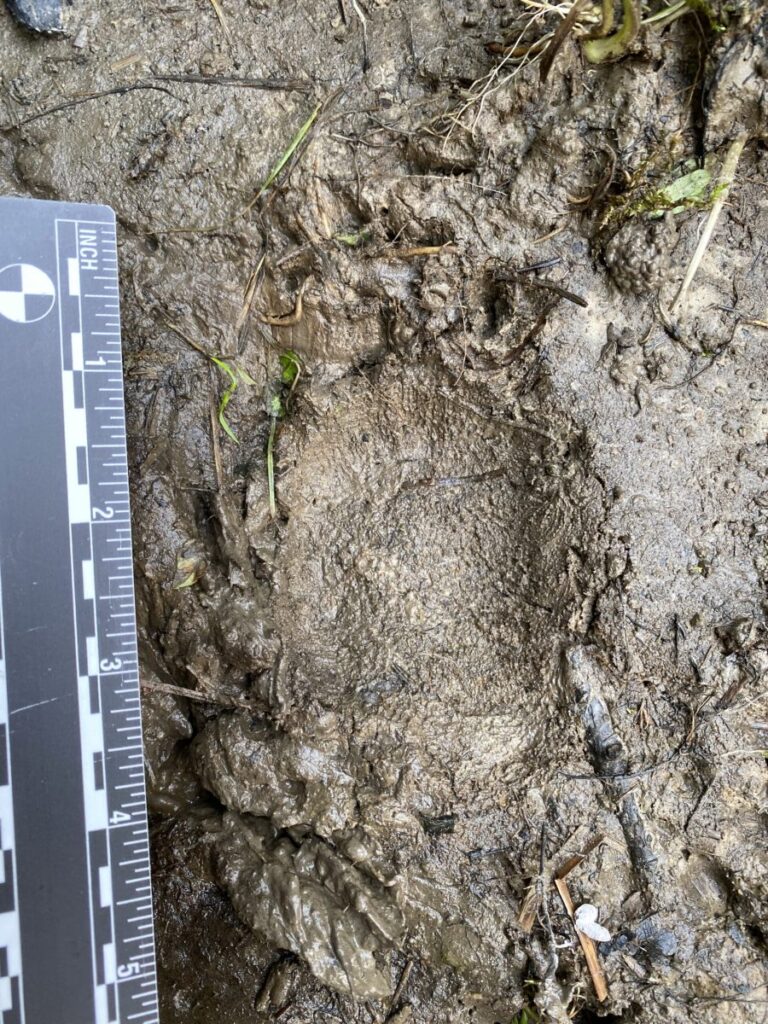
Who left this track?
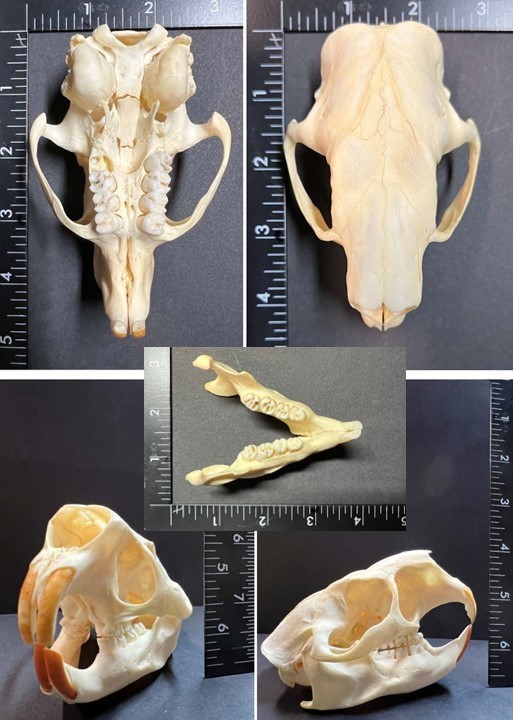
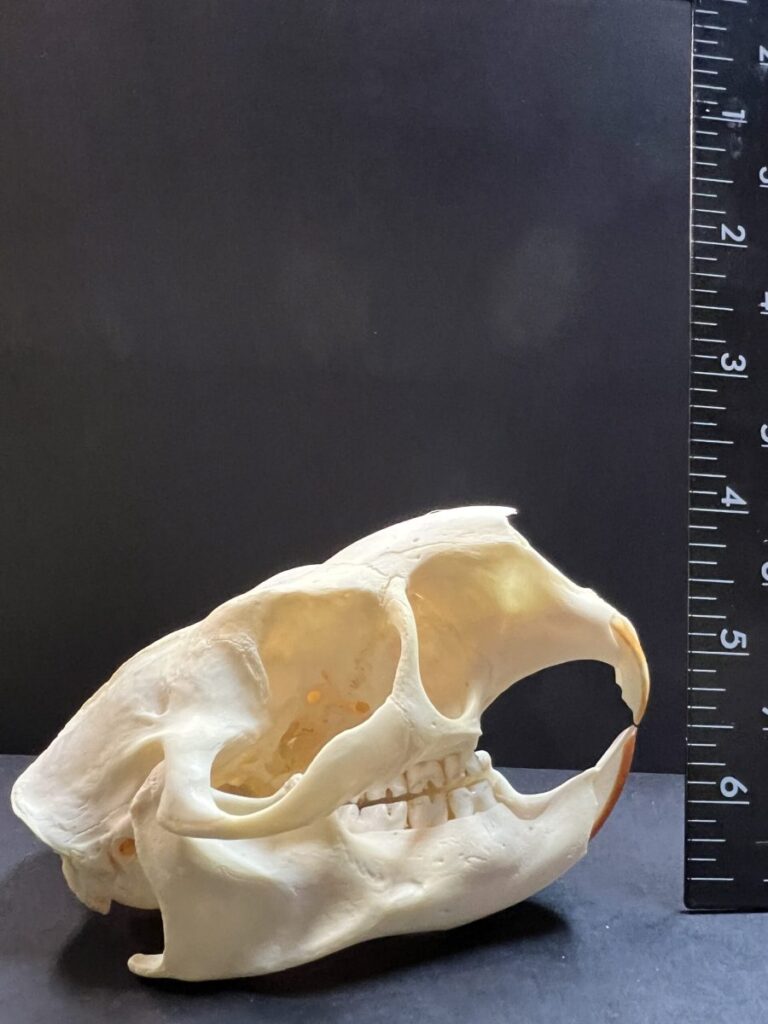
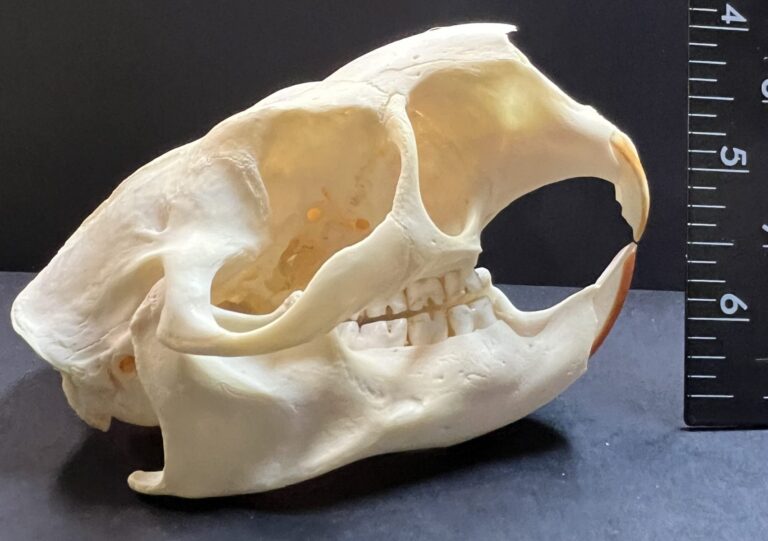
Location: Western New York, USA Photo: Shane Hawkins This is the track of a porcupine. Note the long claws for climbing and the absence of divided pads, lobing, or toes. The pebbled texture on the bottom of the foot is classic for North American porcupines, and very different from African porcupines.
-
North American porcupine skull and mandible, signs · New York, USA -
North American porcupine skull and mandible, signs · New York, USA -
North American porcupine skull and mandible, signs · New York, USA -
North American porcupine tracks · New York, USA -
North American porcupine tracks · New York, USA -
North American porcupine tracks in the snow in southern Vermont. · Vermont, USA
-
-
Question 10 of 10 Intermediate
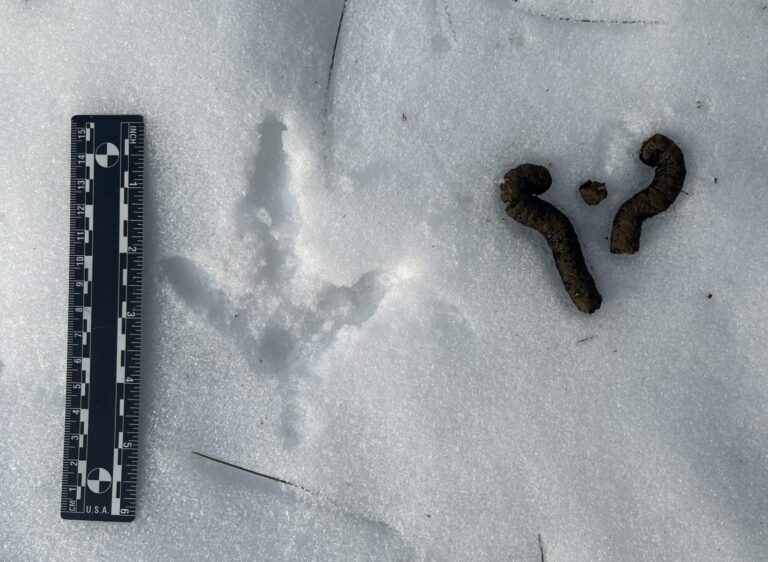
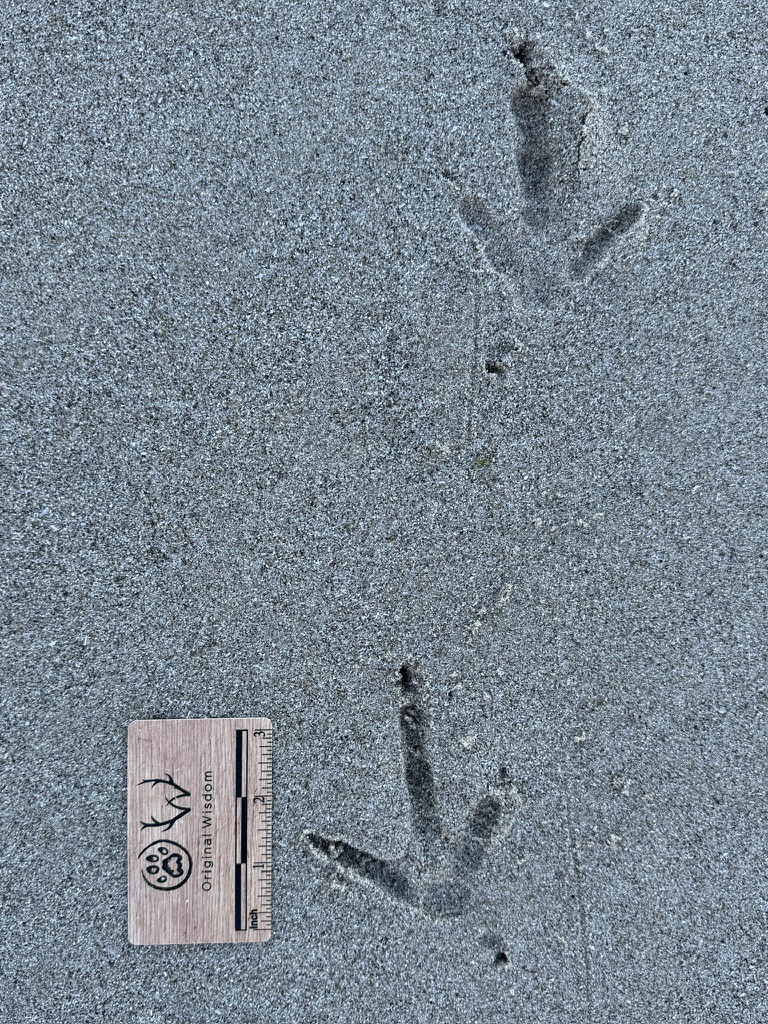
Who left these tracks?
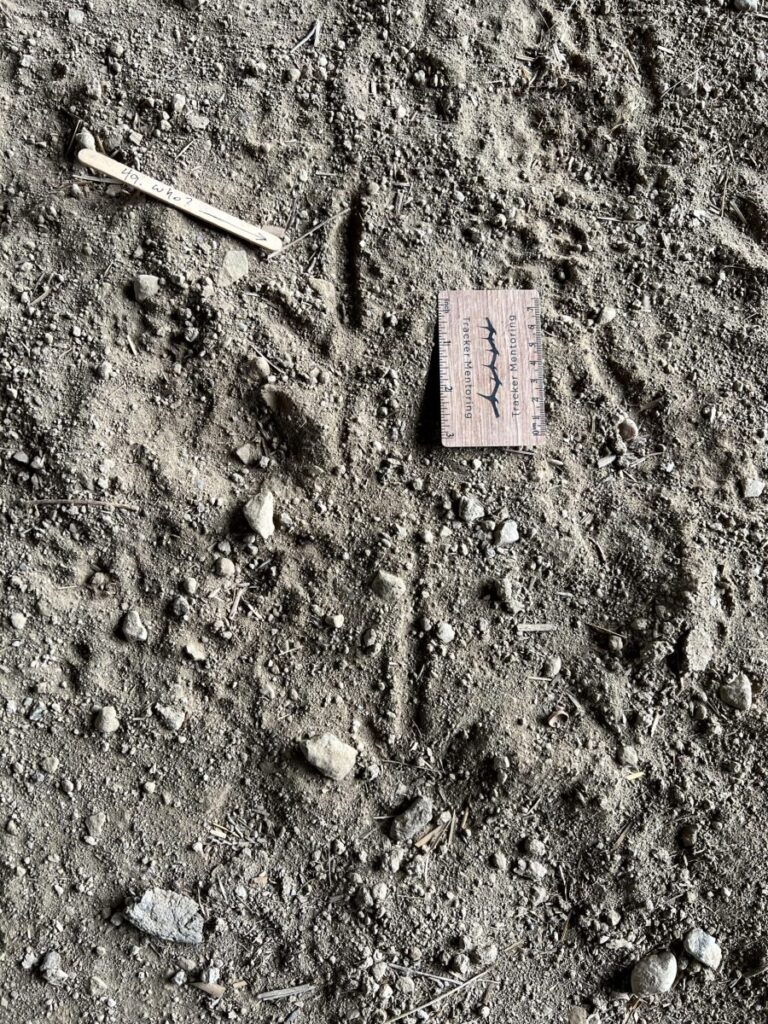
Location: Central Ohio, USA Photo: Shane Hawkins Note the very long central toe at the front of the foot, with 3 toes forward and 1 back in the classic anisodactyl foot of a bird. This bird is big and has robust claws. These are turkey vulture tracks.
-
Turkey vulture tracks · New York, USA -
Turkey vulture tracks
-
Your score
Answer every question to see your score. 10 to go.