October 2023 Quiz
There are 10 questions in this quiz, the first 5 are from the northeastern USA, and the second 5 are from South Africa. More exact locations are given with the individual questions.
Choose an answer under each photo to see straight away whether you are right, with a note on what to look for. Your score is at the end.
Choosing an answer shows the result at once. With a keyboard, use the arrow keys to move between answers and press Enter to choose.
-
Question 1 of 10 Advanced
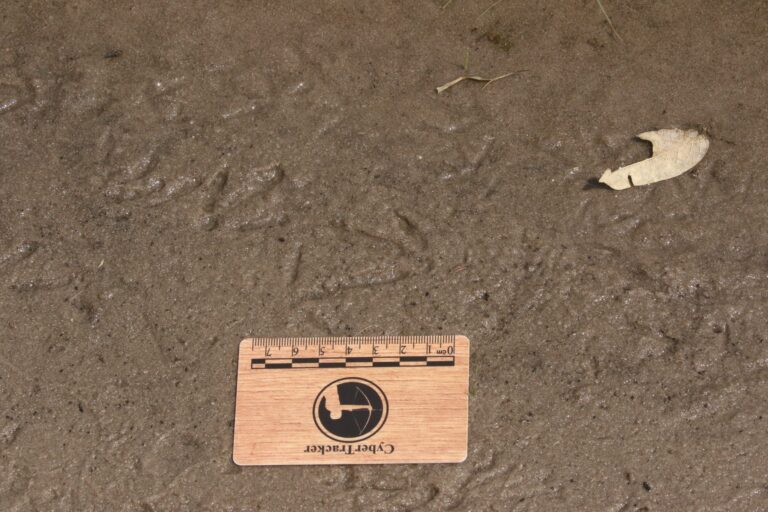
Who left these tracks?
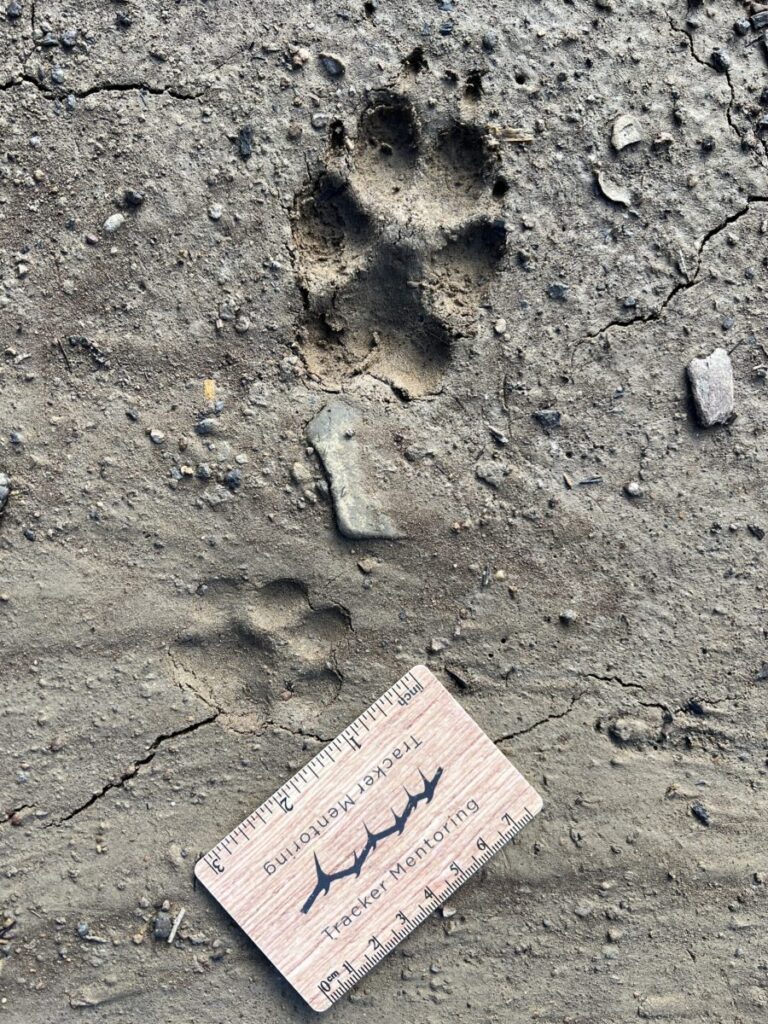
Location: Southwestern New York, USA Photo: Shane Hawkins Many people got to some kind of canine. Melinda measured the front foot at just about 2 inches and the hind at about 1 3/4 inches, with 4 toes, X-shaped negative space, fur and no claws, about the right size for red fox but without a clear chevron in the heel pads. Shane, who took the photo on the Allegheny mud-flats, explained her logic for grey fox, Kersey first called it red fox, and Sandy first called it coyote, though the tracks are too small for most coyotes. Looking again, Kersey could see grey fox features (H-shaped negative space, large-ish toes, small claws) and accept grey fox, but everyone agreed they were not 100% sure. It is a good example of the care it takes to choose a representative photo for a quiz.
-
Question 2 of 10 Advanced
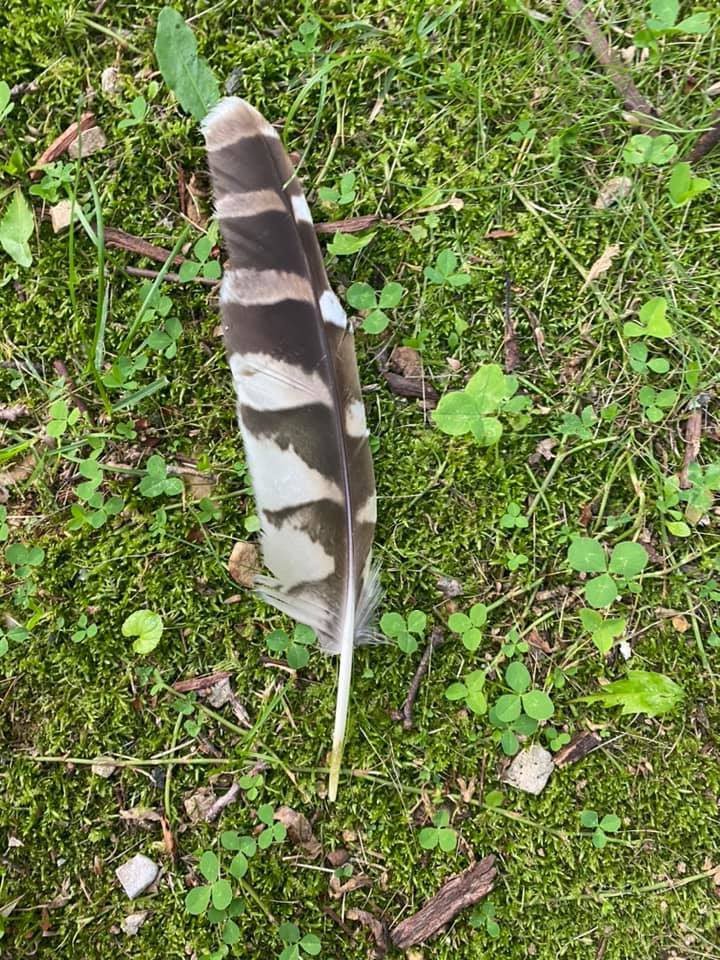
Whose feather is this, and where on the body is it from?
Location: Southwestern New York, USA Photo: Shane Hawkins The soft edges of this feather should lead you towards an owl. Owl feathers are soft to decrease noise as they fly to catch prey, while turkeys, buzzards, pheasants and goshawks have crisper edges. The emargination of the narrower side and the big difference in width on each side of the rachis tell us it is a primary wing feather. Angled to aim the shorter edge into the wind, this is a left primary wing feather of a barred owl.
-

Bird feathers, owl signs · New York, USA
-
-
Question 3 of 10 Intermediate
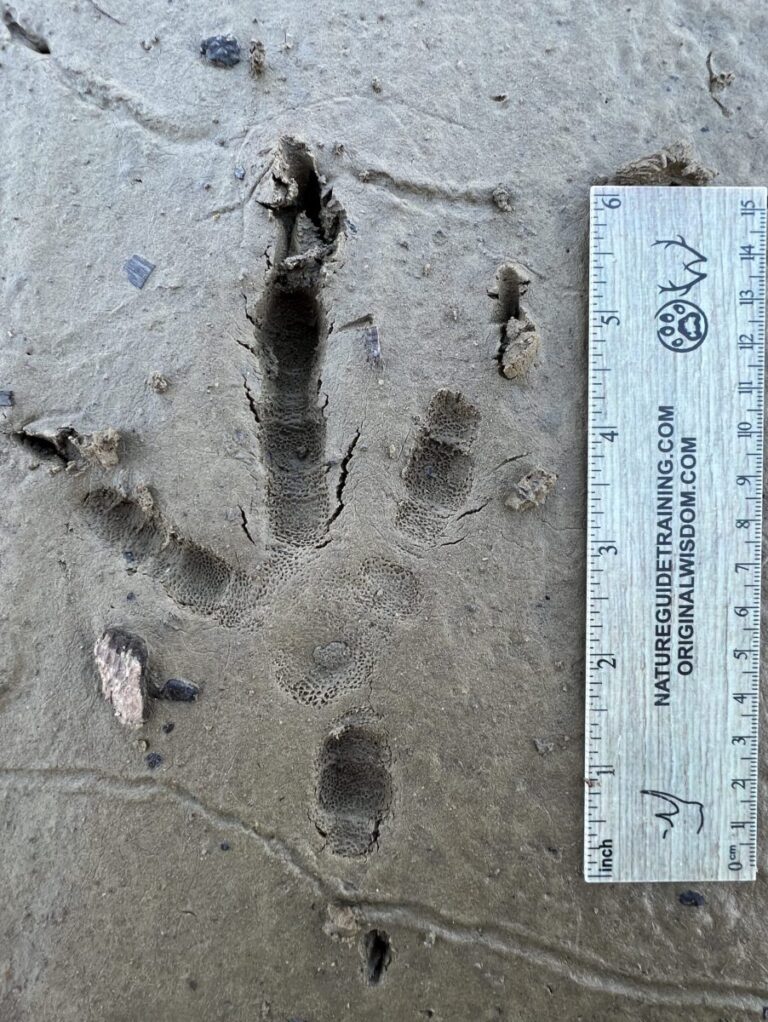
Who left this big bird track?
Location: Southwestern New York, USA Photo: Shane Hawkins Look at the pebbling in this big bird track! Including claws it is longer than the 6 inch ruler, and the very big, very sharp claws show a bird that catches prey. Pete, Erin and Mark all got bald eagle. Heron tracks are big too, but they lack these long, robust claws and have longer, thinner toes with a long hallux.
-
Bird tracks, Bald eagle · New York, USA
-
-
Question 4 of 10 Beginner
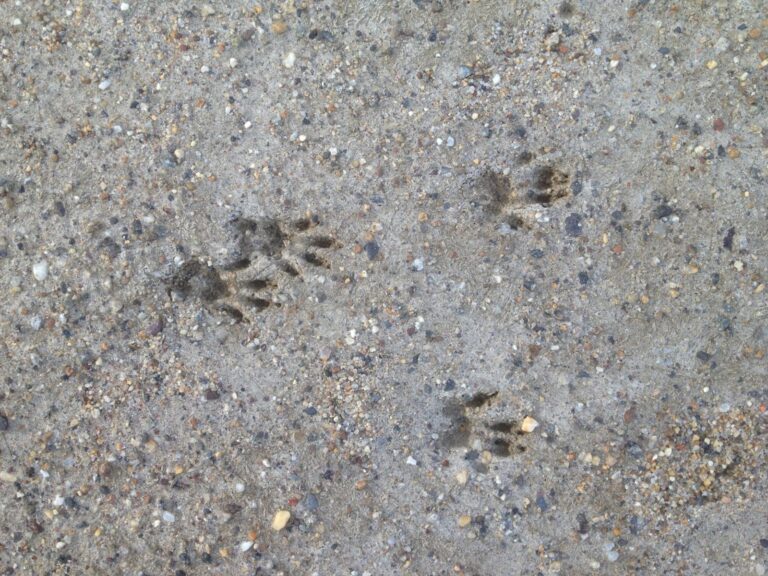
Who left these tracks, and how was it moving?
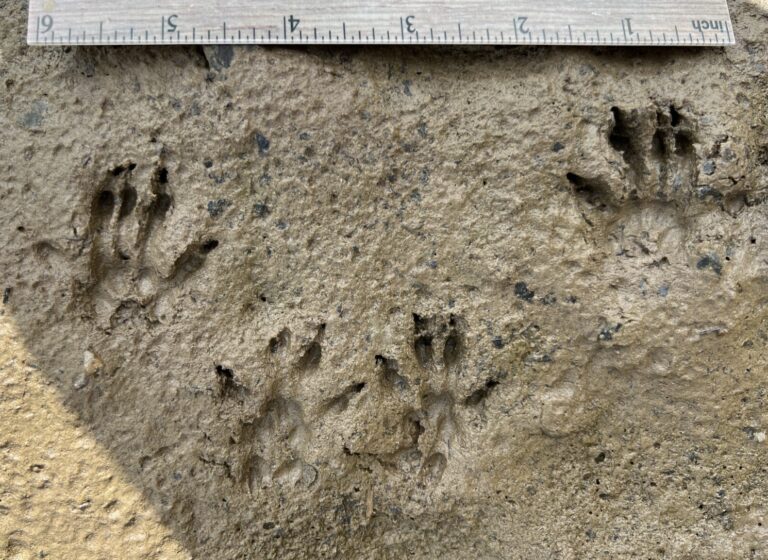
Location: Southwestern New York, USA Photo: Shane Hawkins Pete described a squirrel pattern: two hind feet at the top with a 1-3-1 toe pattern, and front feet at the bottom with 4 toes each, sharp claws and 5 round palm pads. He guessed grey squirrel from the large size. This is a slow bounding pattern from a grey squirrel. Juca was sure too: “If it is not a squirrel I will retire from this thing.”
-
Squirrel tracks -
Bobcats, squirrel tracks -
Squirrel tracks -
Squirrel tracks · New York, USA
-
-
Question 5 of 10 Advanced
Who left this scat?
Location: Southwestern New York, USA Photo: Shane Hawkins No one got this one, probably because it is a little atypical. The content looks like fur and the black color indicates a meat diet. The glossy sheen points to cat, and the fur, size, and the fact that it is unburied lead us towards bobcat in southwestern New York. Domestic or feral cats often bury or half-bury their scats.
-
Coyote and Bobcat tracks · Jamestown, New York, USA
-
-
Question 6 of 10 Beginner
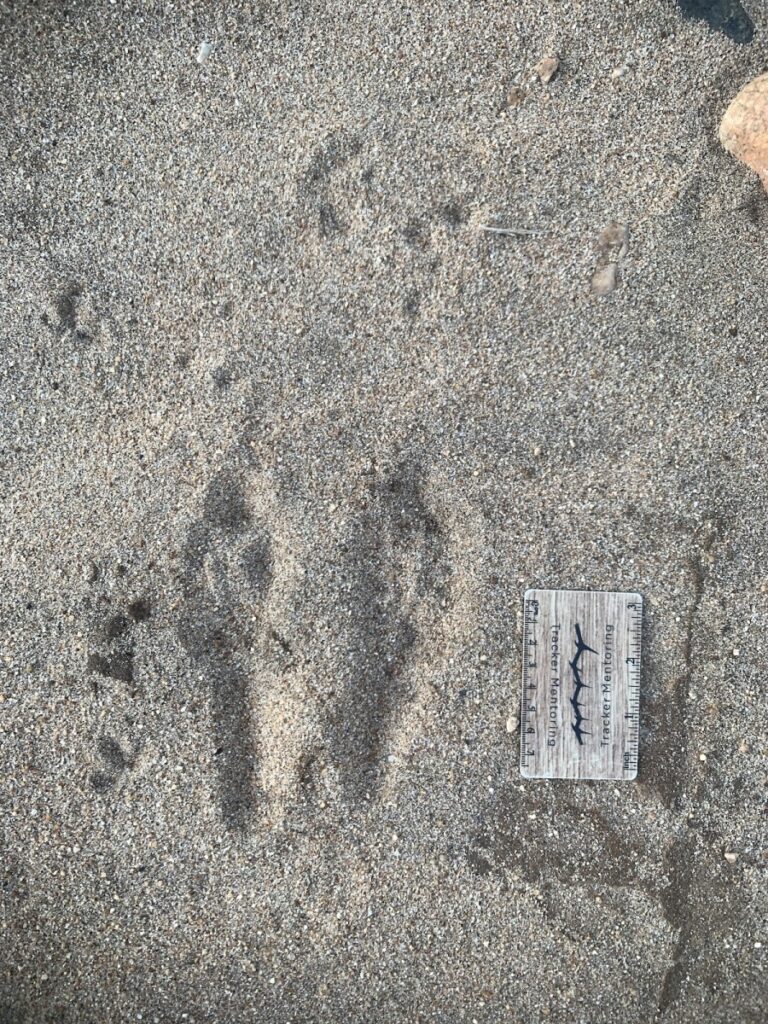
Who left this track?
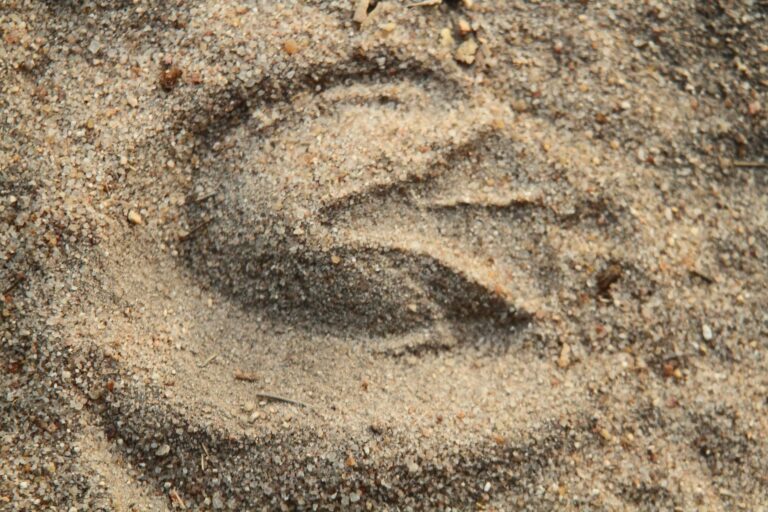
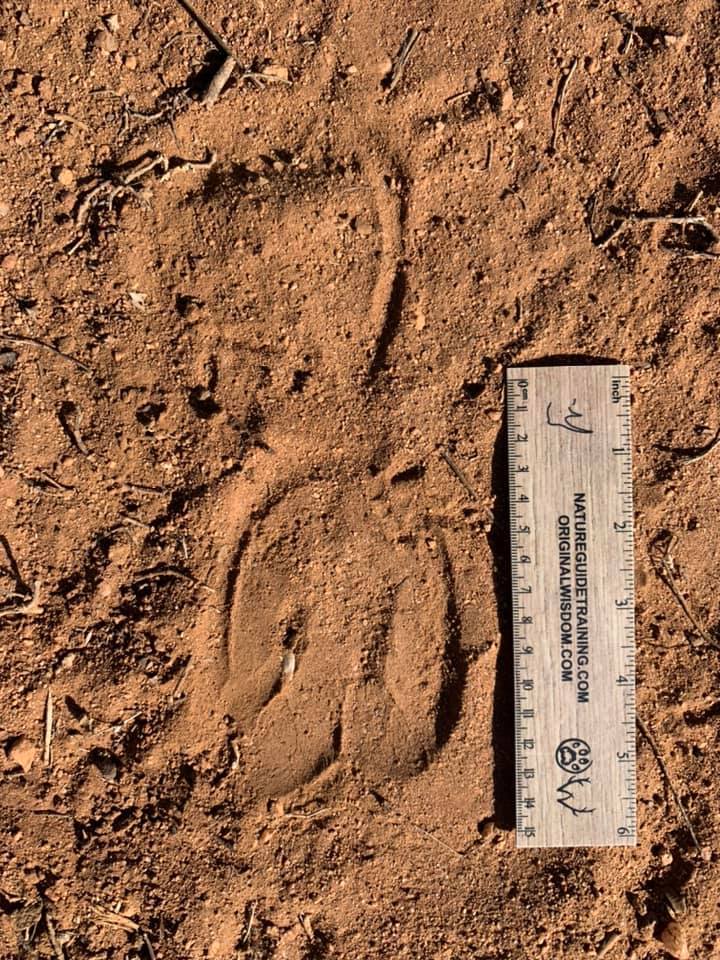
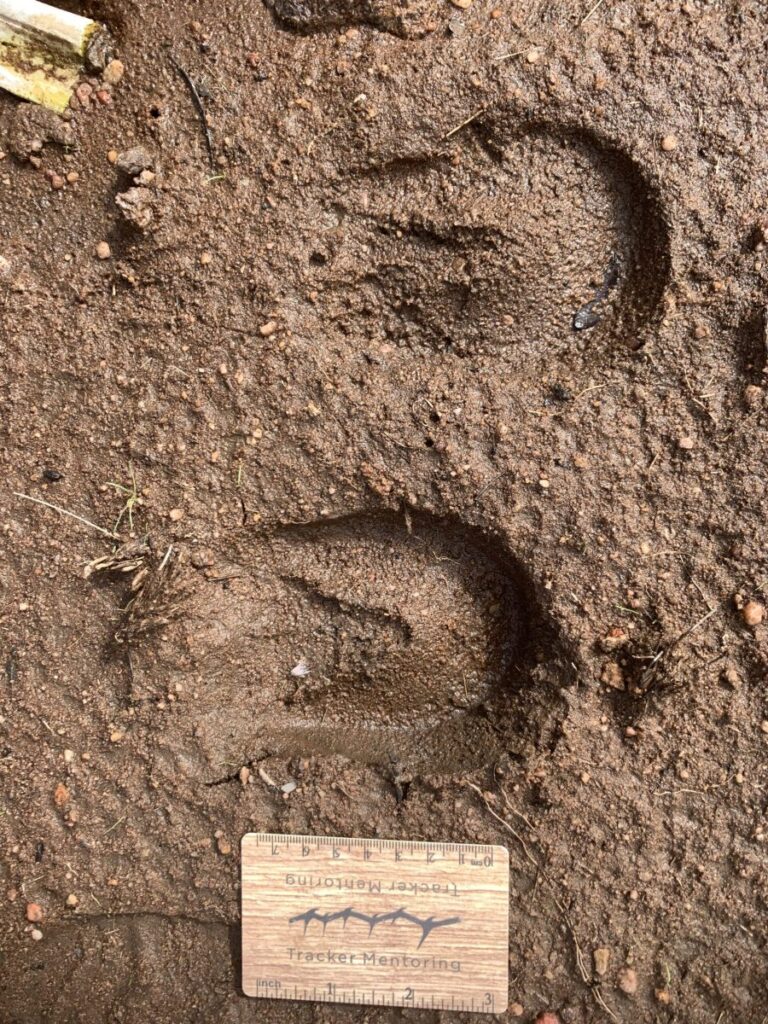
Location: Welgevonden Nature Reserve, Waterberg, South Africa Photo: Kersey Lawrence It is a single-toed, hoofed animal in Africa, and there is only one wild species there. Erin described a rounded, rainbow-shaped leading edge with a triangular wedge at the back, like the frog on a horse's foot. Mix added that it looks horse-like but smaller than a horse. Trail riding horses on some reserves leave much bigger tracks.
-
Zebra track · South Africa -
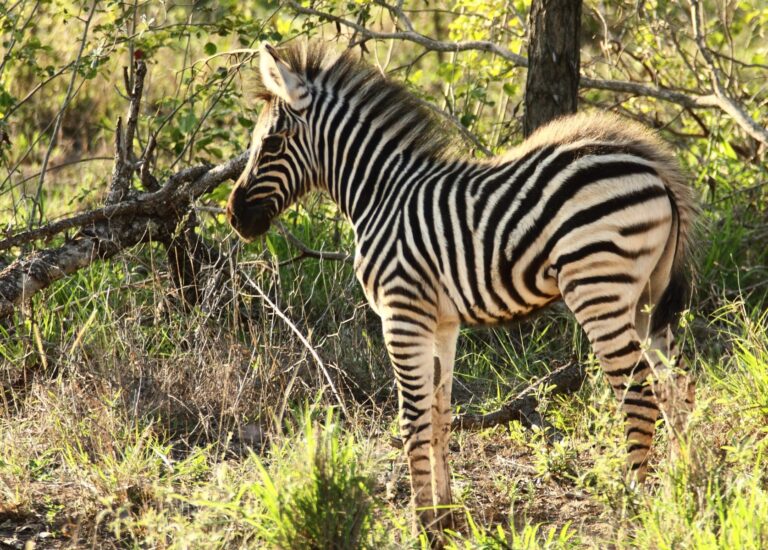
A zebra foal · South Africa -
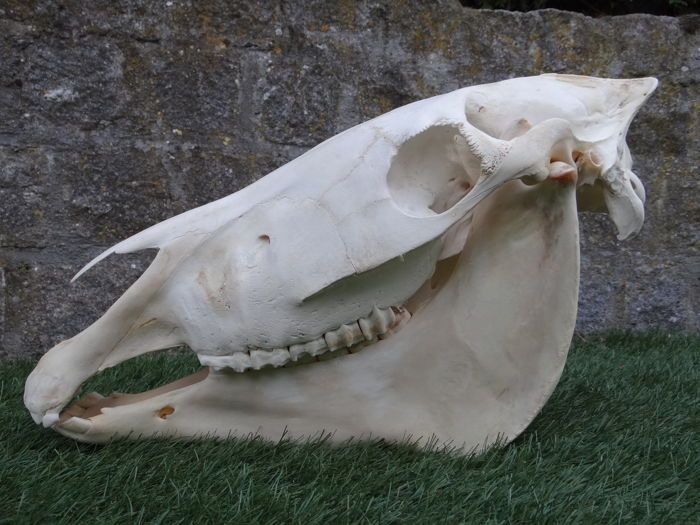
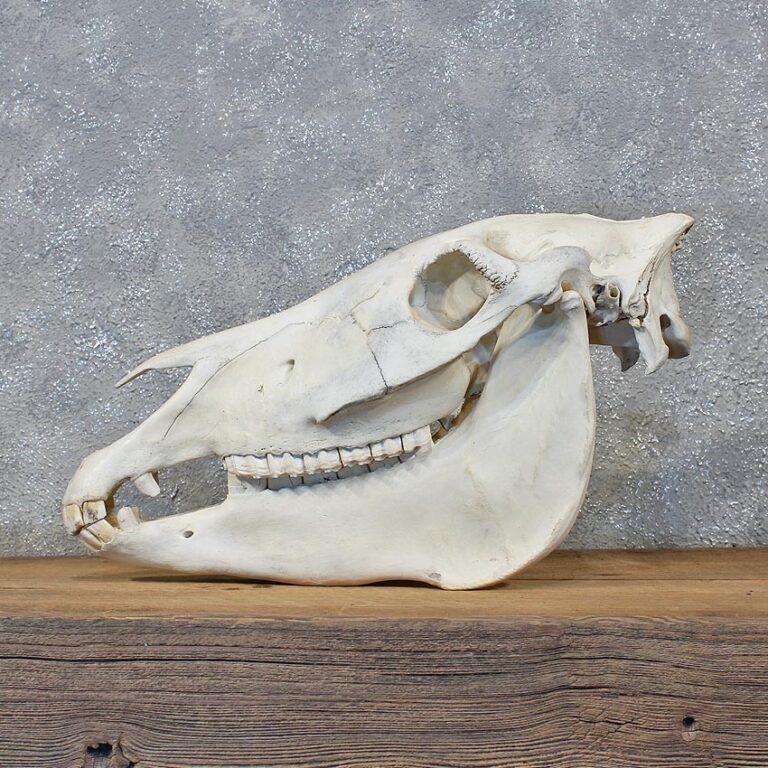
Zebra skull and mandible, signs · South Africa -
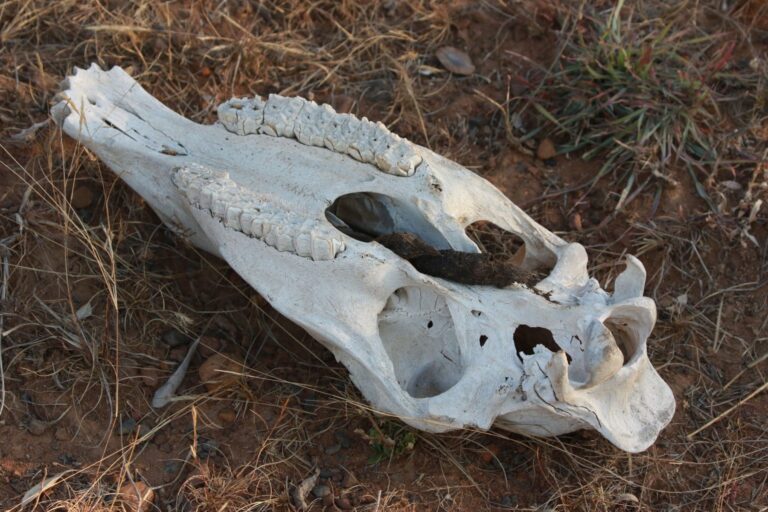
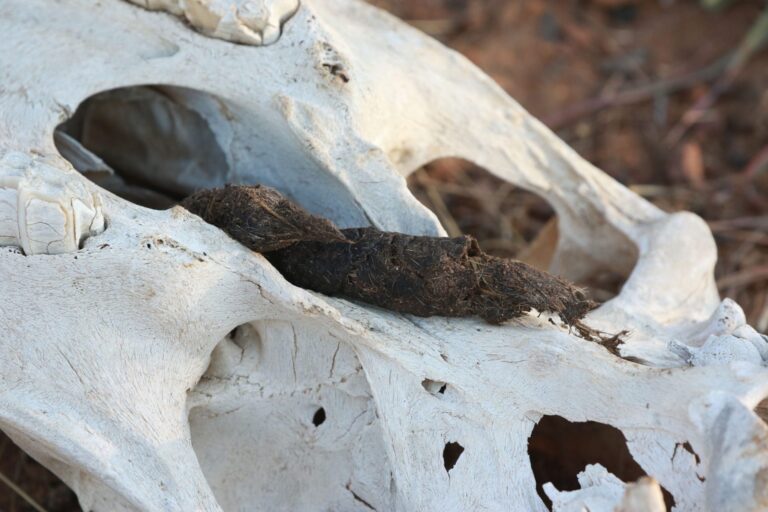
Zebra skull, signs, black-backed jackal scat · South Africa -
Zebra skull, signs, black-backed jackal scat · South Africa -
Zebra skull and mandible, signs · South Africa -
Zebra tracks · South Africa -
Zebra tracks · South Africa -
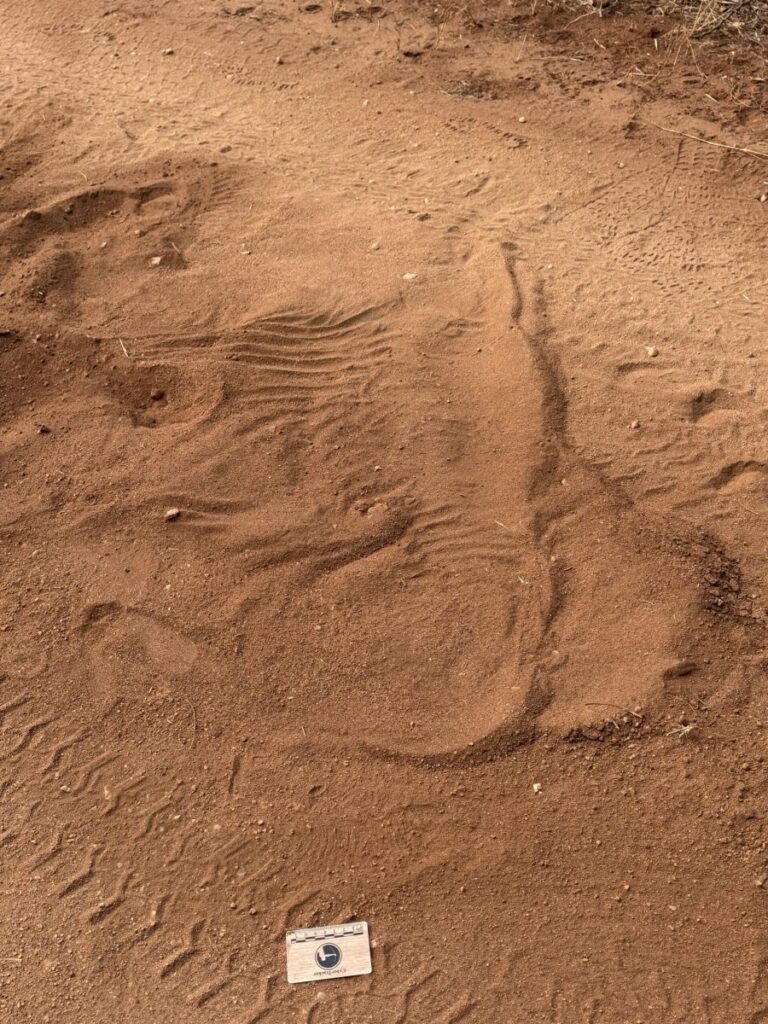
Zebra roll · South Africa
-
-
Question 7 of 10 Intermediate
What is this?
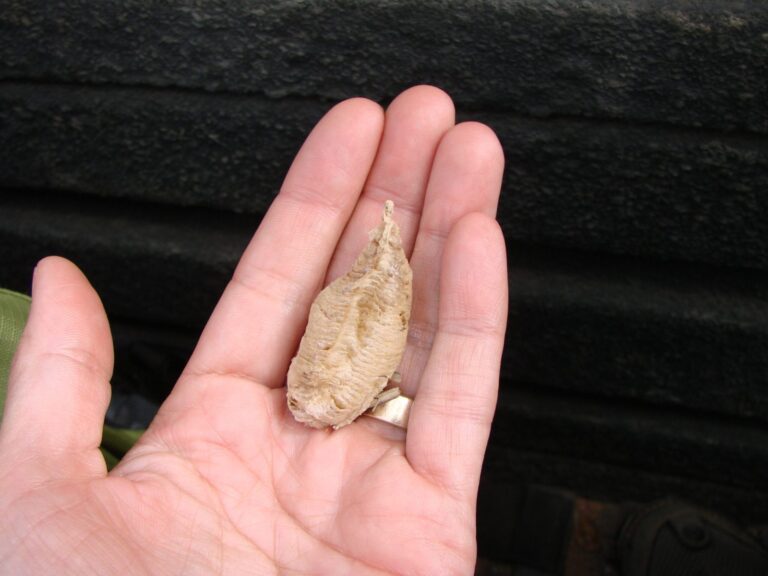
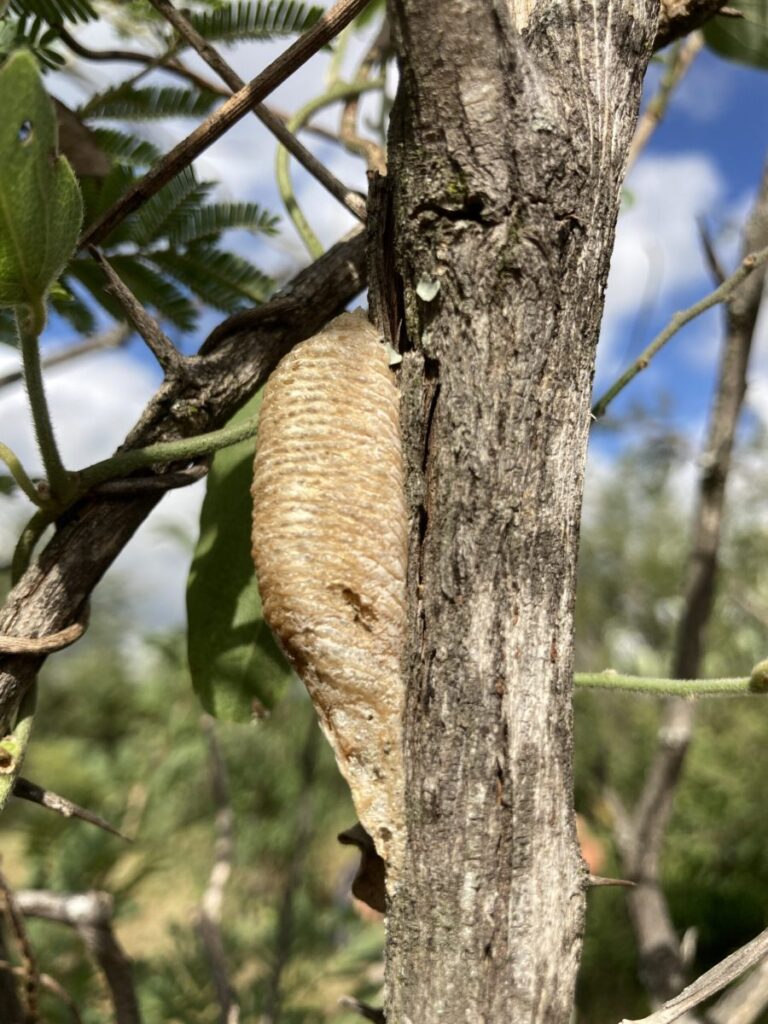
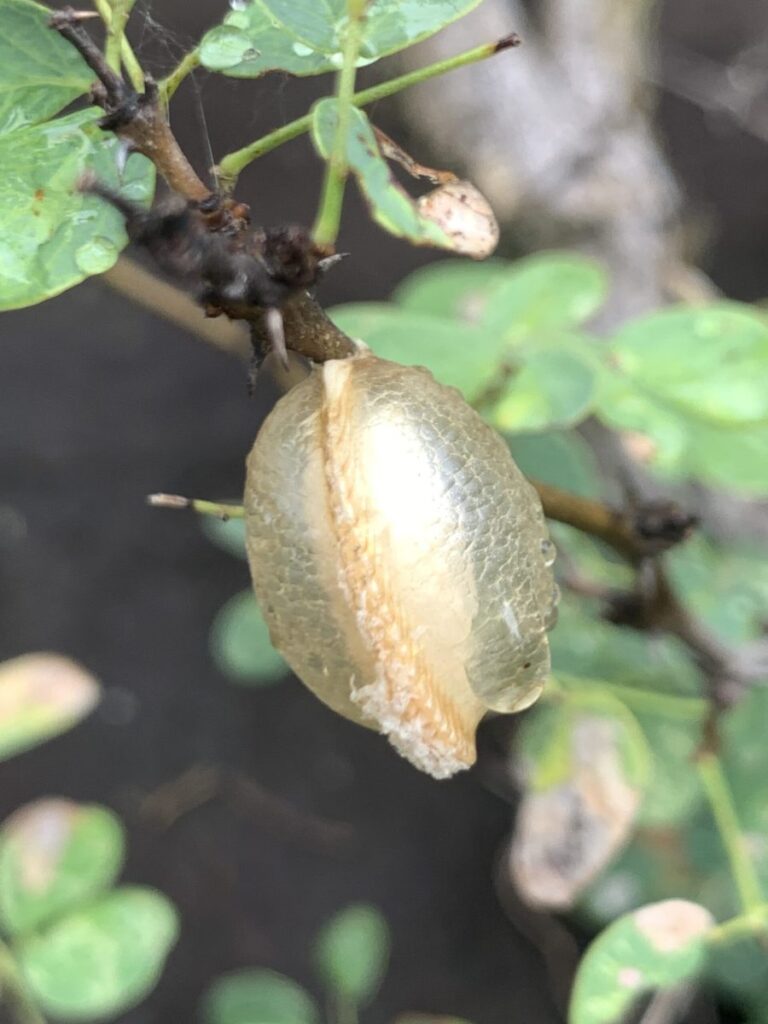
Location: South Africa Photo: Kersey Lawrence Juca, Erin, Brad, Justine, Mark, and Melinda all got this one. It is a praying mantis ootheca from a large green mantid. Each overlapping fin is a chamber in the hardened foam, and the female lays one egg in each chamber. Hatchlings emerge through small holes along a seam down the middle, but oothecas are often predated, especially by birds, and appear ripped open like this one. They are common across the world, so it is a good one to know.
-
Praying mantis ootheca, signs · South Africa -
Praying mantis ootheca, signs · South Africa -
Praying mantis ootheca, signs · South Africa
-
-
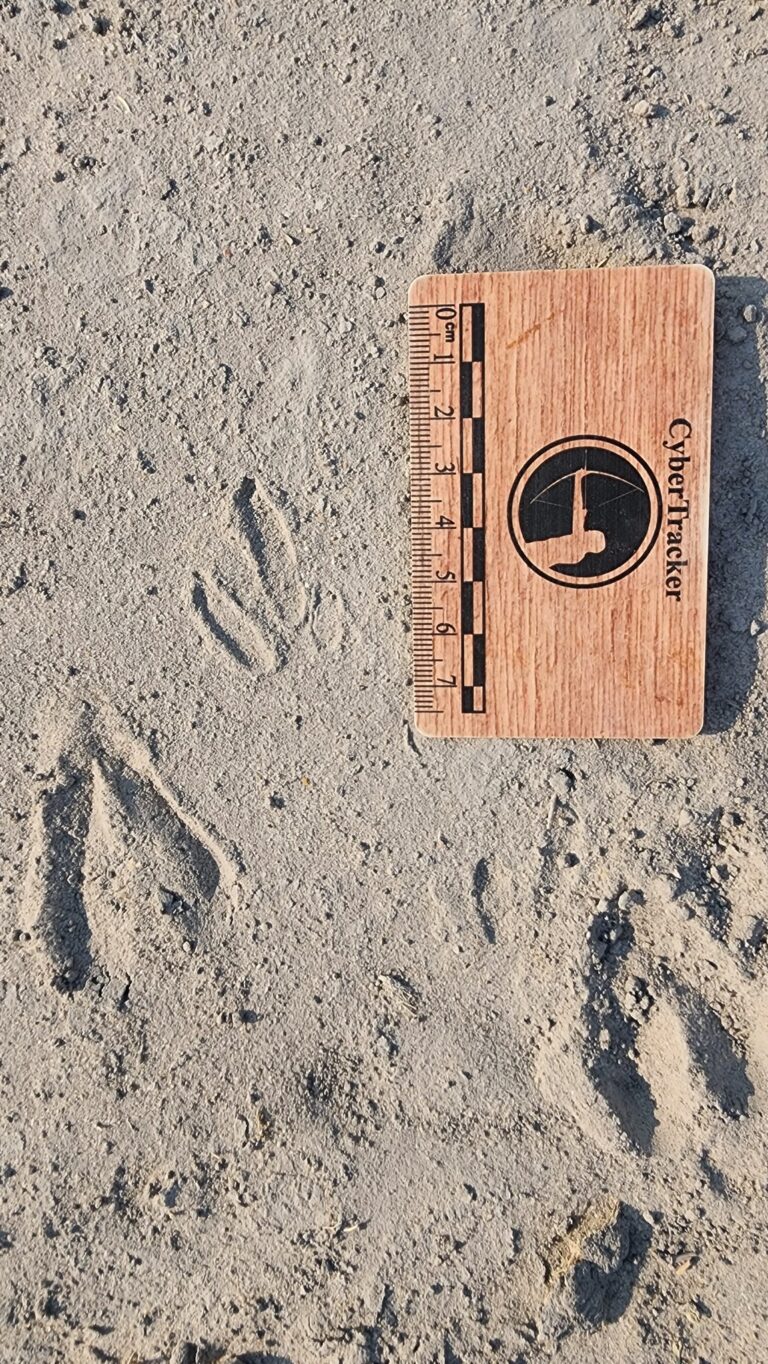
Question 8 of 10 Advanced
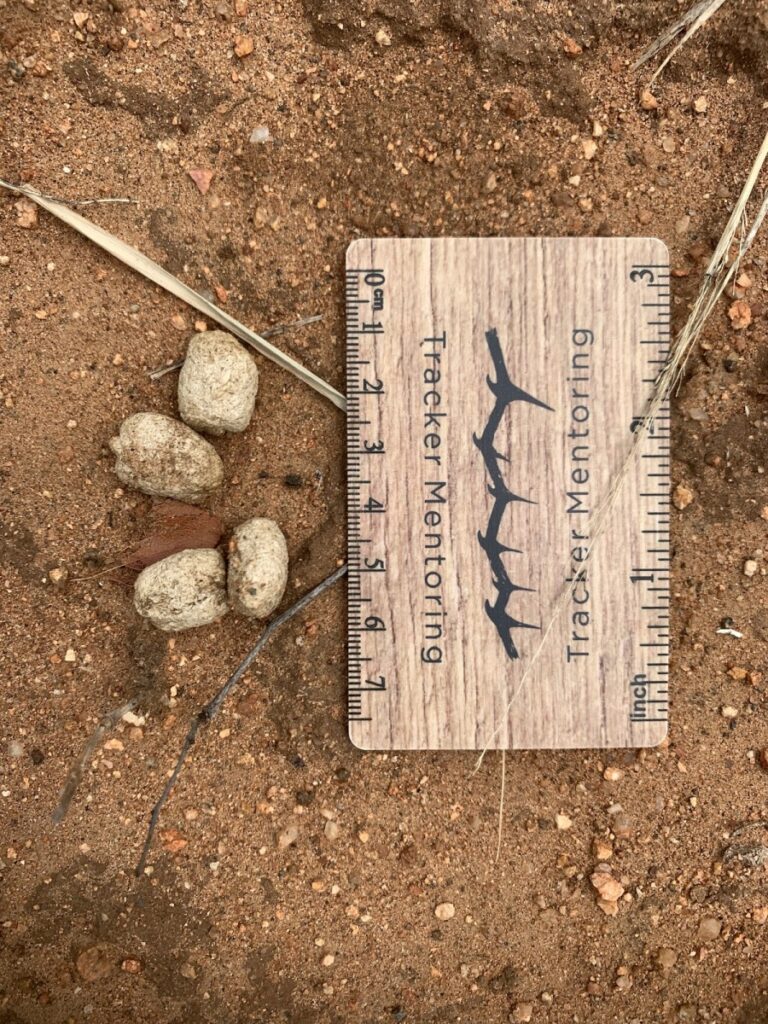
Who left these pellets?
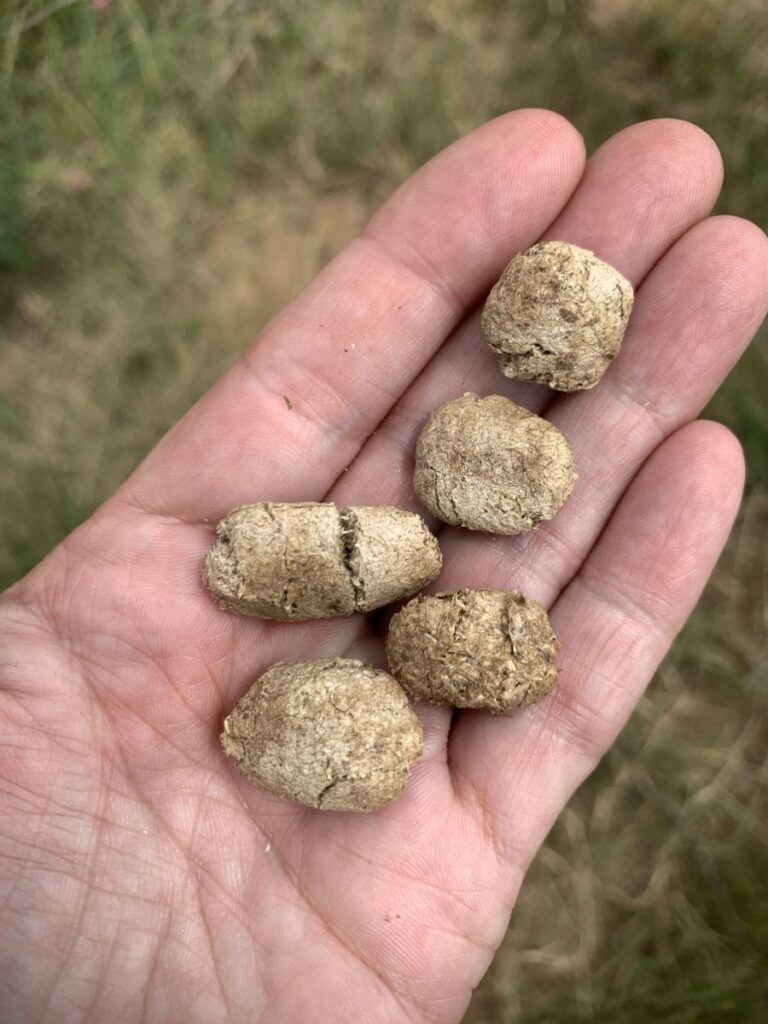
Location: South Africa Photo: Kersey Lawrence This is an herbivore, since we can see vegetation in the pellets, but not a ruminant, because large particles are still visible. Scrub hare was a great guess, but scrub hare scats look like flattened, circular, yellow candies, and these are bigger, longer and more rectangular. Lee describes them as “little suitcases.” Juca and Mix got this one: springhares are not lagomorphs but large rodents that live in communal burrows and move in a bipedal hop.
-
Southern Springharescat, signs · South Africa -
Springhare Tracks · Kalahari, Namibia -
Springhare, Greater Kruger Region of South Africa, Kersey Lawrence · South Africa
-
-
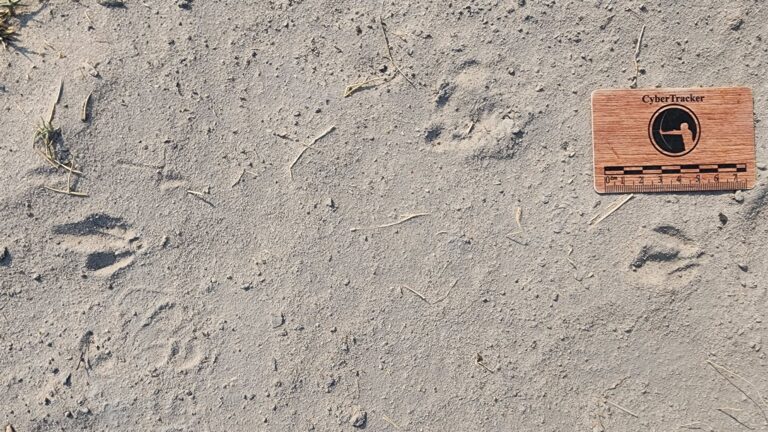
Question 9 of 10 Beginner
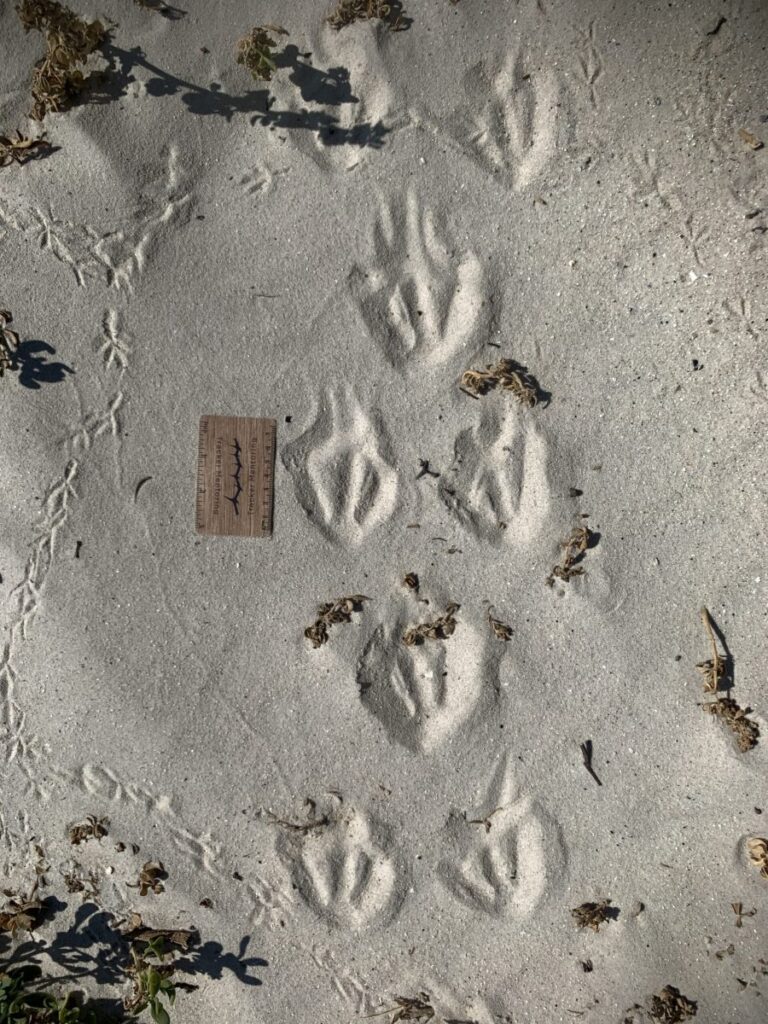
Who left these big webbed tracks?
Location: Boulders Beach, Cape Town, South Africa Photo: Kersey Lawrence These big bird tracks have a prominent metatarsal pad and webbing. Erin got it, noting webbed swimming bird feet and the stride of an animal with short legs, and Brad, Justine, Mix and Mark also came to penguin. Pete's logic came close too. The smaller bird tracks that many people noticed were from a wagtail, probably at least two of them.
-
Penguin tracks · South Africa
-
-
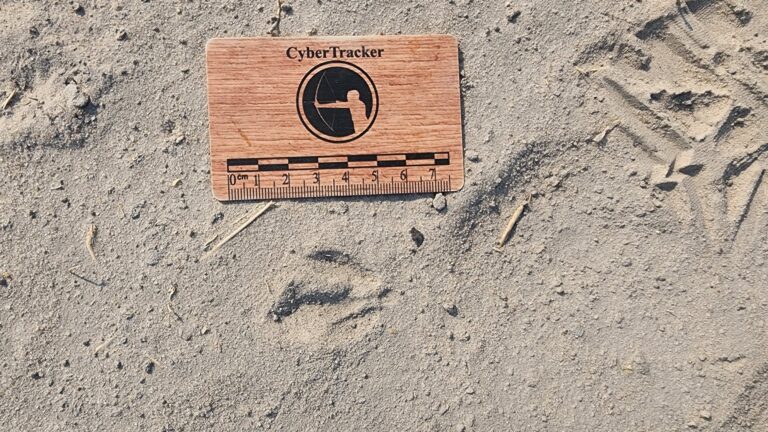
Question 10 of 10 Advanced
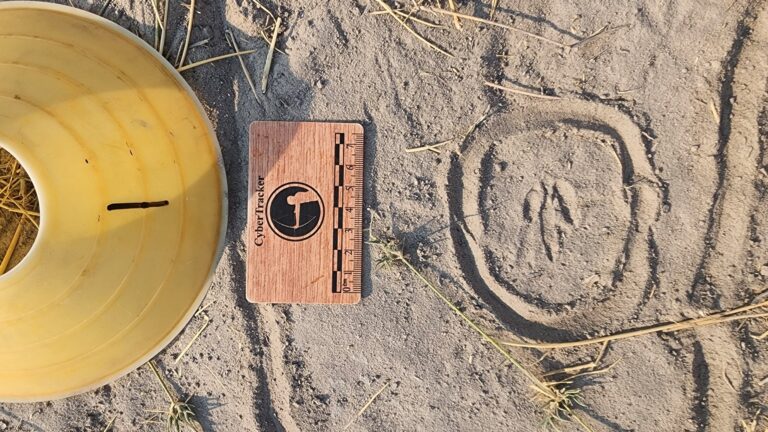
Who left this track?
Location: Boulders Beach, Cape Town, South Africa Photo: Kersey Lawrence Justene got this one, with three toes forward and a small round pad. Kersey remembers these as water thick-knee tracks, which are very similar to spotted thick-knee tracks, so thick-knee is a good answer. Melinda measured 4.4 cm, with robust, segmented toes, no hallux, and possible slight webbing between toes 3 and 4. That slight webbing near the metatarsal pad shows prominently in thick-knee tracks. In South Africa they are also called dikkops, meaning “fat head” in Afrikaans.
-
Water thick-knee tracks · North-West District, Botswana -
Water thick-knee tracks · North-West District, Botswana -
Water thick-knee tracks · North-West District, Botswana -
Water thick-knee tracks showing stride length · North-West District, Botswana -
Water thick-knee tracks
-

Your score
Answer every question to see your score. 10 to go.