
June 2025 Quiz
Choose an answer under each photo to see straight away whether you are right, with a note on what to look for. Your score is at the end.
Choosing an answer shows the result at once. With a keyboard, use the arrow keys to move between answers and press Enter to choose.
-
Question 1 of 2
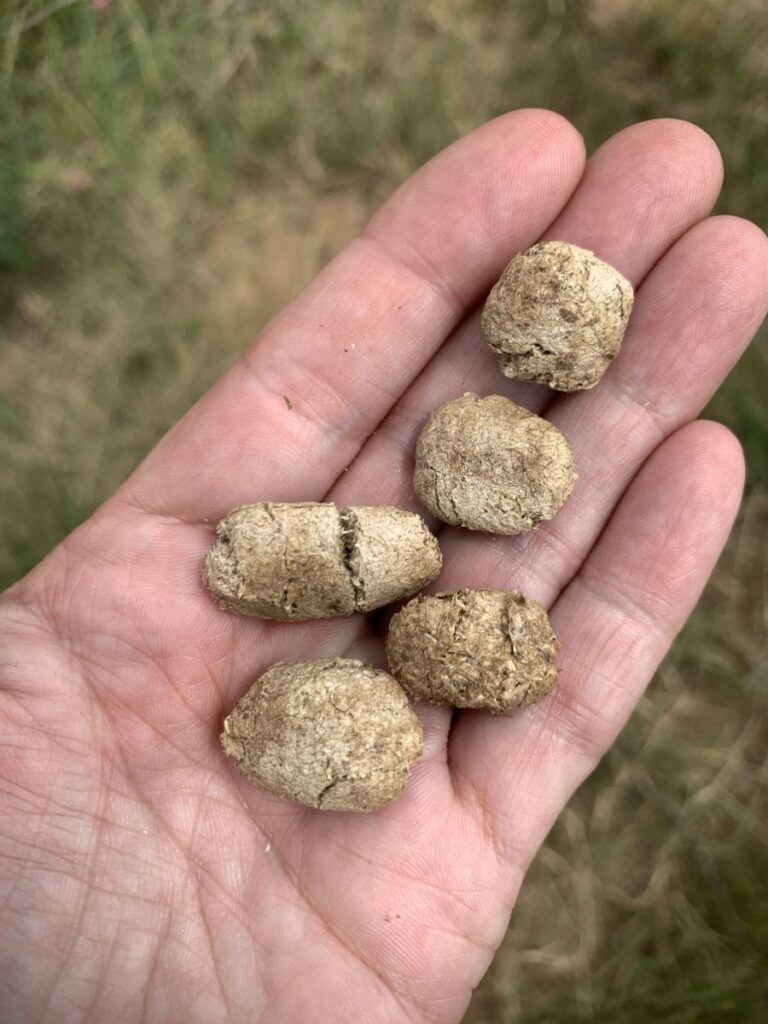
Who's scat is this, and why do you think so? Photo from the dry Greater Kruger region of South Africa, by Kersey Lawrence.
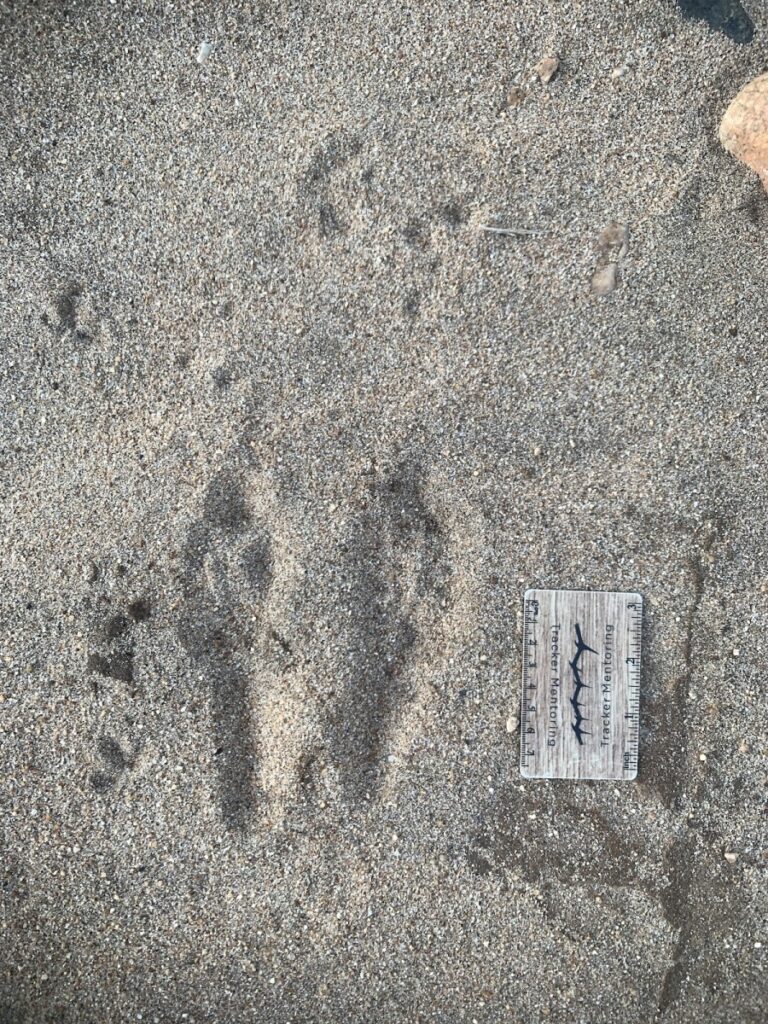
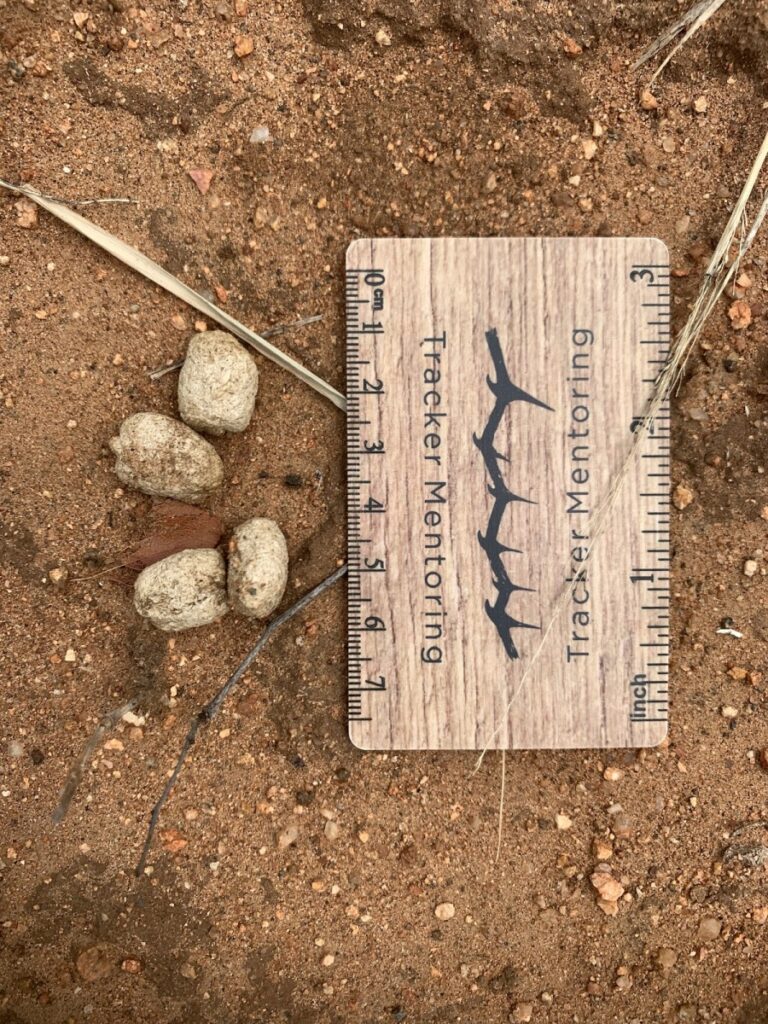
Location: South Africa Photo: Kersey Lawrence These are springhare (Pedetes capensis) dung pellets from the dry Greater Kruger region of South Africa. In last month’s May 2025 quiz, we reviewed this rodent’s tracks. Here, we present their dung, scat, pellets, poo, or whatever you’d like to call excrement. Springhares, like lagomorphs (rabbits and hares, which they are not related to, ironically), practice a form of coprophagy called refection, or autocoprophagy. Coprophagy is the eating of dung, and many animals practice this, especially at birth when a young animal needs to establish the “gut flora” of its mother to process food. Refection, or autocoprophagy, is the eating of your own dung. Springhares (and lagomorphs) consume their own dung right from their anus, before it hits the ground, in a form of ultra-processing to get as much nutrients from the grasses and root systems that they feed upon. The first scat is generally dark in color, and the second scat, after going through the system another time, is much lighter and straw-like particles are often visible. We can tell springhare scats apart from those of lagomorphs because the springhare scats are rectangular in shape, while lagomorph scats are round and flattened like an M&M candy. We call springhare scats “little suitcases” due to their shape.
Photo taken by Kersey Lawrence
-

Southern Springharescat, signs · South Africa -
Springhare Tracks · Kalahari, Namibia -
Springhare, Greater Kruger Region of South Africa, Kersey Lawrence · South Africa
-
-
Question 2 of 2
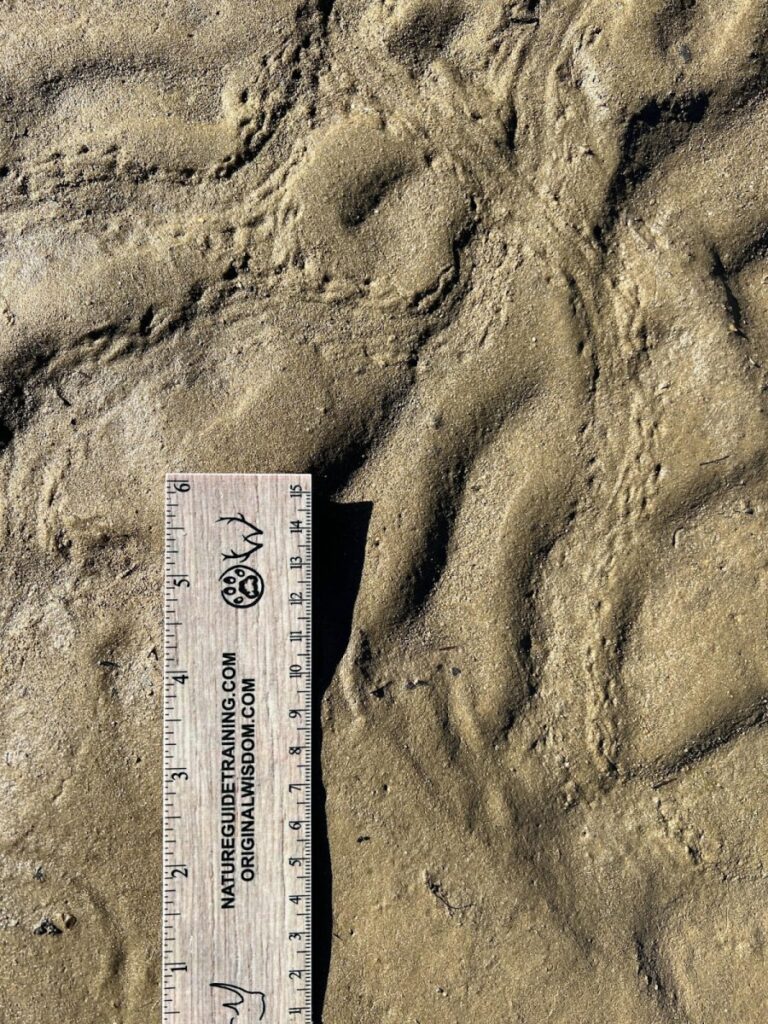
Who's trails are these near water, and why do you think so? Photo from the Allegheny region of Southwestern New York, by Shane Hawkins.
Location: New York, USA Photo: Shane Hawkins These are crayfish trails from the Allegheny mudflats of Southwestern New York, photo taken by Shane Hawkins. These crustaceans live in fresh water and often come onto the silty banks, leaving their spider-like trails behind. Crayfish have ten legs, belonging to the order Decapoda, within the phylum Arthropoda. There are many different genus and species, depending on the location. Their legs are arranged as five pairs, with the first pair being the large claws (chelicerae) used for defense and capturing prey. The remaining four pairs are walking legs, some of which may have small pincers.
Photo by Shane Hawkins, Southwestern New York, USA
-
Crayfish Trails · New York, USA
-
Your score
Answer every question to see your score. 2 to go.