
May 2025 Quiz
Choose an answer under each photo to see straight away whether you are right, with a note on what to look for. Your score is at the end.
Choosing an answer shows the result at once. With a keyboard, use the arrow keys to move between answers and press Enter to choose.
-
Question 1 of 2
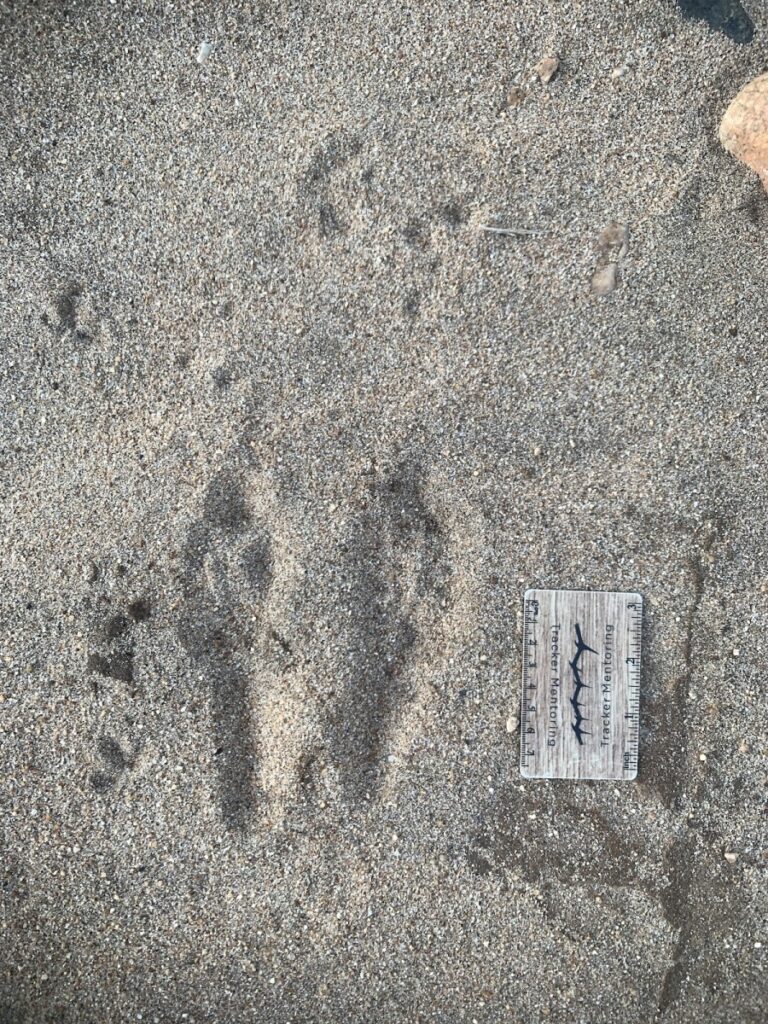
This photo comes from Sandy Reed in the Kalahari of Namibia. Who is it, and why do you think so?
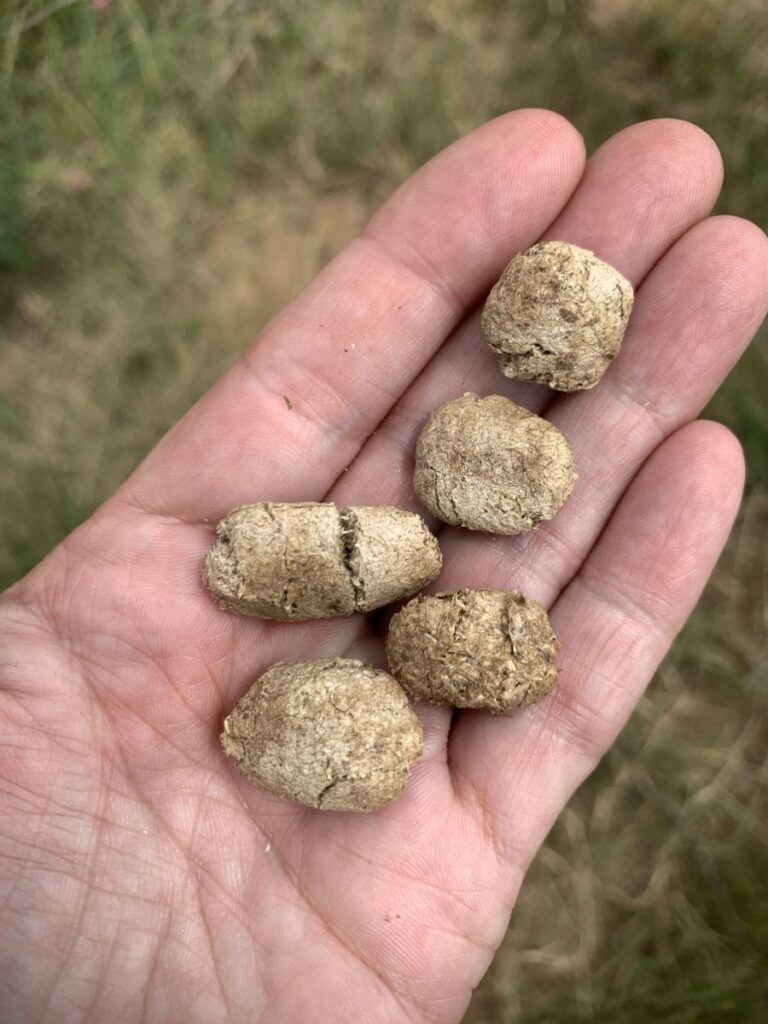
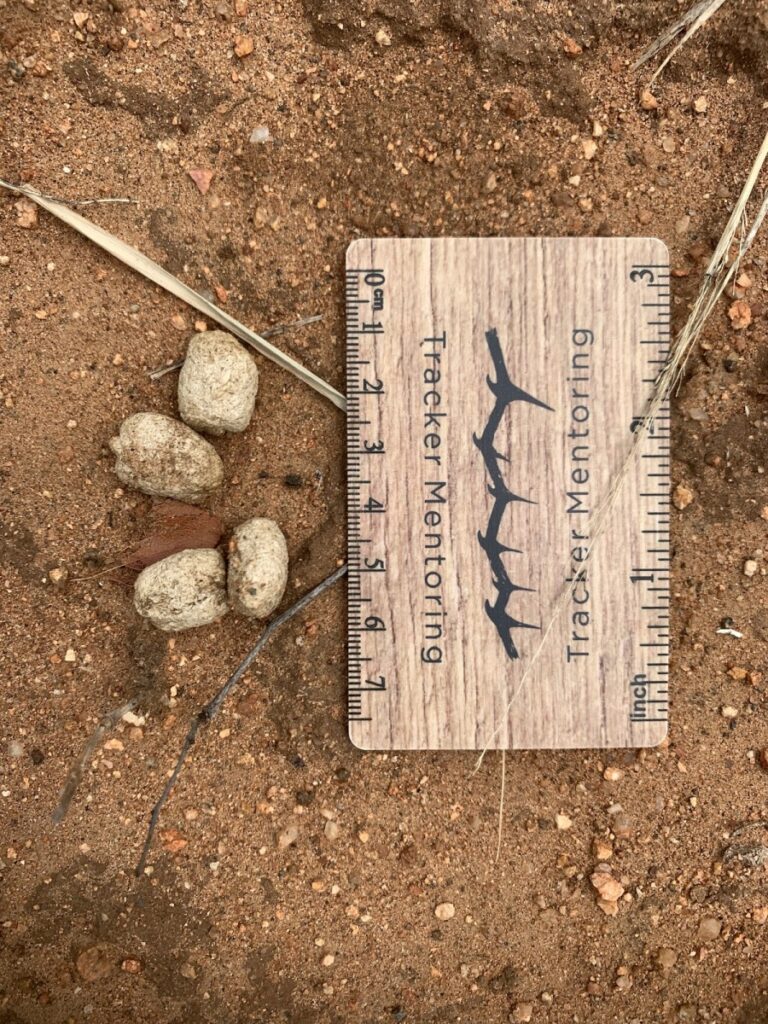
Location: Kalahari, Namibia Photo: Sandy Reed These tracks are from a Springhare (Pedetes capensis) in the Kalahari region of Nambia, a country in Southern Africa. These rodents look like rabbits and have 5 toes on the front feet and 4 on the hind, contributing to the pointed aspect of the hind tracks. Springhares have 4 legs and padded feet, but typically move in a bi-pedal hop like a kangaroo, capable of making up to 4 meter bounds, and are prolific diggers of burrow systems. They are mostly nocturnal, and we see their red eyes “bouncing” across the landscape in our spotlights at night when we have worked in South Africa, Botswana, and Nambia (when we accidentally shine on them for a fraction of a second). Here, the springhare has set down its tiny front feet, pausing for a moment, and we can also see the “heel” of the hind feet.
Photo by Sandy Reed, Kalahari, Namibia
-

Southern Springharescat, signs · South Africa -
Springhare Tracks · Kalahari, Namibia -
Springhare, Greater Kruger Region of South Africa, Kersey Lawrence · South Africa
-
-
Question 2 of 2
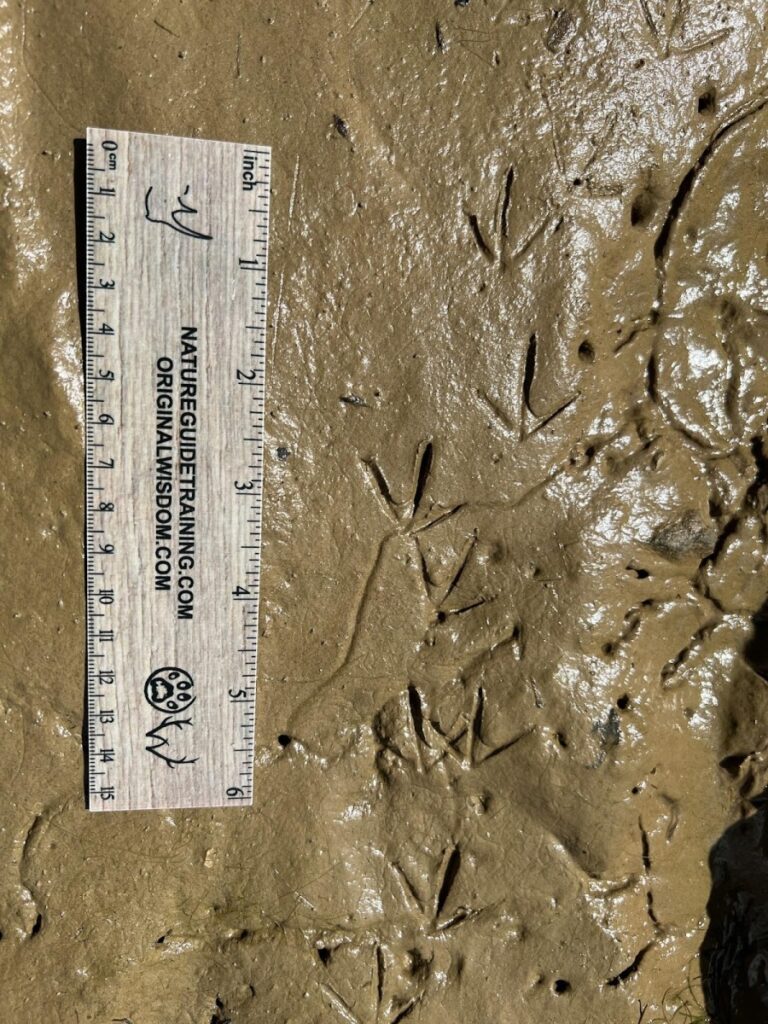
This photo comes from Shane Hawkins in Southwestern New York, USA. Who is it, and why do you think so?
Location: New York, USA Photo: Shane Hawkins These small bird tracks are from a spotted sandpiper. Sandpipers are shorebirds, found alongside water, and here we see the tracks in the beautiful muddy banks of the Allegheny mudflats of Southwestern NY, USA, in North America. The most common sandpiper in the region is the spotted sandpiper (Actitis macularius), which may also hybridize with its sister species the common sandpiper (A. hypoleucos). As you can see in the tracks, sandpiper tracks are small, which is fitting with the small stature of the bird. It does, however, have relatively long legs for its size, and those widely splaying toes are good indicators of wet habitat use. We can see 4 toes in most of the tracks, with 3 long toes forward and one tiny toe, the hallux or toe 1, positioned at the back. We call this structure anisodactyl, but semi-palmatate. Anisodacyl just means 3 toes forward, and one back, in “classic” bird foot structure, like a child draws in a picture. Palmate refers to webbing, and semi-palmate birds often have a bit of webbing visible in good substrate, between toes 3 and 4 (the outer 2, front-facing toes). The bird seems to be moving slowly here, not reflecting the length of its true stride, perhaps foraging in the mud (those might be beak holes near their tracks).
Photo by Shane Hawkins, Southwestern New York, USA
-
Spotted-sandpiper-pic-May-Quiz-Q2 · New York, USA
-
Your score
Answer every question to see your score. 2 to go.