
The Tracking Literature library gathers research on tracks and signs, trailing, and animal behaviour and ecology, together with related fields such as human tracking, forensics, ichnology and taphonomy. Behaviour and natural history papers are here even when they never mention tracking, because understanding behaviour matters to trackers.
Search every field, or narrow the list with the filters. Each paper has its own page with a synopsis, keywords and the full citation. Where a paper is open access, or the authors or publisher have given permission, you can download the PDF; otherwise the page links to the publisher or a legal free copy.
2010PDF available
Visual Tracking and the Military Tracking Team Capability: A Disappearing Skill and Misunderstood Capability
Why did the United States Army let one of its oldest skills fade away? Two soldiers trace military tracking from Rogers’ Rangers and Apache Scouts to Vietnam’s Combat Tracking Teams, compare trackers with scent dogs and sensors, and walk through a detailed example of trackers following insurgents from a roadside bomb site.
2010PDF available
Wiggling Through the World: The mechanics of slithering locomotion depend on the surroundings
How does an animal with no legs move so well? Laboratory studies of snakes and the sandfish lizard show that snakes rely on belly scales that grip more sideways than forwards, and lift parts of their bodies as they slither, while the sandfish dives into sand in under a second and “swims” through it at nearly two body lengths a second.
2009Publisher link
Bed site selection of red muntjac (Muntiacus muntjak) and sambar (Rusa unicolor) in a tropical seasonal forest
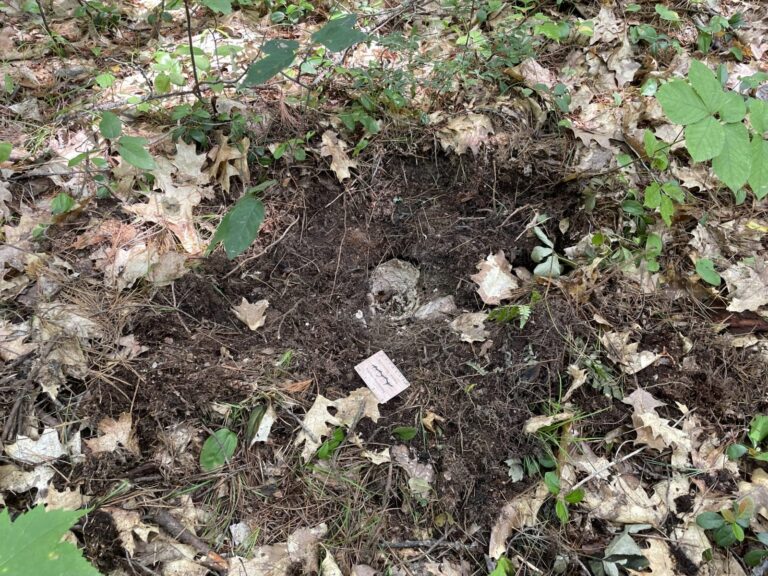
How do you find where a deer slept in a tropical forest? In Thailand’s Khao Yai National Park, researchers looked for little piles of shiny fruit seeds that muntjac and sambar bring up while chewing the cud, then cleared the leaf litter to read the hoof prints underneath. Both deer bedded under thick canopy, sambar preferred flatter ground, and the two species differed in which way their bed sites faced.
2009Publisher link
Comparison of Methods of Monitoring Wildlife Crossing-Structures on Highways
Are tracks in the sand or cameras the better way to tell which animals use highway underpasses and overpasses? In Canada’s Banff National Park, track-pads picked up more coyotes and grizzly bears, while cameras caught more deer and elk and became cheaper for studies over a year. The study also shows how busy, trampled track-pads lead to undercounting.
2009Publisher link
Competition and coexistence in sympatric bobcats and pumas
Do bobcats steer clear of pumas? In the Huachuca Mountains of Arizona, a study built on tracks and scats found bobcats active in every habitat whether or not pumas had passed, but their diets told another story. Bobcats ate mostly rabbits and rodents, pumas mostly deer, and one puma scat held the remains of a bobcat.
2009PDF available
Determining Observer Reliability in Counts of River Otter Tracks
How reliable are track surveys when the observers have never been tested? In east Texas, which biologist did the otter survey mattered more than any habitat feature. In formal track and sign evaluations, experienced observers missed 37% of real otter tracks and called 26% of raccoon, opossum and swamp rabbit tracks “otter”. The good news: scores rose from 61% to 79% in just three months of evaluation and feedback.
2009Publisher link
Evaluating Methods for Counting Cryptic Carnivores
How good are track counts and camera traps at counting leopards? In South Africa’s Phinda Private Game Reserve, almost every leopard wore a radio collar, so researchers knew the true answer. Track counts were cheapest but underestimated leopard numbers unless each track set was linked to a known individual, while camera traps gave the best balance of accuracy and cost.
2009Publisher link
Food composition and food niche overlap of three kinds of canidae
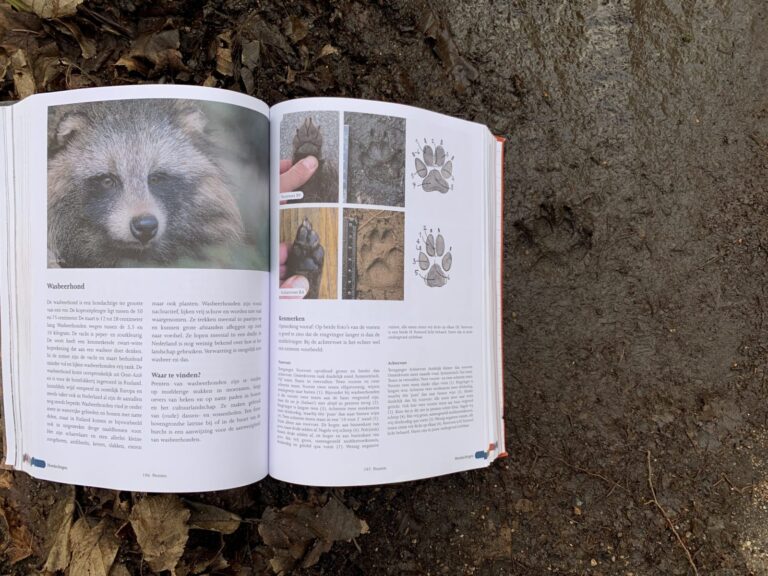
By following tracks in snow and sand to dens and latrines, researchers in China’s Inner Mongolia gathered over 300 scats from wolves, red foxes and raccoon dogs. Wolves were living largely on sheep, goats and cattle, red foxes on rodents, and raccoon dogs on birds and insects. Different diets, and raccoon dogs sleeping through the lean winter, may be how the three canids share a harsh grassland.
2009PDF available
Global Navigation Satellite System Wildlife Tracking Collar Positioning Accuracy
How close is a GPS collar point to where the animal really stood? In her master's thesis, Kersey Lawrence (then Kirstin Lawrence-Apfel) tested wildlife collars against survey-grade control in Connecticut forests and the mountains of Patagonia: nearly half the positions were more than 15 m off, and a few were out by up to 2 km. She recommends using GPS for the big picture, then checking on the ground with camera traps and tracks and signs surveys.
2009PDF available
How to Read a Scientific Paper
Ever opened a research paper and felt lost by the second paragraph? This short guide from the University of Arizona explains how papers are built, what phrases like “data not shown” really mean, and six questions to ask before you believe a paper’s conclusions. A handy companion for anyone reading the tracking literature.
2009PDF available
Inter-Observer Variation in Identifying Mammals from Their Tracks at Enclosed Track Plate Stations
How often do four experienced biologists agree on who left a track at a track plate station? In California’s forests, they agreed on carnivore tracks 87% of the time, and 95% when poor tracks were set aside, but only 37% of the time on squirrels and other non-carnivores. The study shows how much track quality and training shape the reliability of track-based surveys.
2009PDF available
Motions of the running horse and cheetah revisited: fundamental mechanics of the transverse and rotary gallop
Why does a galloping horse land on a hind foot, while a cheetah lands on a front foot? This paper argues that the real difference between the two famous gallops is which legs turn the body from falling to rising, not the left and right order of the feet. Dogs and jackrabbits switch between both styles depending on speed.
2009Publisher link
Red foxes (Vulpes vulpes) use rabbit (Oryctolagus cuniculus) scent marks as territorial marking sites
Why would a fox leave its scat right on top of a rabbit’s latrine? In a forest near Madrid, researchers found that red foxes marked more where rabbits were plentiful, and placed their scats on rabbit latrines and pawscrapes far more often than chance would predict. The rabbits’ own scent marks seem to work as amplifiers for the fox’s territorial message.
2009PDF available
Resting structures and resting habitat of fishers in the southern Sierra Nevada, California
Where does a fisher rest in a hot, dry forest? By walking in on radio-collared fishers in California’s southern Sierra Nevada, researchers found 78 resting places, mostly in the biggest trees around, often riddled with mistletoe or cavities, and almost always under dense canopy. Their results point to the large trees, snags and old oaks this isolated population depends on.
2009PDF available
Signs at the Top: Habitat Features Influencing Snow Leopard Uncia uncia Activity in Sagarmatha National Park, Nepal
Snow leopards have come back to the slopes of Mount Everest after vanishing in the 1960s. By mapping 223 scrapes, scats, footprints, scent marks and rubbing sites, researchers found the cats were most active lower down, near rivers and away from busy trekking trails, suggesting a trade-off between gentler conditions and avoiding people. Their prey, Himalayan tahr, mattered less than expected.
2009Publisher link
Spoor density as a measure of true density of a known population of free-ranging wild cheetah in Botswana
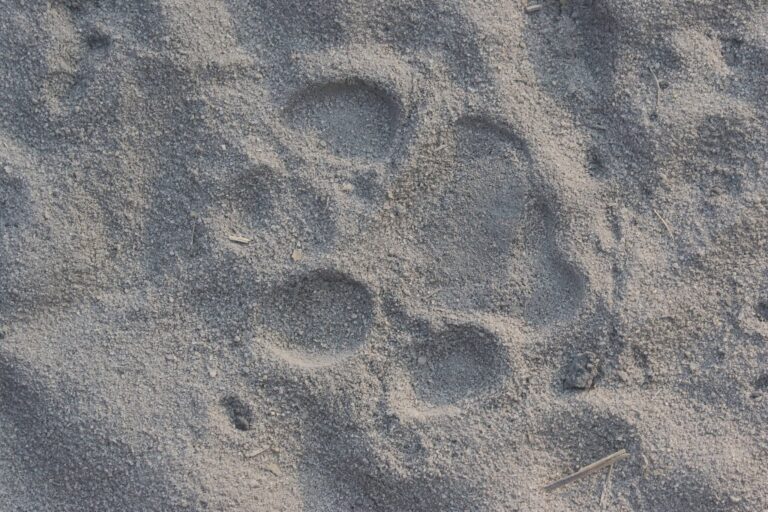
Can you count cheetahs by their tracks? In a Botswana game reserve where every cheetah was known, researchers drove more than 8000 km of sandy roads counting spoor and compared it with the real population. Track counts underestimated the cheetahs, and a correction that worked in one wet season overshot the next, showing how rain, prey and cubs change the way cheetahs leave their tracks.
2009PDF available
The Use of an Orthotic Casting Foam as a Track-Plate Medium for Wildlife Research and Monitoring
Could foam made for casting human feet be the answer to rained-out track plates? Researchers in British Columbia found that orthotic casting foam recorded claws, pads and even the pebbly texture of a porcupine’s foot, and kept those tracks through three weeks of rain, hail and frost. Expert trackers rated the foam tracks better than sand and usually better than sooted aluminum, though some animals were wary of the sinking surface.
2009PDF available
The mechanics of slithering locomotion
How does a snake slither across smooth ground with nothing to push against? By testing milk snakes on cloth, smooth board and slopes, researchers found that the belly scales grip better forward than sideways, and that snakes lift the curves of their bodies to put their weight where it helps most. On slopes steeper than about 7 degrees, the snakes slid backward.
2008PDF available
A footprint technique to identify white rhino Ceratotherium simum at individual and species levels
Can a rhino be recognised by their footprints alone? Working with 40 known white rhino in Namibia, researchers photographed 1276 footprints and turned each into 113 measurements. Their Footprint Identification Technique matched tracks to the right animal more than 90% of the time and told white from black rhino with over 98% accuracy, offering a cheap, non-invasive way to count and monitor endangered animals.
2008PDF available
A new method for estimating visitation rates of cryptic animals via repeated surveys of indirect signs
How often does an otter visit a fish farmer’s pond? By sorting otter droppings into fresh and old on each weekly check, researchers built a method that was more than three times more accurate than the usual “sign present or absent” approach. The skill of ageing tracks and signs turns out to be worth real precision in wildlife monitoring.
About the library
What is the Tracking Literature library?
A searchable collection of research papers on tracks and signs, trailing, and animal behaviour and ecology, gathered by Original Wisdom. Each paper has its own page with a plain-language summary, keywords, the full citation and a link to the paper.
Can I download the papers?
Where a paper is open access, or the authors or publisher have given permission, you can download the PDF from its page. Otherwise the page links to the publisher or to a legal free copy.
Who writes the summaries?
Kersey Lawrence of Original Wisdom summarises each paper: what the researchers did, found and concluded, how tracking was used, who did the tracking, and what it means for trackers.
How do I find papers on one species or place?
Type it in the search box, which searches every field including scientific names, or tick it in the Species or Region filter. Filters combine, so you can narrow the list to, for example, leopard papers from Botswana.
How should I cite a paper or a summary?
Each paper page gives the full citation and DOI of the original paper, and a ready-made citation for Original Wisdom's summary of it.