International education and research in ecology and conservation, wildlife tracking, and human culture
Research
Track-based research for conservation: what wildlife tracking can tell us, and how sure we can be.
Original Wisdom brings trackers, universities and conservation teams together to do research based on tracking (tracks and signs, trailing, observational awareness, and animal behaviour). Our work is both quantitative and qualitative. We measure how reliable tracker data is, and we study the knowledge, culture and history that tracking comes from. Trackers take part as skilled contributors, not as field assistants. Students and researchers learn from them.
Our research is led by Dr. Kersey Lawrence. She is a Senior Tracker™ and CyberTracker Senior Tracker Evaluator (Tracks & Signs and Trailing), Honorary Faculty in the School of Biological Sciences at the University of Aberdeen, and a SACNASP-registered (South African Council for Natural Scientific Professions) Professional Natural Scientist. Her PhD at the University of Connecticut studied the ecology and culture of tracking.
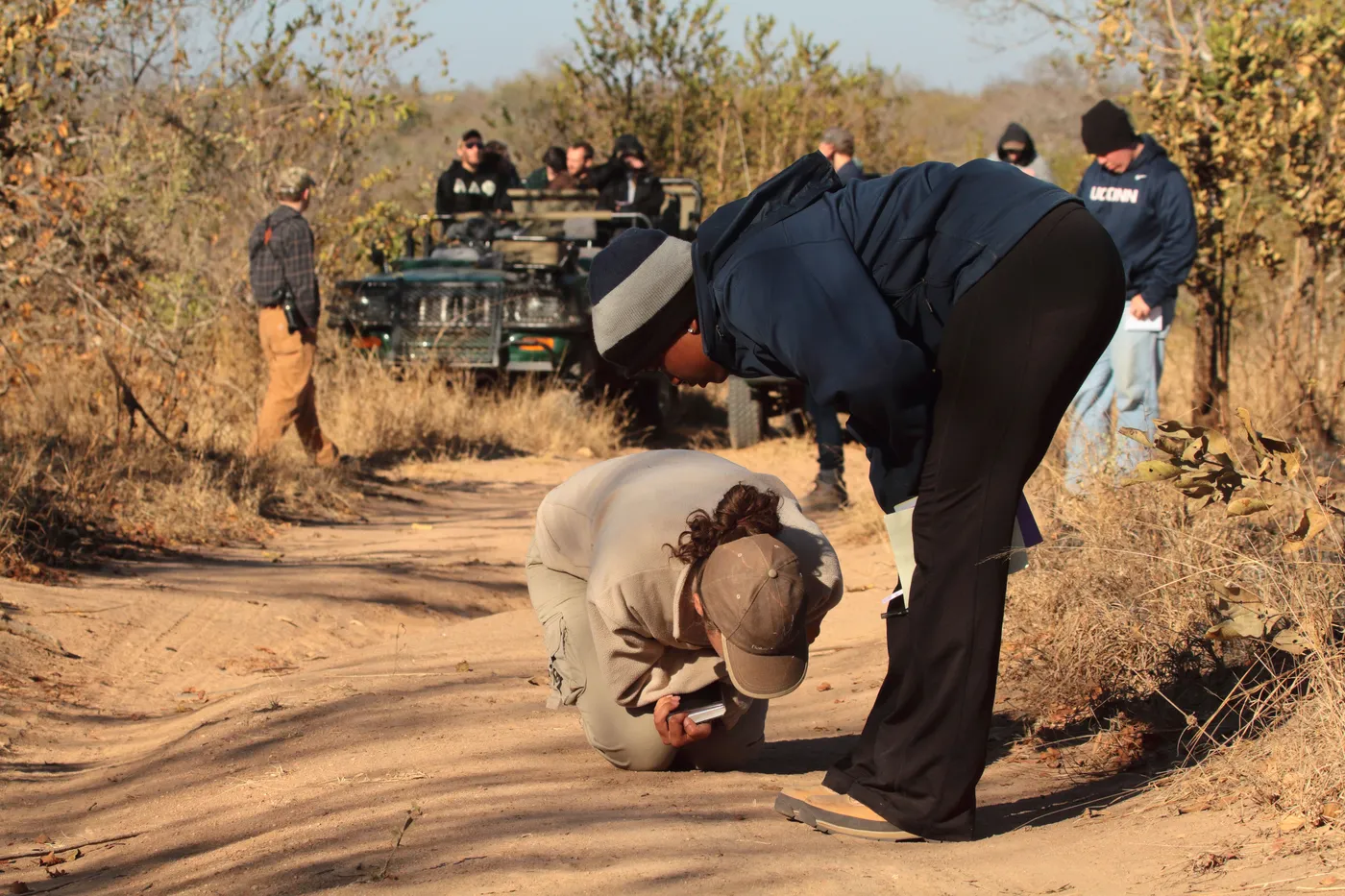
University students identifying tracks
Universities we work with
University of Aberdeen, Scotland, School of Biological Sciences: Dr. Kersey Lawrence is Honorary Faculty here. We work with faculty members including Professor Michelle Pinard, Dr. John Baird and Dr. Ela Krol on research projects, student fieldwork and long-term research at our South African research station and in Aberdeen.
University of Mpumalanga, South Africa: with Dr. Kath Forssman in biological sciences, and Dr. Tim Forssman, Associate Professor in Archaeology and Culture and Heritage Studies in the School of Social Sciences.
University of Cape Town, South Africa: with Dr. Jiska de Groot, Senior Researcher at the African Climate and Development Initiative, on the Soul of Tracking research project, which studies the human side of tracking.
Federal University of Pará (Universidade Federal do Pará), Brazil: with Dr. Juarez Pezzuti at the university’s Centre for Advanced Amazonian Studies (Núcleo de Altos Estudos Amazônicos).
Dr. Kersey Lawrence is a CyberTracker Senior Tracker™ and Senior Tracker Evaluator. Within CyberTracker Conservation, we work with Louis Liebenberg, founder of CyberTracker and Associate of the Department of Human Evolutionary Biology at Harvard University.
Our research
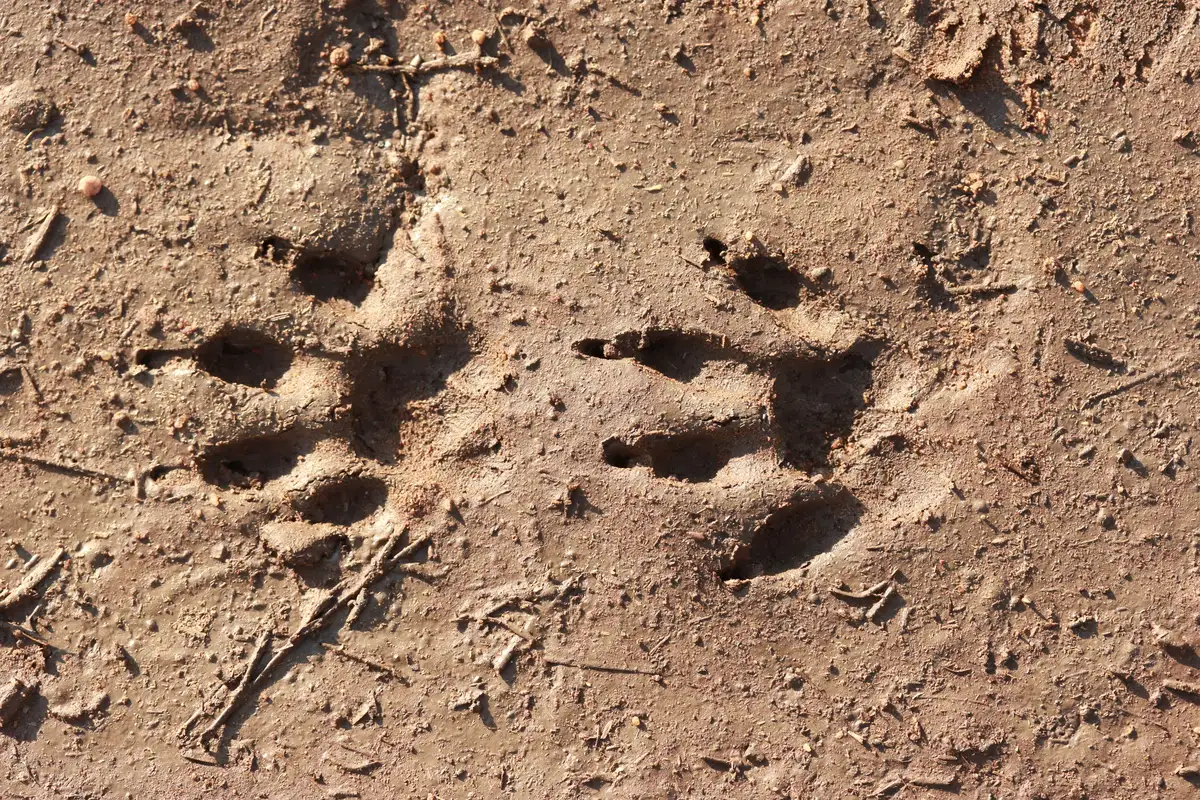
Water mongoose tracks
Quantitative track-based research
The Grey Area: tracker accuracy and data reliability
Some readings of tracks and signs are certain. Some fall in the Grey Area, where the evidence supports more than one reading. Some can’t be answered at all. Dr. Kersey Lawrence’s Grey Area research asks where the line falls between what the evidence on the ground can show and what a tracker believes it shows. Recognising uncertainty accurately is not failure. It is part of expertise. We measure accuracy and reliability across certification levels, so that tracker data can be trusted in conservation science.
Biodiversity monitoring through tracking
We design and test track-based monitoring: data collected by trained guides and certified trackers, verified with camera traps, and analysed for abundance indices, rare and understudied species, and patterns across the landscape. Our CyberTracker Online data collection sequences work for literate, non-literate and oral-literate users, in more than one language.
Documenting tracks and signs
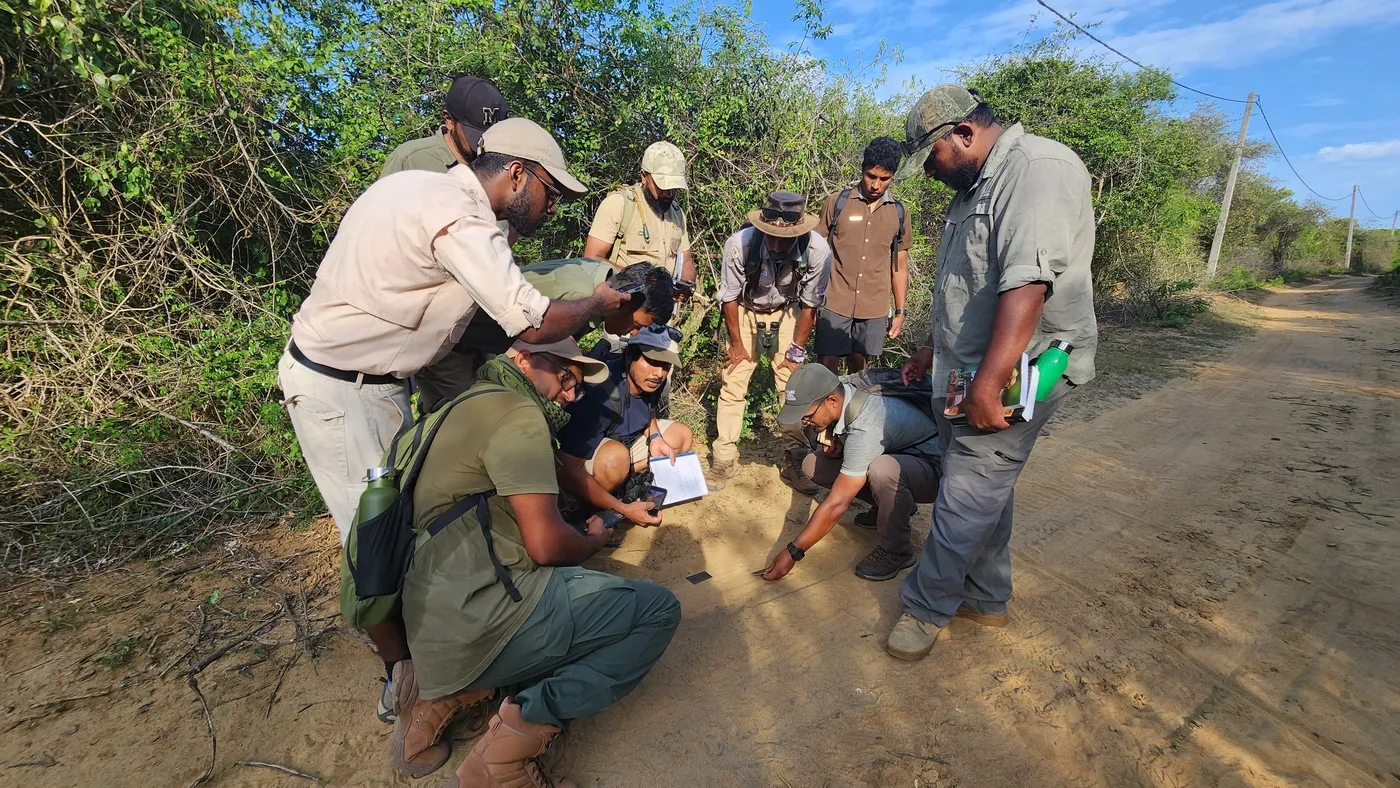
Many tracks and signs are still undescribed in the scientific literature. We work with local trackers to record and publish them. One example is our work with Sri Lankan colleagues on the tracks and signs of the Yala National Park buffer zone.
Animal behaviour
Following trails answers questions about behaviour that observation alone can miss: how animals move, feed, rest and interact when no one is watching.
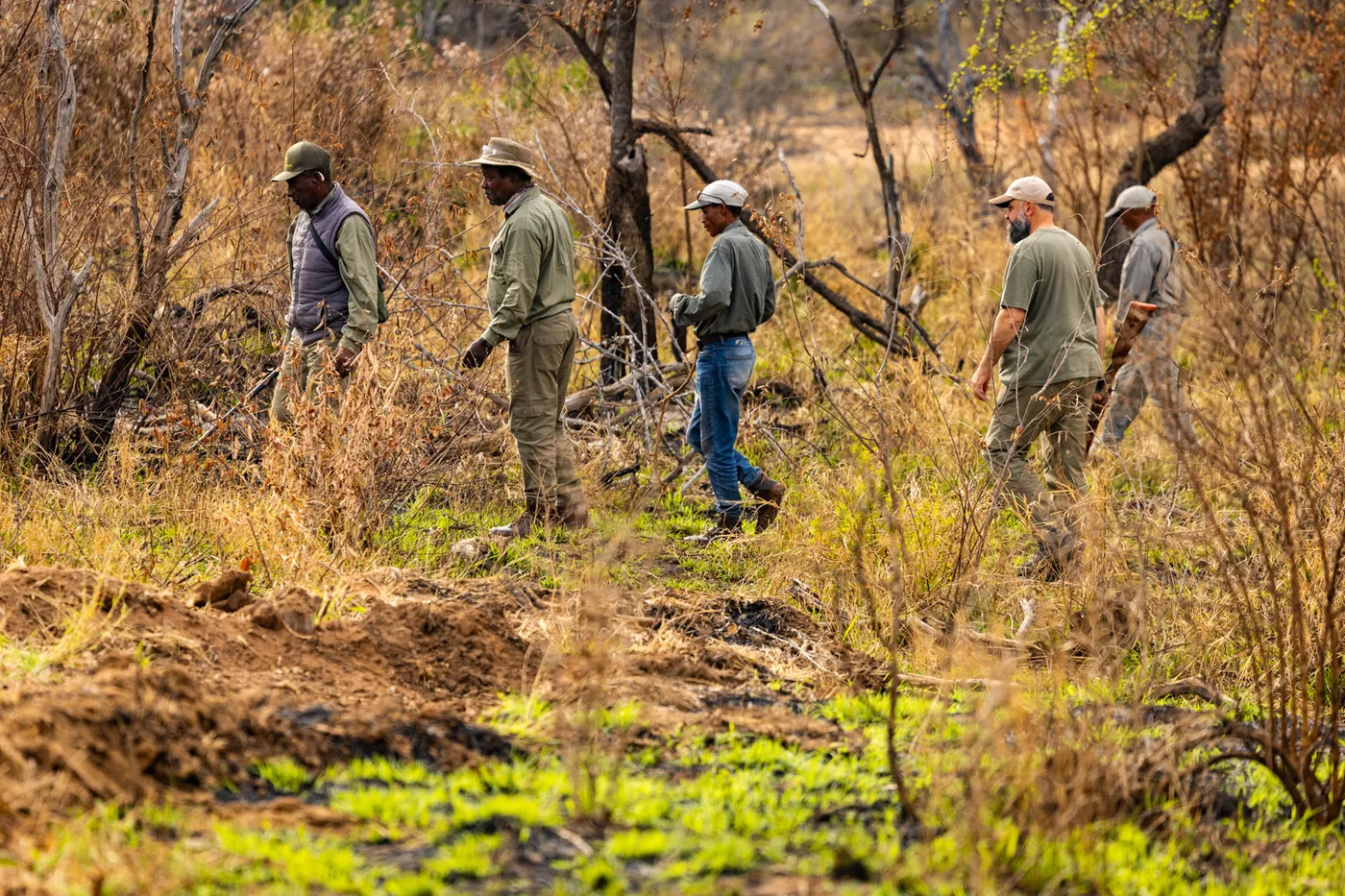
San and Shangaan trackers on a trail. Photo: Lee Gutteridge
Qualitative track-based research
The Soul of Tracking
A project with the University of Cape Town on the human side of tracking: how trackers learn, what tracking means to them, and how their knowledge is passed on.
Archaeology and knowledge systems
With the University of Mpumalanga, we look at tracking as one of the oldest forms of human knowledge, and at how it connects to the archaeological record.
Indigenous and local knowledge
We value each way of knowing for its own strengths. Indigenous and local knowledge, built over generations of living with animals, sees what academic study can miss. Scientific methods can test what the eye alone cannot. Used together, they see further than either does alone.
Reading and recording tracks together in the field
Where we work
We don’t publish exact locations. Some of the species we study, including rhino and pangolin, are targeted by poachers, and a place name can put them at risk.
Our research station in the Greater Kruger, South Africa: a private property on a nature reserve, with accommodation for visiting professors and long-term graduate researchers, a classroom, three research vehicles and continuous camera recording at a waterhole.
A private nature reserve in the Limpopo lowveld, South Africa: student projects and field courses.
Yala National Park, Sri Lanka: since 2025 we have worked in Yala National Park and its buffer zone with the Hilton Yala Resort ranger team, Sri Lankan guides and researchers, and the Field Guides Association of Sri Lanka. We run CyberTracker Tracker Certification and Learning to Track cohorts, and we record tracks and signs with local trackers, many of them not yet described in the scientific literature. We are also testing a CyberTracker Online sequence for track-based biodiversity monitoring, designed for several languages and for users who read and write as well as those who don’t. The data will be used to measure accuracy by certification level, build indices of abundance, and follow rare and understudied species, including leopard and sloth bear. The long-term aim is a model, led by Sri Lankans, that can grow across Sri Lanka and the wider Asia-Pacific region.
Brazil: a research partnership in development with the Federal University of Pará, designed around the PROAFRICA programme of Brazil’s National Council for Scientific and Technological Development (Conselho Nacional de Desenvolvimento Científico e Tecnológico). PROAFRICA supports researcher exchange, joint fieldwork and the sharing of knowledge between Brazilian and African institutions.
North America: tracking research and tracker certification across the United States.
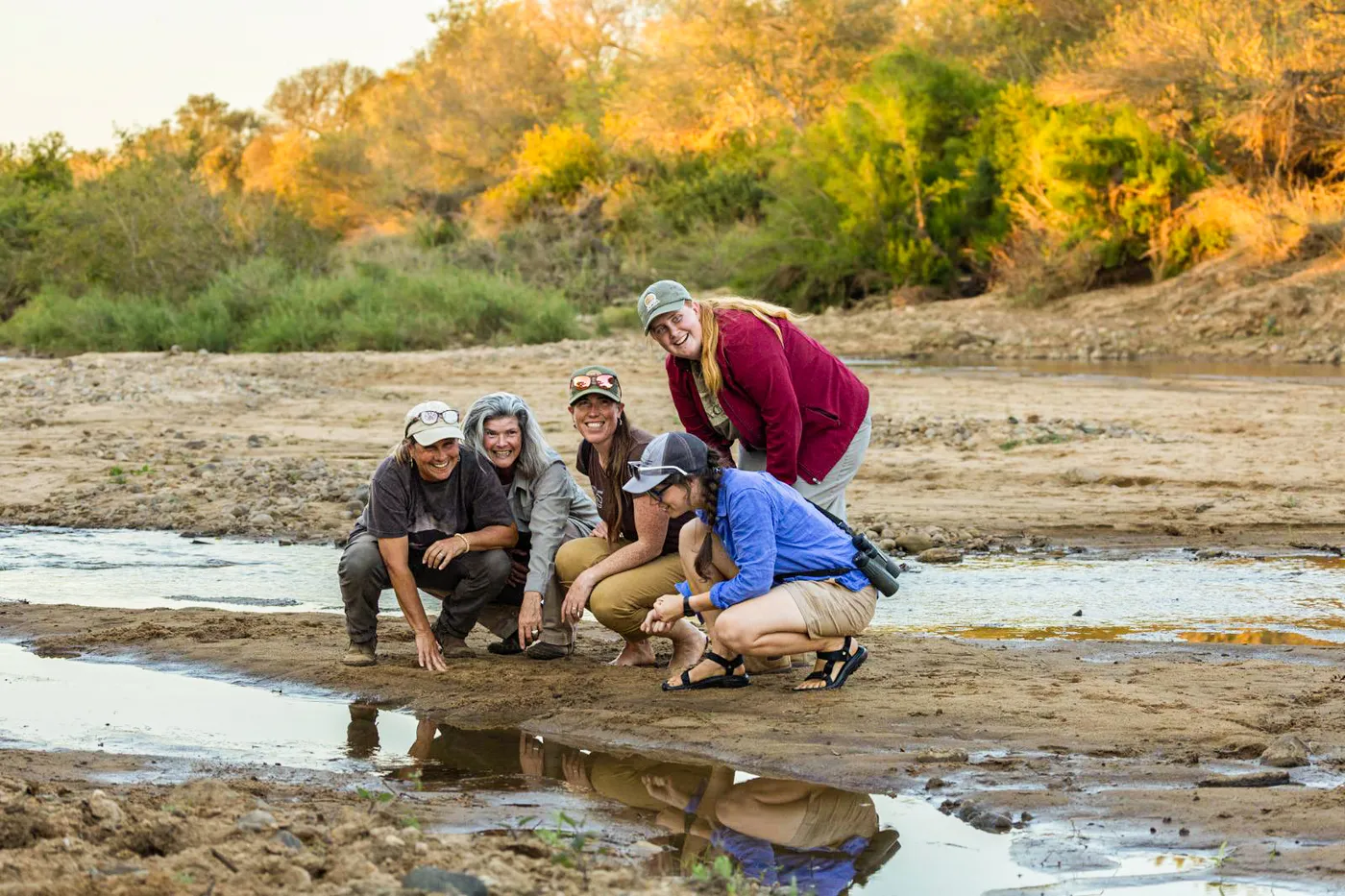
CyberTracker women trackers. Photo: Libby Page
Develop a project with us, anywhere in the world
Do you have a research question that tracking could answer? We can help you design and run it, wherever you are. We can help with:
Shaping a research question and choosing methods based on tracking
Certifying your field team, so you know how reliable your data is
Supervising and mentoring students in the field
Bringing local and Indigenous trackers in as research partners
Projects are shaped with the people involved. We have worked with universities, protected areas, conservation organisations and community trackers on several continents.
Contact us
To discuss a research project, a student placement or a collaboration, write to Dr. Kersey Lawrence. It helps to tell us who you are, your organisation or university, where you’d like to work, and what you’d like to find out.
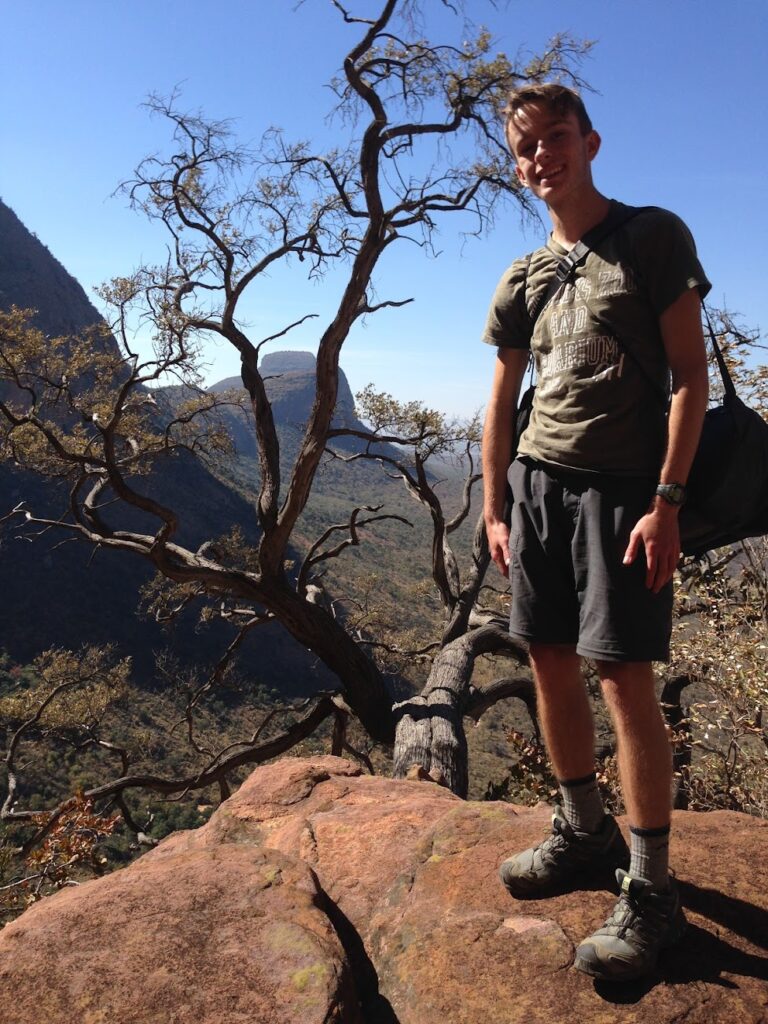
One hundred percent of donations made in Brandon’s name are set aside to help provide for a high school or college student to travel to South Africa to participate in an Original Wisdom program. The student must have a strong passion for photography and/or wildlife tracking and be a part of a program or class that is learning about and working towards conservation.